

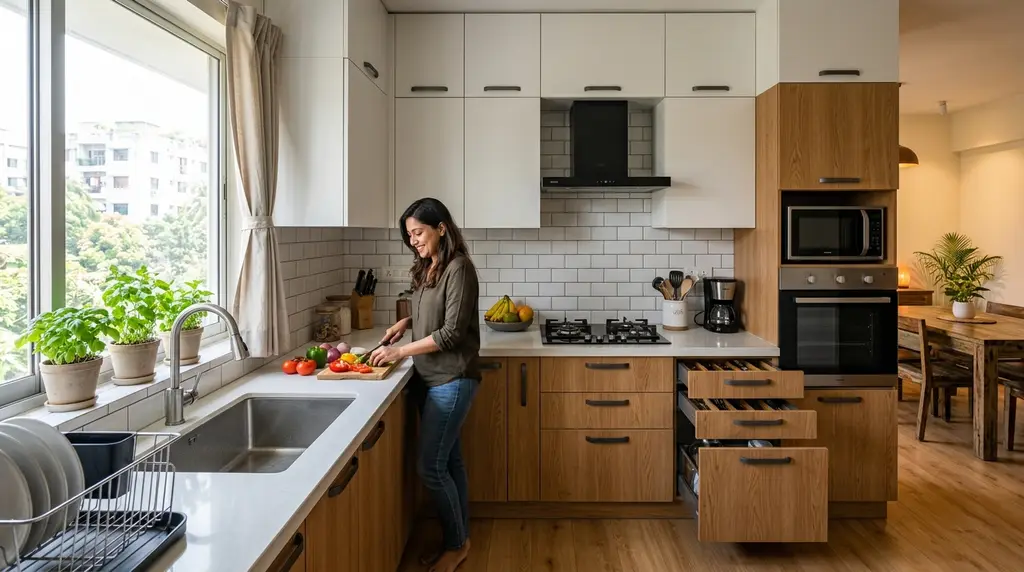
What a kitchen interior design project typically includes in Dhaka
When people ask about kitchen interior design cost in Dhaka, they’re usually trying to understand two things: what they’ll actually get for the money, and what choices drive the final number. A modular kitchen project is not just cabinets—it’s a full set of design and site tasks that turn a room into a practical workspace.
Most professional interior design services in Bangladesh will cover a similar scope: a site visit and measurement, layout planning, 3D/working drawings, cabinet fabrication and installation, countertop supply and fitting, hardware and accessories selection, plus coordination with electrical, plumbing, and appliance positioning. If you’re browsing a “kitchen interior design” service page, these are the core tasks you should expect to see listed.
Dhaka modular kitchen price ranges (realistic benchmarks)
Kitchen budgets vary by size, finishes, and hardware brand. In Dhaka, a practical way to think is “per running feet” (linear feet of base cabinets) and then add wall cabinets, countertop, and accessories. As a broad benchmark for a standard apartment kitchen:
- Economy modular kitchen: BDT 18,000–30,000 per running feet (base + wall average, basic hardware)
- Mid-range modular kitchen: BDT 30,000–55,000 per running feet (better board, branded channels/hinges, nicer finishes)
- Premium modular kitchen: BDT 55,000–95,000+ per running feet (high-end boards/finishes, heavy-duty hardware, accessories)
These ranges assume standard cabinetry. Countertops, tall units, pantry systems, and built-in appliance units can raise the total quickly. The cleanest way to budget is to break the cost down into materials, hardware, and accessories—then add installation and design/management.
Modular kitchen price breakdown in Dhaka
1) Core cabinet materials (boards, shutters, carcass)
Cabinet material is often the biggest line item after countertops. In Dhaka homes, the most common options are laminates over board, acrylic/PU painted shutters, and sometimes PVC/WPC for wet zones. What matters is the board quality (especially for the carcass), edge banding, and how the shutters are finished.
- Particle board + laminate: Lower cost, works in dry zones; avoid in areas prone to water seepage.
- MDF board (laminate/painted): Smoother finish, good for painted or membrane doors; needs protection from moisture.
- Plywood (marine/commercial) + laminate/veneer: Strong and stable; typically better for Bangladesh humidity when properly sealed.
- WPC/PVC boards: Water-resistant, good near sink; can feel less “premium” depending on finish and thickness.
Typical share of budget: 35%–50% of the total modular kitchen cost, depending on finish. Acrylic, PU paint, and premium laminates push the cost up mainly through shutter finishing and edge detailing.
2) Countertop (often the “silent budget buster”)
Countertops can change the final number more than most people expect. In Dhaka, granite remains popular for durability. Quartz is increasingly requested for a cleaner look and consistent pattern, but it’s usually pricier.
- Granite: Durable, heat-resistant; price varies by slab type and thickness.
- Quartz: Uniform look, low maintenance; higher material cost, careful handling required.
- Solid surface: Seamless joints and modern look; can scratch, but repairable.
Typical share of budget: 10%–25% depending on kitchen length and slab selection. Cutouts for hob and sink, edge profiles, and backsplash height also affect pricing.
3) Hardware (hinges, channels, lift-ups, handles)
Hardware is where a kitchen starts feeling “smooth” and long-lasting. Many Dhaka kitchens look great on day one but feel loose after a year because of low-grade hinges and drawer channels. If you want a kitchen that stays aligned, invest here.
- Soft-close hinges: Standard for mid-range and above; better brands last longer in daily use.
- Drawer channels: Telescopic channels are basic; concealed soft-close systems cost more but feel premium.
- Lift-up systems: For overhead shutters (especially near chimney units); pricing varies widely by brand and weight rating.
- Handles vs. G-profile/handleless: Handleless designs often cost more due to profiles, extra finishing, and alignment.
Typical share of budget: 15%–30%. Brand choice (local vs. imported), number of drawers, and special mechanisms can push hardware higher than the cabinet boards.
4) Accessories (baskets, pantry units, corner solutions)
Accessories make daily cooking easier—and they also add cost fast. Many homeowners in Dhaka start with “basic baskets” and then upgrade after living with the kitchen. If you already know your cooking habits, it’s smarter to plan these upfront in your modular kitchen design.
- Cutlery tray and utensil organizers: Small cost, high impact.
- Pull-out baskets (base units): Great for bottles, spices, and groceries.
- Tall pantry unit: Adds storage and a clean look; requires strong channels and careful leveling.
- Corner units (magic corner/le-mans): Convenient but expensive; sometimes a simple shelf is better value.
- Waste bin pull-out: Hygienic and popular in modern kitchens.
Typical share of budget: 5%–20% depending on how “feature-rich” the kitchen is.
5) Appliances, sink, and chimney (often excluded from “cabinet price”)
Be clear whether your kitchen quote includes the sink, faucet, hob, oven, and chimney. Many interior design packages in Dhaka price cabinetry separately, while the client purchases appliances directly. Even when appliances aren’t included, your interior design team should handle appliance space planning, ventilation routing for the chimney, and service access so maintenance doesn’t become a headache later.
Other cost drivers specific to Dhaka apartments
- Site condition and civil work: Wall leveling, floor slope issues near the sink, and old plumbing can add extra work.
- Electrical points and lighting: Under-cabinet lights, loft lights, and extra sockets for appliances should be planned in drawings.
- Backsplash and wall finishes: Tiles, glass, or panels change labor and material costs.
- Timeline and building rules: Lift restrictions, working hours, and material carrying distance affect labor.
How to get an accurate quote (and avoid surprises)
The fastest way to control cost is to request a detailed, itemized estimate after measurement and layout finalization. A proper kitchen interior design process will include: site measurement, layout options (L-shape, U-shape, straight, parallel), 3D views, and then a BOQ-style breakdown—cabinet running feet, shutter finish, board specification, edge band type, hardware brand/model, and accessories list.
Before you finalize, confirm these points:
- Exact board type/thickness for carcass and shutters
- Hardware brand and whether soft-close is included everywhere
- Countertop material, thickness, and cutout charges
- Accessories list (what’s included vs. optional)
- Installation timeline, warranty, and after-sales support
A practical way to budget your modular kitchen in Dhaka
If you want a balanced kitchen that lasts in Dhaka’s humidity and daily use, aim for mid-range boards with reliable branded hardware, then add only the accessories you’ll truly use. Most homeowners get better value by upgrading drawer channels and hinges first, rather than choosing the fanciest shutter finish.
For a tailored estimate, an interior design team can visit your site, prepare the kitchen layout and 3D, and then share a modular kitchen price breakdown by materials, hardware, and accessories—so you can adjust the plan without compromising function.
Explore more on Modular Kitchen & Dining
About the author
Ethan manages product research, sourcing lists, and install-day styling so spaces feel finished, not just furnished. He builds vendor comparisons, tracks lead times, and keeps a tight handle on substitutions when items go out of stock. …
Leave a comment