

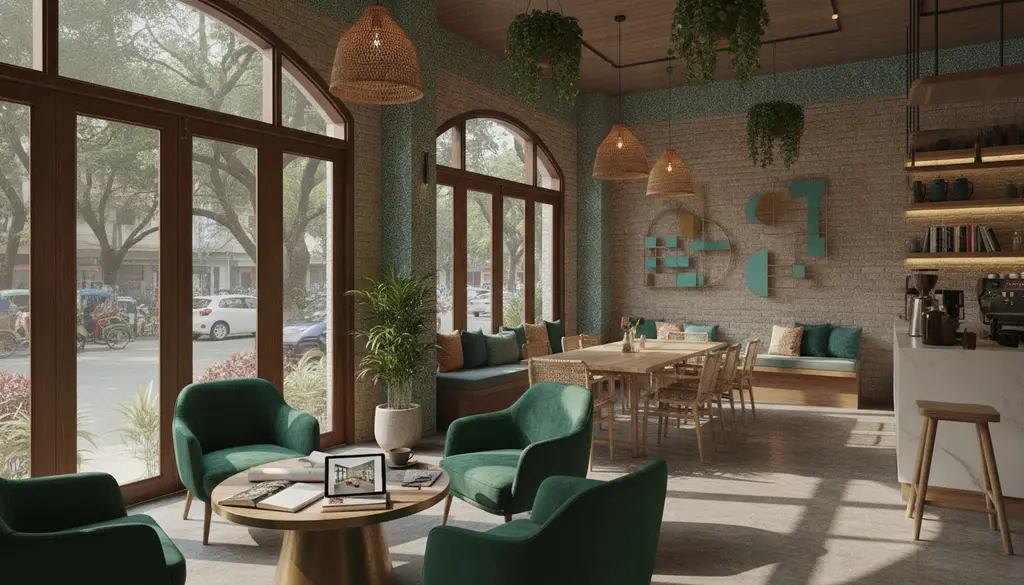
Why Dhanmondi & Gulshan cafes need a stronger concept design (not just pretty décor)
Dhanmondi and Gulshan are two very different café worlds inside Dhaka. Dhanmondi cafés often live on repeat neighborhood traffic—students, families, office groups—and they win when they feel welcoming, efficient, and easy to return to. Gulshan cafés, on the other hand, compete on brand perception, premium comfort, and “this feels like a place I’d bring someone.” In both areas, the cafés that perform best usually start with a clear concept design, then let every interior decision support that concept—from layout to lighting to signage.
If you’re hiring restaurant interior designers in Dhaka, the most valuable early-stage deliverable is a concept package that aligns business goals, customer behavior, and the realities of the site. Below is a practical checklist you can use during concept design for a café in Dhanmondi or Gulshan—whether you’re planning a small takeaway corner or a full dining lounge.
Concept design checklist for cafés in Dhanmondi & Gulshan
1) Brand story, positioning, and “one-line promise”
Before selecting materials or furniture, define what the café stands for and how it will be remembered. This sounds like marketing, but it’s an interior foundation: your brand promise dictates how open the space feels, how long people stay, and how premium the finishes should be.
- Target customer: students, young professionals, families, expats, corporate visitors, late-night crowd.
- Menu direction: espresso bar, bakery café, brunch, desserts, specialty tea, fusion bites.
- Price point: value, mid-range, premium—this guides material choices and seating comfort.
- Signature moment: an iconic wall, a barista counter view, a display case, a photo corner—planned intentionally, not randomly added later.
During concept design, an interior design service should translate this into mood boards, a color palette, and a clear theme that won’t feel outdated in one year.
2) Site assessment: what the space will allow (and what it won’t)
Many cafés in Dhaka deal with tight footprints, awkward columns, split levels, low ceilings, or challenging frontage. A proper site visit and measurement is non-negotiable. This is where professional interior designers add real value: they anticipate constraints early so your concept remains buildable.
- Existing conditions: structural columns, beam drops, window sizes, ceiling height, floor level differences.
- MEP realities: exhaust routes, drainage points, electrical load, generator/UPS needs.
- Frontage and visibility: can people see the counter? Is signage readable from the street?
- Noise and heat: busy roads, nearby construction, sun exposure—key in Gulshan glass-front units.
3) Space planning: the layout that makes operations profitable
A beautiful café that can’t serve quickly will lose customers—especially in Dhanmondi peak hours. Your concept should include an early layout plan showing customer flow, staff flow, queue management, and table mix.
- Entry sequence: where customers pause, where they order, and how they move to seating.
- Queue logic: clear line path that doesn’t block the door or tables.
- Seating mix: 2-tops, 4-tops, communal table, counter seating, lounge corner—matched to your audience.
- Table spacing: comfortable circulation so staff can serve without squeezing past chairs.
- Takeaway vs dine-in balance: dedicated pickup shelf and delivery rider coordination point if needed.
This phase often connects directly to a restaurant layout planning or space planning service page, because it impacts revenue per square foot more than any decorative choice.
4) Kitchen and bar workflow: design around speed, hygiene, and heat
Even small cafés need serious back-of-house thinking. Concept design should include a preliminary BOH plan that respects food safety and staff comfort. For Dhaka, heat management and exhaust routing are often the biggest hidden risks.
- Barista station: espresso machine placement, grinder, milk fridge, knock box, sink, storage.
- Food prep zone: cold prep vs hot prep separation, handwash sink location, easy-clean finishes.
- Dishwashing flow: dirty-in/clean-out logic to avoid crossing paths.
- Storage: dry store, packaging, delivery supplies, cleaning chemicals (separate and ventilated).
- Exhaust and ventilation concept: early routing plan so you don’t fight the ceiling later.
5) Lighting concept: the difference between “nice” and “premium”
Lighting sells food and makes people stay longer. A concept design package should define lighting layers: ambient, task, accent, and feature lighting. In Gulshan, where guests often linger longer and take photos, lighting quality matters even more.
- Color temperature: warmer tones for cozy cafés; balanced warm-neutral for modern premium looks.
- Counter lighting: highlight menu boards, pastries, and barista action.
- Table lighting: avoid harsh downlights; use pendants or controlled beams where possible.
- Instagram-friendly spots: planned feature wall lighting that doesn’t distort faces.
6) Material and finish selection: durable, cleanable, Dhaka-proof
Dhaka cafés see high foot traffic, dust, humidity, and frequent cleaning. Concept design should include a practical finish palette with durability and maintenance in mind—not just what looks good on Pinterest.
- Flooring: anti-slip and easy to mop; consider stain resistance near the counter.
- Wall protection: washable paint, textured finishes that don’t trap grime, wainscoting in high-touch zones.
- Tabletops: heat and scratch resistance, stable edges, easy repairs.
- Upholstery: commercial-grade fabric or leatherette that handles spills.
- Acoustic materials: panels, soft surfaces, curtains—especially important in echo-prone units.
7) Furniture, comfort, and dwell time strategy
Café seating should match your business model. If you want quick turnover, choose comfortable-but-upright seating and smaller tables. If you want people to stay (common in Gulshan), invest in deeper chairs, lounge seating, and better table heights for laptops.
- Ergonomics: chair height, seat depth, back support, and table clearance.
- Power and Wi‑Fi planning: discrete outlets near laptop zones; cable management built into the concept.
- Flexibility: a few movable tables for events, groups, or weekend rush changes.
8) Branding inside the space: signage, graphics, and menu display
Branding shouldn’t be an afterthought sticker on the wall. Concept design should include where the logo lives, how menu boards are displayed, and how the customer understands the ordering process in three seconds.
- Exterior sign concept: visibility day and night; material that suits the neighborhood tone.
- Menu board placement: readable from the queue without neck strain.
- Wayfinding: clear WC sign, pickup point, and seating cues.
- Graphic moments: subtle patterns, brand colors, and wall art that looks intentional.
9) Safety, compliance, and accessibility (planned early)
Dhaka fit-outs often face last-minute changes because safety and compliance weren’t included in concept thinking. Good restaurant interior designers coordinate these early to avoid rework.
- Fire safety basics: extinguisher locations, exit paths kept clear, non-slip floors.
- Restroom planning: privacy, ventilation, durable finishes, easy cleaning.
- Accessibility considerations: sensible door widths, obstacle-free circulation where possible.
10) Budget mapping and phasing: where to spend for maximum impact
Concept design should come with budget awareness. A smart designer will propose a “spend here, save here” approach: invest in lighting, counter design, and durable flooring; value-engineer items that won’t be noticed.
- Cost drivers: custom joinery, imported lighting, specialty stone, HVAC upgrades.
- Phasing options: open with Phase 1 essentials, then upgrade feature wall or lounge corner later.
- BOQ alignment: concept choices that can translate cleanly into a bill of quantities during detailed design.
How to use this checklist when hiring restaurant interior designers in Dhaka
When you meet designers for your Dhanmondi or Gulshan café, ask what they deliver at concept stage: mood boards, layout options, 3D visuals, finish palettes, and preliminary MEP coordination. A strong interior design service will also guide you into the next steps—3D visualization, restaurant interior design, café fit-out drawings, and site supervision—so the concept doesn’t get lost during construction.
If you walk away from concept design with a clear layout, a defined atmosphere, and a practical materials plan, you’ll build faster, spend smarter, and open a café that feels “right” from the first day—whether it’s a cozy Dhanmondi neighborhood spot or a premium Gulshan destination.
About the author
Maya leads the studio’s design vision and client experience, translating lifestyle needs into warm, livable interiors. She specializes in residential refreshes and small commercial spaces with a focus on practical layouts and timeless finishes. …
Leave a comment