



The era of cold, gallery-style living rooms is officially dead. We've moved toward spaces that prioritize how a room feels against your skin, not just how it looks in a square photo. In my years of designing spaces from Gulshan to Manhattan, I’ve learned that a room that's too perfect usually feels like a museum where you’re afraid to sit down.
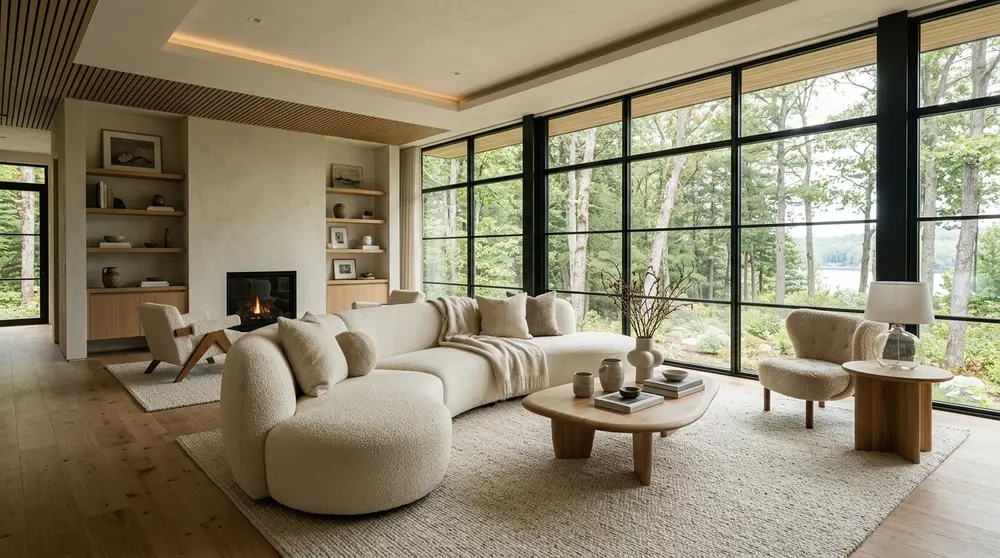
Modern living room design in 2026 centers on "warm minimalism," which combines clean architectural lines with tactile, natural materials like oak and bouclé. The most effective designs prioritize multifunctional layouts for hybrid work, integrated smart lighting systems, and biophilic elements that improve air quality and mental well-being. It’s about creating a soft landing for your life.
Key Takeaways
- Warm minimalism replaces stark whites with earthy tones like terracotta and sage.
- Sustainable materials with eco-impact certifications are now a design standard.
- Multifunctional zones are essential for balancing relaxation and remote work.
- Smart home technology should be invisible, featuring hidden cables and voice-controlled lighting.
- Biophilic design, including indoor vertical gardens, remains a top priority for urban air quality.
Modern design used to mean "new," but in 2026, it means "intentional." I spent years following the "less is more" rule until I realized that a room with nothing in it feels like a waiting room, not a home. Today, we focus on warm minimalism, where every piece serves a purpose but carries a heavy dose of texture. It’s a shift from looking good to feeling good.
| Feature | 2025 Standard | 2026 Modern Shift |
|---|---|---|
| Color Palette | Cool Greys / White | Terracotta / Sage / Oat |
| Tech Integration | Visible Hubs/Wires | Invisible / Voice-First |
| Main Material | Polished Chrome | Brushed Oak / Stone |
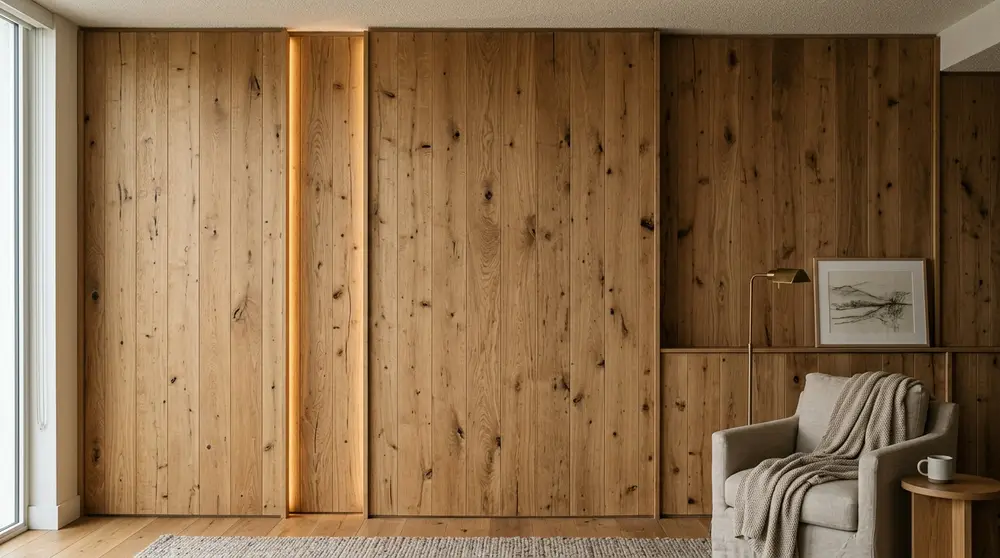
1. Natural Oak Paneling – The Texture King
Vertical oak slats provide a rhythmic, architectural feel that hides imperfections in your walls while adding immense warmth. I once used these to hide a jagged concrete pillar in a downtown apartment, and it became the room’s favorite feature. It’s the smell of the wood that gets you first.
Standout Features
The texture of real wood beats any wallpaper every single time. It absorbs sound, making those echoey open-plan spaces feel much tighter and more private. Keep the finish matte to avoid that dated 1970s "basement" shine that reflects light in all the wrong ways. I prefer a clear oil that lets the grain show through naturally.
- Who it's for: Homeowners with large, echoing rooms or those who want to hide wall damage without messy plaster work.
- Pricing: High-quality white oak slats typically run between $18 and $30 per square foot depending on the thickness.
- Honest Drawbacks: Dust loves to live between the slats. You’ll need a specialized vacuum attachment to keep it clean, and poor installation leads to warping in humid weather.
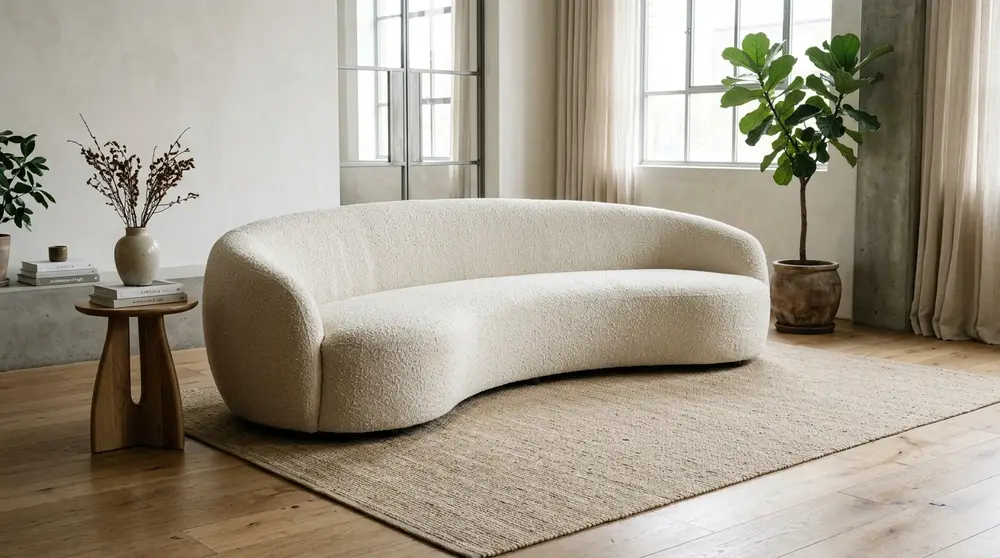
2. Curved Bouclé Sofas – The Conversation Starter
Organic shapes are taking over because they break the rigid lines of modern apartment architecture. A curved sofa naturally encourages conversation because people sit at a slight angle toward each other rather than in a straight line. It feels more human. I’ve seen these transform a stiff room into a social hub in minutes.
Standout Features
Bouclé remains the king of fabrics in 2026 because of its durability and "nubby" texture. It hides small spills surprisingly well, though I always recommend a performance-treated version if you have kids or pets. It feels expensive without being fragile. The lack of sharp corners makes the whole room feel safer and more fluid.
- Who it's for: People who host small gatherings and want a cozy, intimate vibe that doesn't feel like a corporate lobby.
- Pricing: A well-made 8-foot curved sofa starts around $2,500 and can go up to $7,000 for designer Italian brands.
- Honest Drawbacks: They are a nightmare to move. If your doorway is less than 32 inches wide, you might be stuck with a sofa that stays on the lawn.
Once you've nailed the main living area, the real challenge is carrying that same 2026 aesthetic into your private sanctuary: 30 Modern Bedroom Interior Design Ideas 2026 →
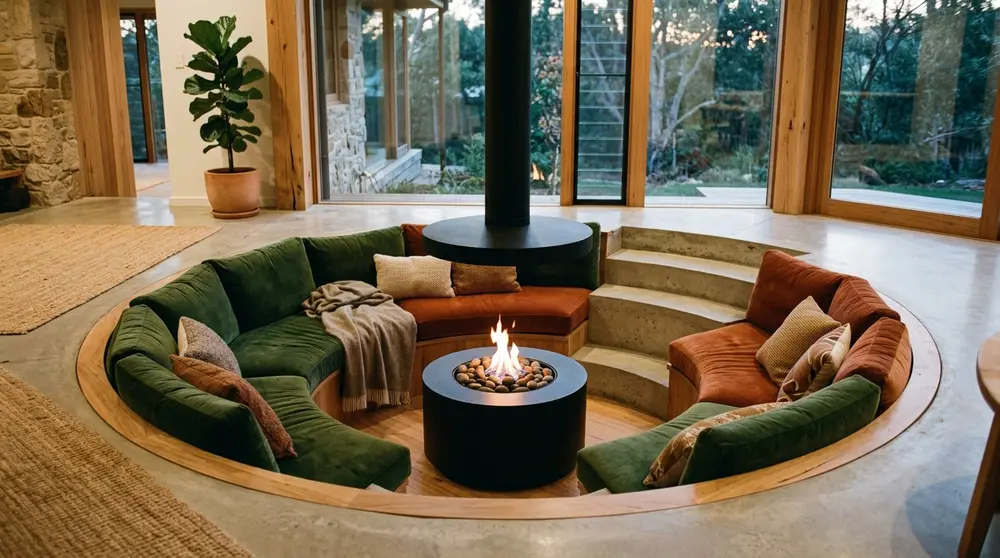
3. Sunken Conversation Pits – The Retro Revival
The 1960s are back, but with a refined, minimalist edge that works for modern living. Sunken pits create a dedicated "analog" zone where the focus is entirely on the people you are with, physically separating the social area from the rest of the floor plan. It’s a bold architectural move.
Standout Features
Building these into an existing slab is expensive, so many of my clients are now opting for "faux pits." We use raised platforms around a central seating area to create the same intimate, grounded feeling without the heavy jackhammering. It makes the room feel like it has layers. It’s the ultimate statement of luxury.
- Who it's for: Homeowners building from scratch or doing a total gut renovation who value social interaction over TV time.
- Pricing: A custom-built pit can add $8,000 to $15,000 to your budget for framing and custom upholstery.
- Honest Drawbacks: They can be a tripping hazard if not lit properly. They also make the room layout permanent, so you can’t just rearrange the furniture next year.
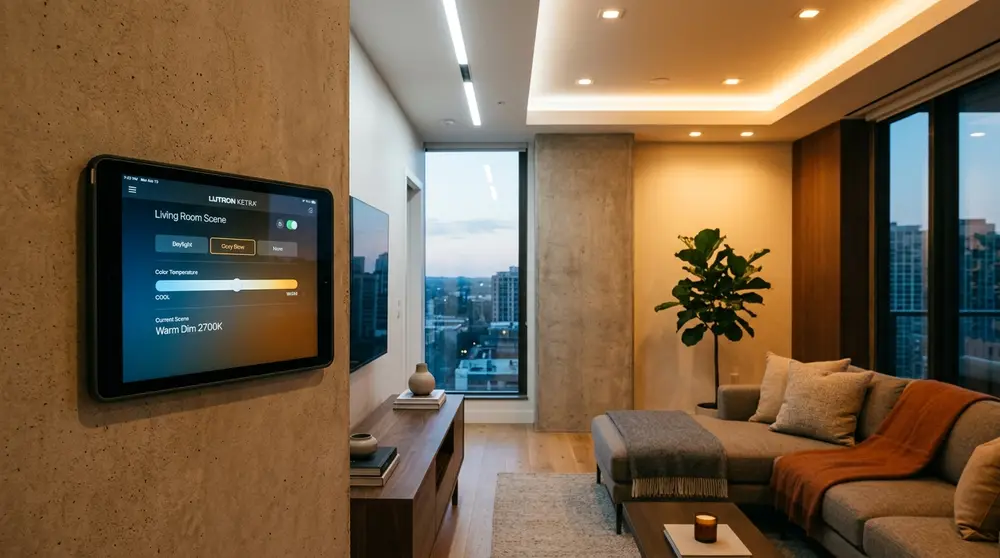
4. Lutron Ketra Smart Lighting – The Mood Shifter
Lighting in 2026 is about "scenes," not just flipping a switch on the wall. Your living room should automatically shift from a bright, cool 4000K for cleaning to a warm, sunset-mimicking 2700K as evening approaches. It mimics the sun’s natural rhythm. I tell clients this is the most important tech they’ll buy.
Standout Features
I learned the hard way that you shouldn't just buy "smart bulbs" from a grocery store. Instead, install a system like Ketra that can render millions of colors with high precision. It keeps the tech invisible and the interface intuitive for guests. The light quality is so high that it makes your furniture look three times more expensive.
- Who it's for: Anyone who suffers from the winter blues or works from home and needs to shift the energy of the room throughout the day.
- Pricing: A full living room system starts at $3,500 and can easily hit $10,000 for professional installation.
- Honest Drawbacks: The setup is complex. If your Wi-Fi goes down or the hub glitches, you might find yourself sitting in the dark until you reboot the system.
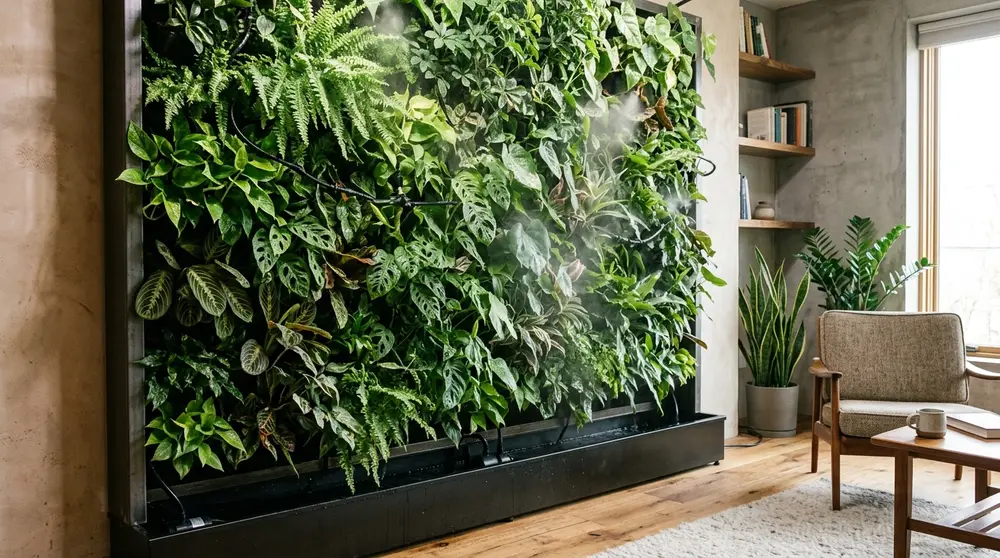
5. Self-Irrigating Living Walls – The Air Purifier
Living walls do more than just look good; they actually clean the air in city homes. In crowded areas, these systems scrub CO2 and add moisture to dry, air-conditioned rooms. It’s like your house has its own set of lungs. I’ve noticed my clients usually feel a lot more relaxed around them.
Standout Features
Most modern systems now feature self-contained irrigation with a hidden pump. You only need to top up a reservoir once every two weeks, making it possible for even the most "black-thumbed" owners to maintain a lush green backdrop. It creates a vertical garden that doesn't take up any floor space. It’s a slice of the jungle indoors.
- Who it's for: City dwellers who lack a backyard and want to improve their indoor air quality naturally.
- Pricing: Professional systems cost about $150 per square foot, including the plants and the pump.
- Honest Drawbacks: If the pump fails or a leak occurs, you could end up with water damage behind your drywall. It requires regular monitoring.
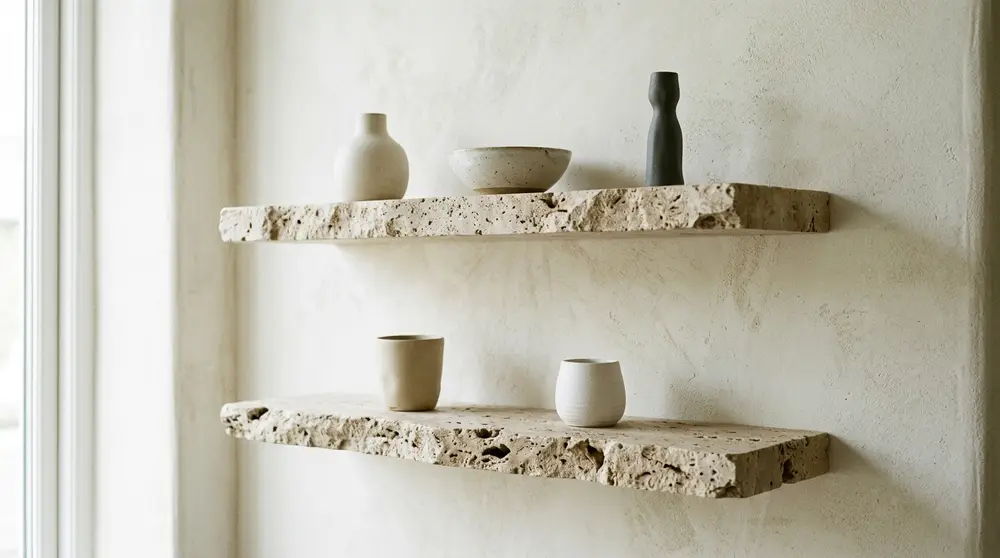
6. Floating Travertine Shelves – The Minimalist Stage
Heavy stone shelves with no visible brackets create a striking, "impossible" look that defies gravity. They serve as a minimalist stage for a few curated pieces of art or books, keeping the floor space completely clear. I once saw a DIY attempt at this fail because the person used standard anchors. Stone is heavy.
Standout Features
The trick here is the internal steel "arm" bolted directly into the wall studs. Travertine has a beautiful, porous texture that feels ancient and modern at the same time. Because there are no brackets, the focus stays entirely on the objects you display. It’s a clean, high-end look that’s surprisingly sturdy.
- Who it's for: Collectors who want to display art without the clutter of traditional bookshelves or cabinets.
- Pricing: Expect to pay $800 to $1,500 per shelf for the stone and the custom steel mounting hardware.
- Honest Drawbacks: You can't change your mind easily. Once those steel arms are in the studs, you're committed to that exact spot forever.
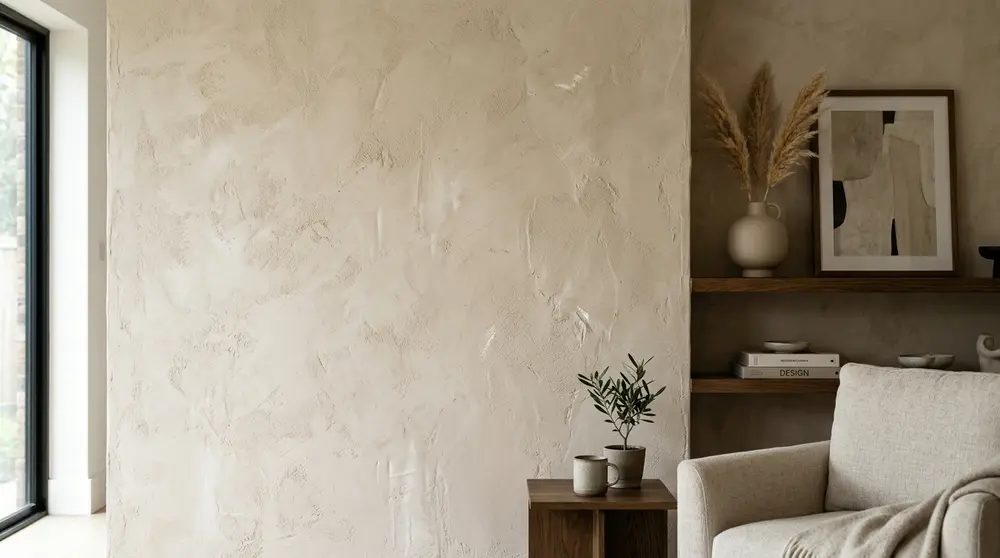
7. Lime-Wash Wall Finishes – The Soulful Surface
Standard flat paint can feel a bit "plastic" and lifeless in a modern home. Lime-wash paint, like those from Bauwerk, has a natural mineral movement and depth that reacts beautifully to light. It feels alive. When the sun hits the wall, you see different layers of the color. It adds a "soul" to the room.
Standout Features
It’s a breathable, non-toxic finish that actually improves with age. The application process creates a hazy, mottled look that mimics the walls of an old Italian villa but in a modern, neutral palette. It’s an easy way to add texture without adding physical bulk to the walls. It feels cool to the touch.
- Who it's for: People who want a high-end, custom look but prefer the simplicity of painted walls over expensive paneling.
- Pricing: The paint itself is about $80 per gallon, but professional application can cost $5 to $10 per square foot.
- Honest Drawbacks: It’s hard to touch up. If you scuff a lime-washed wall, you can't just dab it with a brush; you usually have to re-do the whole section.
8. Motorized Art Media Covers – The TV Vanisher
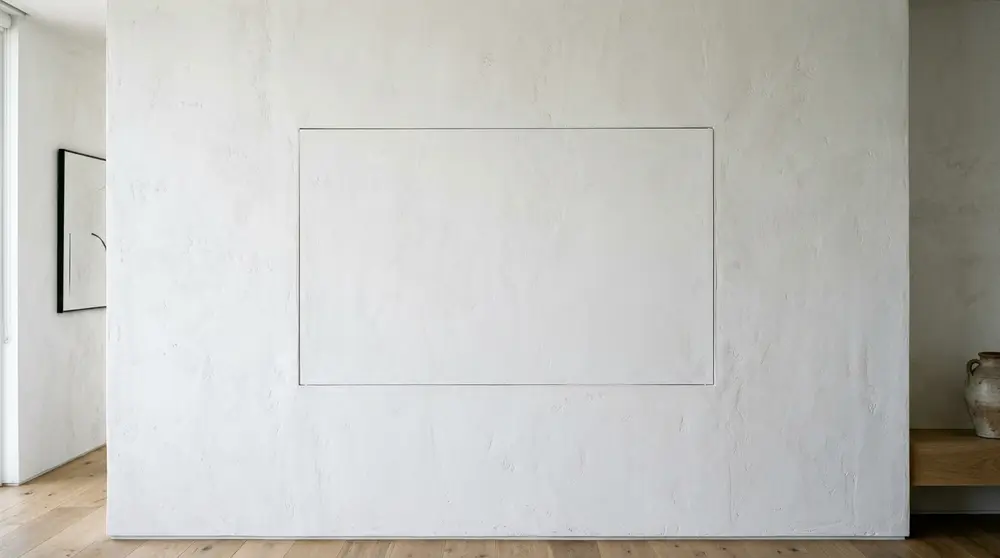
The giant black screen is the enemy of good design. In 2026, we are hiding screens behind motorized art panels that slide away when it’s time for a movie. It’s a magic trick. One minute you’re looking at a landscape painting, and the next, you have an 85-inch 8K theater. It’s the ultimate flex.
Standout Features
This system allows the living room to remain a social, screen-free space until you decide otherwise. The motors are now silent and can be integrated into your smart home system. It eliminates the "black hole" effect that a large TV creates on a feature wall. It’s about taking back your room’s aesthetic.
- Who it's for: Minimalists who hate the look of electronics but still want a high-end home theater experience.
- Pricing: Motorized art lifts start around $3,000, not including the TV or the artwork itself.
- Honest Drawbacks: It’s another mechanical part that can break. If the motor jams, you might be stuck watching a painting instead of the big game.
9. Oversized Noguchi Paper Pendants – The Soft Anchor
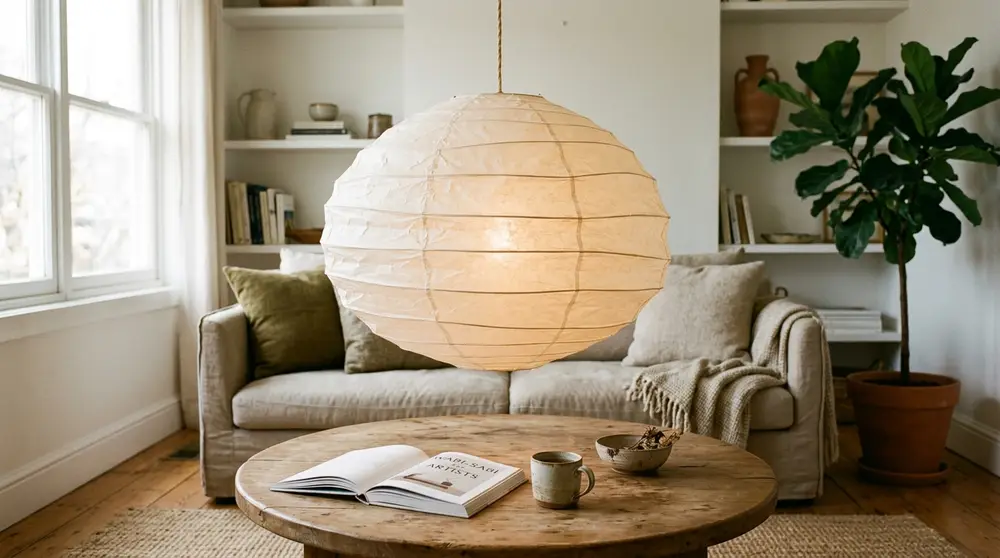
A single, massive light fixture can define an entire room. We’re moving away from many small recessed "pot lights" and toward one or two sculptural pieces like the classic Noguchi pendants. They look like art even when the power is off. They diffuse light beautifully, eliminating the harsh shadows that make rooms feel cold.
Standout Features
Large paper lanterns provide a huge visual impact without feeling heavy or imposing. They act as a "soft anchor" for the seating area, pulling all the furniture together into a cohesive zone. The warm glow through the paper is much more flattering for skin tones than direct LED light. It’s a timeless design choice.
- Who it's for: Homeowners with high ceilings who need to fill the vertical space without using heavy, dark chandeliers.
- Pricing: Original Akari lamps range from $300 to $1,500 depending on the size and shape.
- Honest Drawbacks: They are fragile. One stray balloon or a rough dusting session can puncture the paper, and they are hard to repair.
10. Mixed Metal Hardware – The Curated Look
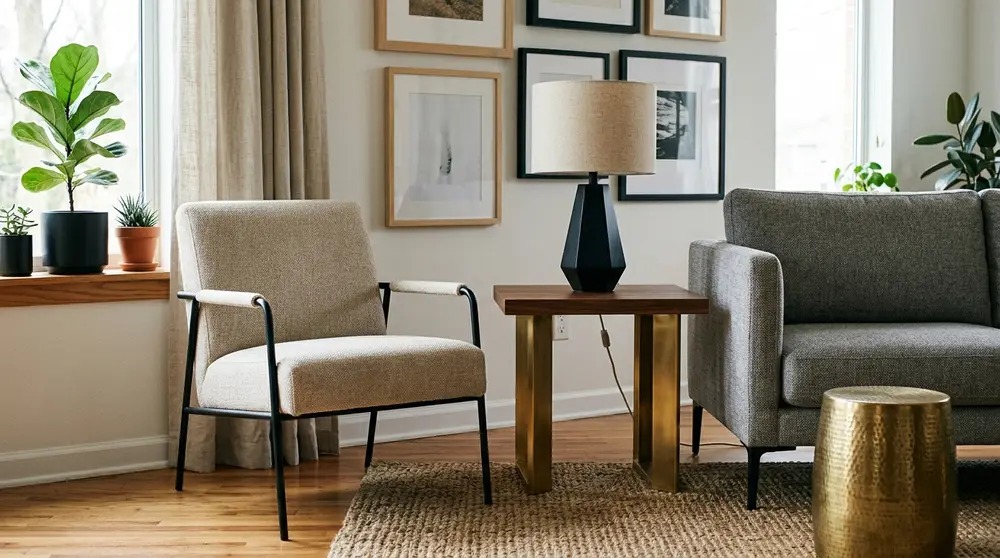
The old rule about matching all your metals is gone. Combining matte black hardware with warm brushed brass adds a layer of curated history to a brand-new living room. It feels more organic. I usually use black as the "anchor" for legs and frames, then use brass for the "jewelry" like lamps.
Standout Features
This approach prevents a room from looking like a furniture showroom catalog. By mixing finishes, you create a space that looks like it was collected over time rather than bought in one afternoon. Brushed finishes are much more forgiving than polished ones because they don't show every single fingerprint. It’s a sophisticated, lived-in luxury.
- Who it's for: People who want a "designer" look that feels personal and unique rather than cookie-cutter.
- Pricing: Swapping hardware is cheap—usually $200 to $500 for a whole room—but the visual impact is massive.
- Honest Drawbacks: It’s easy to go overboard. If you use more than three different metal finishes, the room starts to look messy and unplanned.
11. Vapor-Mist Electric Fireplaces – The Safe Flame
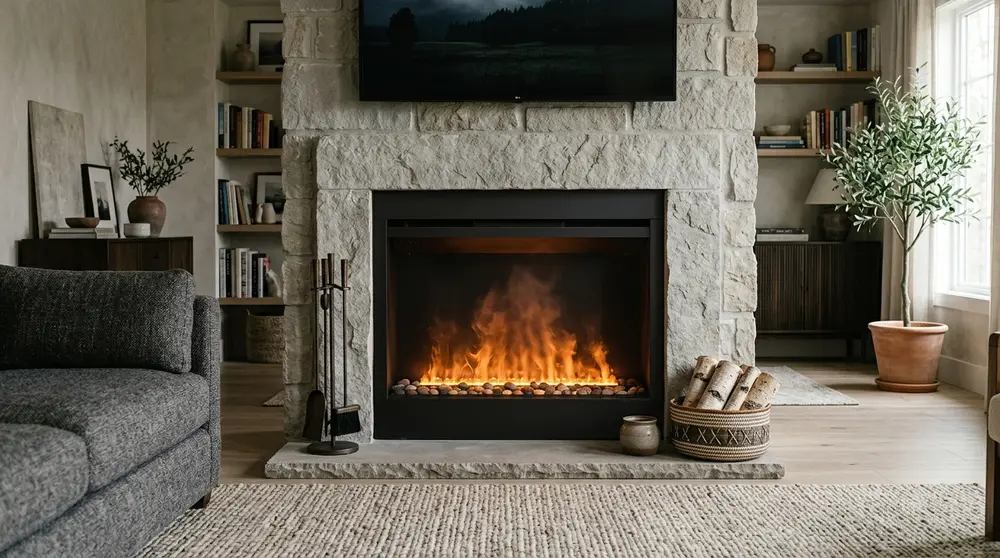
Modern fireplaces in 2026 are often floor-to-ceiling slabs of stone with a simple, horizontal flame. Electric vapor fireplaces have become my go-to for apartment projects because they require no venting. They use ultrasonic technology to turn water into a fine mist lit by LEDs. It looks incredibly real.
Standout Features
These units are safe to touch, so you can put a TV or other electronics right above them without any heat damage. You get that flickering orange flame and smoke effect, but it’s really just mist. It's a perfect solution for high-rises where you can't have a real chimney. It sets the mood instantly.
- Who it's for: Apartment dwellers or families with small children who want the ambiance of a fire without the smoke or heat.
- Pricing: A high-quality 40-inch vapor insert costs between $2,000 and $4,500.
- Honest Drawbacks: You have to refill the water tank. If you have hard water, mineral deposits will eventually clog the misting system.
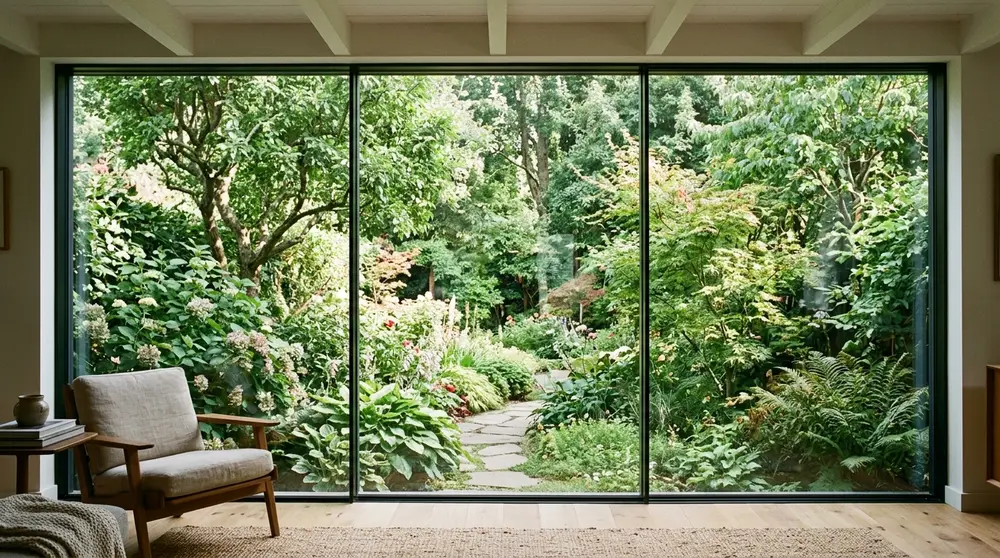
12. Triple-Pane Slim-Frame Glass – The Invisible Barrier
The boundary between inside and out is disappearing. Large glass panels maximize natural light, which is the most effective way to make a small living room feel massive. Triple-pane glass is now the standard for energy efficiency. It blocks 90% of the heat while letting the light through. It’s a smart investment.
Standout Features
I always suggest "slim-frame" aluminum systems where the frames are only an inch wide. When you look out the window, you barely see the metal, making the view feel like a painting. It keeps your AC from running 24/7 in hot climates like Dhaka. It’s a sleek, industrial look that fits perfectly with wood.
- Who it's for: Homeowners with a view or those who want to maximize natural light without skyrocketing their electric bills.
- Pricing: These systems are a major investment, often costing $10,000 to $30,000 for a large living room wall.
- Honest Drawbacks: They are heavy and require professional installation. If the seal fails, the glass will fog up, and it’s expensive to fix.
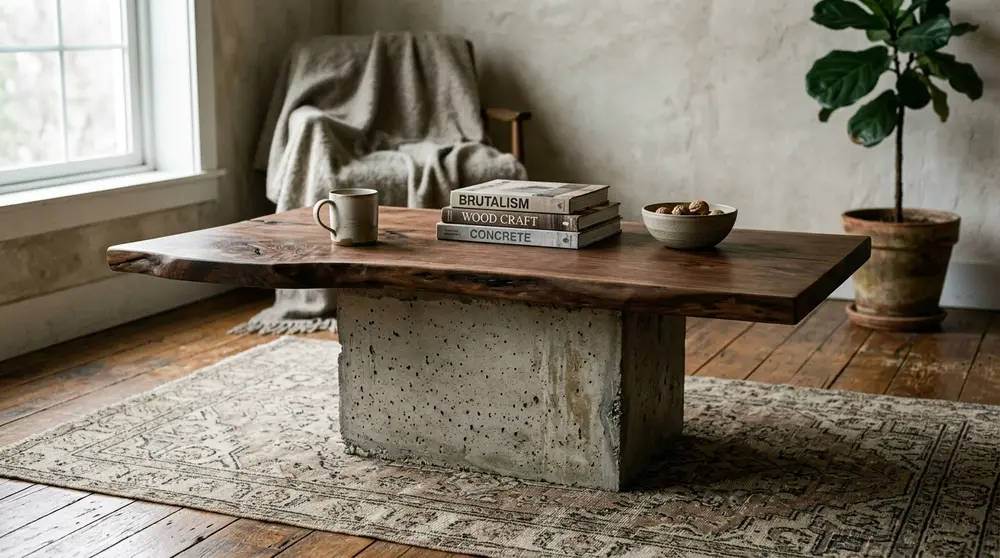
13. Poured Concrete Coffee Tables – The Brutalist Anchor
Think of your coffee table as a small piece of sculpture in the center of the room. We’re seeing a shift toward heavy, grounded materials like poured concrete. Raw concrete adds a "weight" to a room that wood or metal can’t match. It’s a bold, industrial choice that feels incredibly modern and permanent.
Standout Features
Concrete is nearly indestructible and gets better with age as it develops a unique patina. To keep it from feeling too "cold," I always pair it with something very soft, like a sheepskin throw nearby. It’s that contrast between the hard shell and the soft interior that defines the 2026 look. It’s rock solid.
- Who it's for: Families with kids or pets who need furniture that can take a beating and still look artistic.
- Pricing: A custom GFRC (Glass Fiber Reinforced Concrete) table usually costs between $1,200 and $2,800.
- Honest Drawbacks: They are incredibly heavy. I once had to hire three extra movers just to get one into a 4th-floor walk-up.
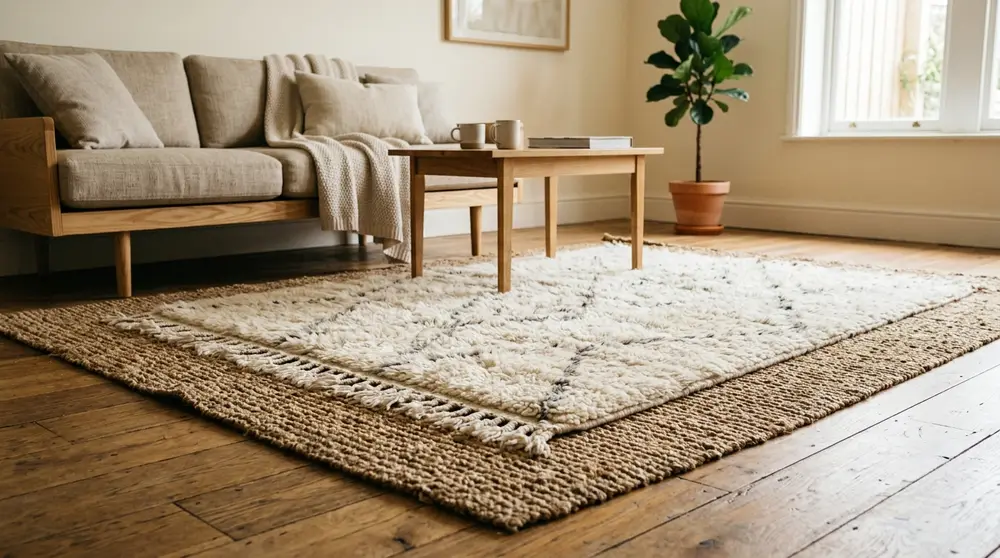
14. Layered Jute and Wool Rugs – The Texture Stack
Jute is the ultimate "workhorse" material because it’s affordable, eco-friendly, and adds a natural texture that balances out soft fabrics. I often layer a smaller, high-pile wool rug on top of a giant jute rug. This gives you durability in high-traffic areas and softness where your feet actually rest. It’s practical.
Standout Features
The natural golden-tan color of jute is timeless and hides dirt better than almost any other material I’ve used. By layering, you can change the look of the room just by swapping the top rug. It’s a cost-effective way to get a high-end, textured look without spending thousands on one massive silk rug.
- Who it's for: People on a budget who want a "designer" layered look that’s also easy to maintain.
- Pricing: You can get a large jute base for $300 and a nice wool topper for $500.
- Honest Drawbacks: New jute rugs shed tiny fibers for the first few weeks. You’ll be vacuuming every day until it settles down.
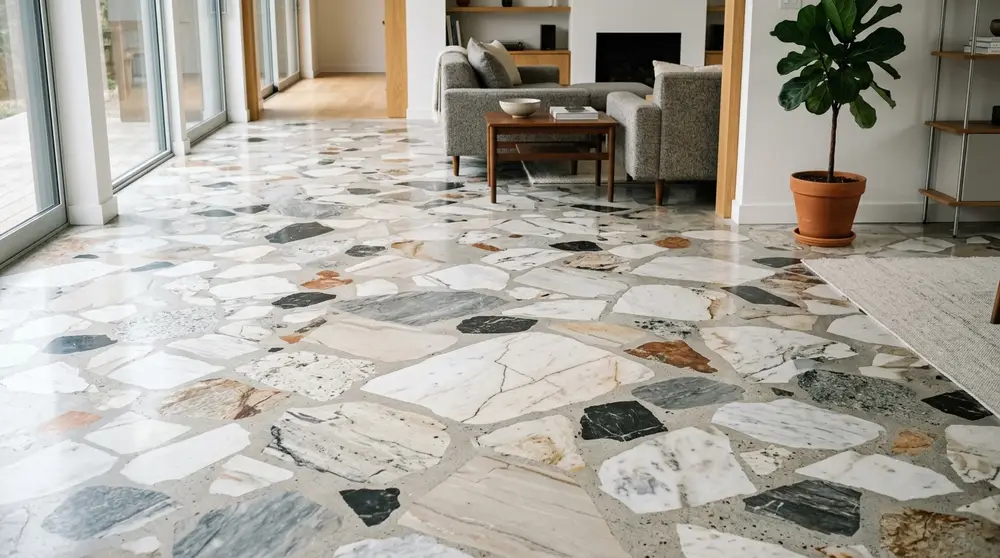
15. Large-Chip Terrazzo Flooring – The Modern Mosaic
Terrazzo has evolved from the speckled 1950s style to a more artistic, large-chip format. It’s incredibly durable and stays cool underfoot, which is a massive plus in warmer climates. Modern terrazzo often uses recycled glass or marble chips. It’s a sustainable way to get a custom, high-end floor that lasts forever.
Standout Features
What I love about terrazzo is that you can pick the "aggregate" to match your room. You can mix in pieces of green marble, clear glass, or even bits of brass. It feels like a continuous sheet of stone without the grout lines of tile. It’s remarkably easy to clean and practically indestructible. It’s pure art.
- Who it's for: Homeowners doing a full renovation who want a unique, permanent floor that stays cool in the summer.
- Pricing: Poured terrazzo is expensive, ranging from $25 to $50 per square foot for professional installation.
- Honest Drawbacks: It’s a messy, multi-day process to install. If you’re already living in the house, the grinding dust will get everywhere.
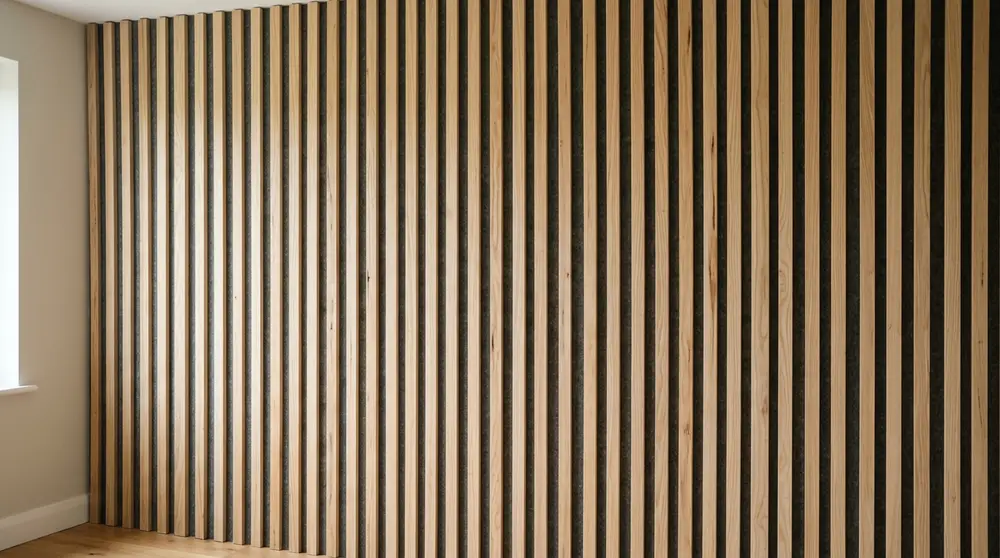
16. Acoustic Felt-Backed Slats – The Sound Healer
Open-plan living is great for light but terrible for sound. Wood slats with felt backing are the secret weapon for making a large room feel quiet and expensive. I once worked on a penthouse where the echo was so bad you couldn't hear the person next to you. These fixed it instantly.
Standout Features
The black felt backing creates a "shadow line" between the wood slats that gives the wall incredible depth. It absorbs mid-to-high frequency sounds, cutting down that annoying "pinging" echo. It’s a functional upgrade that looks like a high-end design choice. They come in easy-to-install panels that screw directly into the drywall. It’s fast.
- Who it's for: Anyone with high ceilings, hardwood floors, or a minimalist room that feels a bit too "loud" and echoey.
- Pricing: Panels usually cost about $150 to $200 for a 2x8 foot section.
- Honest Drawbacks: You have to be careful with the alignment. If your first panel is slightly crooked, the whole wall will look off by the end.
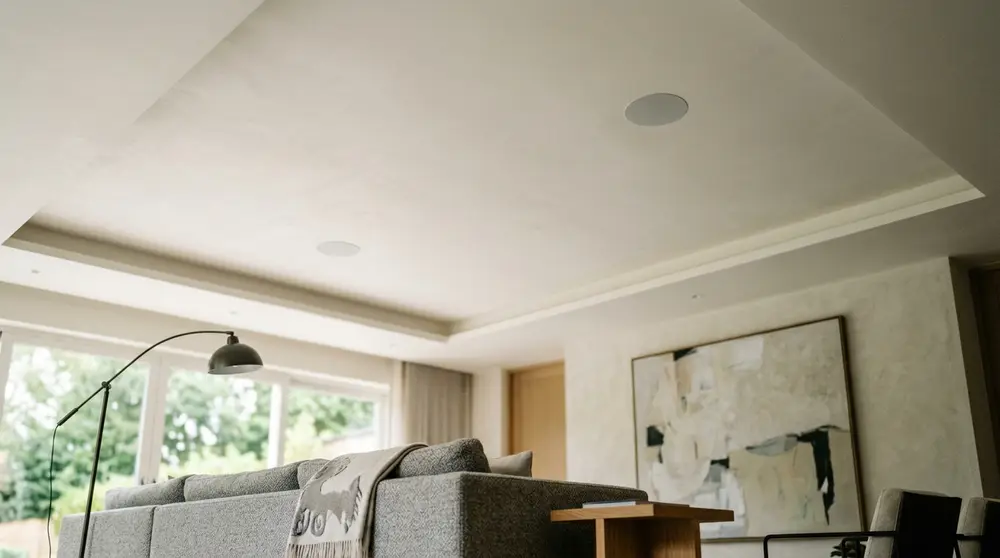
17. Invisible In-Wall Speakers – The Sonic Ghost
In 2026, the best sound is heard, not seen. We are installing "vibrating plate" speakers behind the drywall, turning the entire wall into a high-fidelity speaker. This keeps the walls free of those "acne-like" plastic grilles. It’s the ultimate move for a minimalist who wants a cinematic experience without the black boxes.
Standout Features
Installing these speakers is a trip because you actually plaster *over* the speaker. Once it's sanded and painted, the sound is crystal clear, but the wall looks perfectly flat. There’s no "sweet spot" for the sound; it’s just everywhere in the room. It’s perfect for parties because the music doesn't blast in anyone's face.
- Who it's for: Audiophiles who demand high-end sound but refuse to let speakers ruin their minimalist interior design.
- Pricing: A pair of high-quality invisible speakers starts at $1,500, plus the cost of professional installation and plastering.
- Honest Drawbacks: If a speaker blows, you have to cut a hole in your finished wall to replace it. It’s a high-stakes installation.
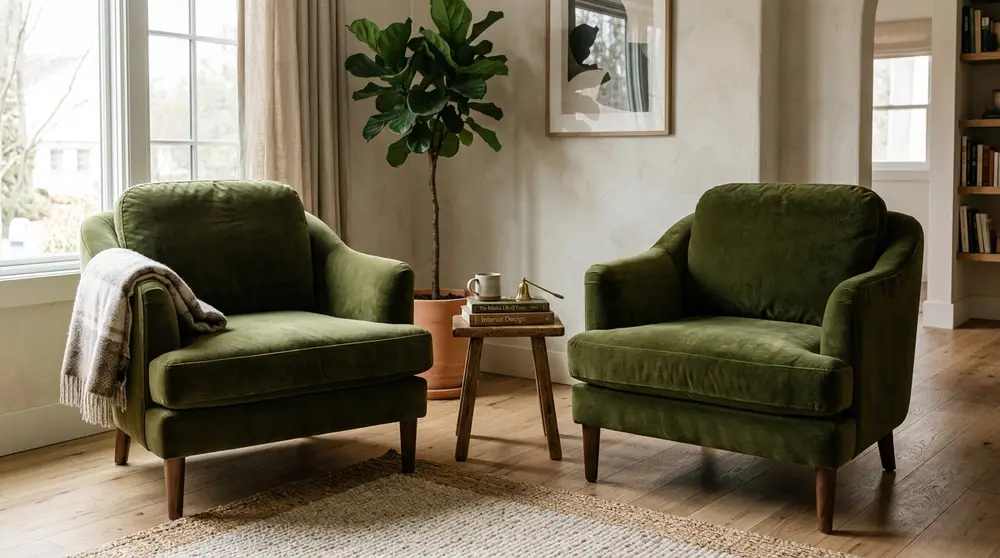
18. Performance Velvet Seating – The Practical Luxury
Every modern room needs one "punch" of color to feel alive. Olive green is the "new neutral" for 2026, and performance velvet is the best way to wear it. It feels connected to nature but adds a layer of sophisticated luxury. It’s the only way to go if you actually live in your home.
Standout Features
Performance velvet is made from high-grade polyester treated to repel liquids. I’ve seen red wine bead up on it and roll right off. It doesn't crush or "bruise" like traditional silk velvet, so it stays looking new for years. It’s incredibly soft and adds a much-needed visual anchor to a neutral room. It’s tough.
- Who it's for: Families and pet owners who want the look of luxury without the constant fear of stains or wear.
- Pricing: An armchair in performance velvet usually costs between $800 and $1,500.
- Honest Drawbacks: Static electricity can be an issue in dry winters, and it tends to attract pet hair like a magnet.
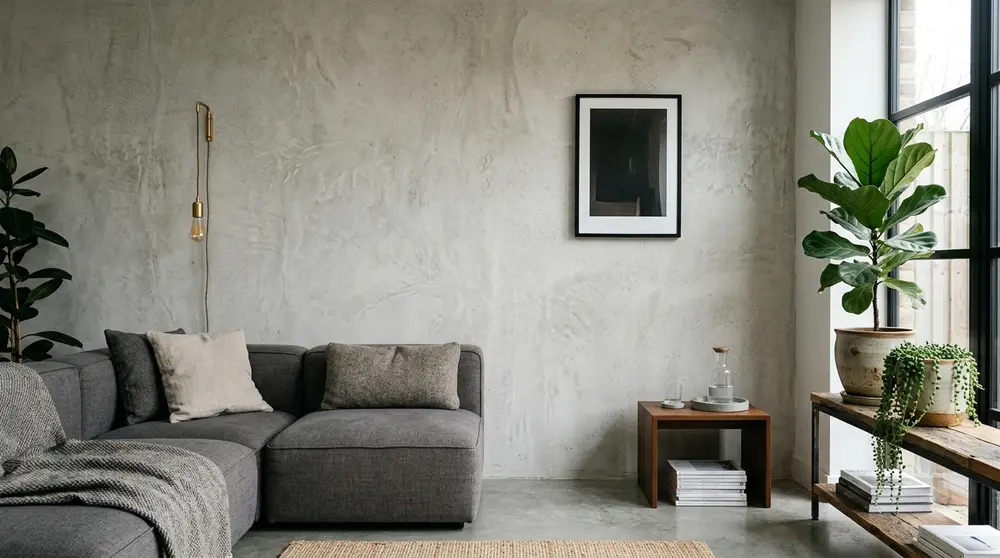
19. Micro-Cement Feature Walls – The Industrial Silk
Micro-cement is a thin, polymer-modified coating that gives you the look of solid concrete without the weight or thickness. It’s applied by hand with a trowel, creating a subtle, swirly texture that feels like industrial silk. It’s a great way to add an edgy, modern vibe to any room. It’s very sleek.
Standout Features
You can put this over almost any surface, including drywall or even old tile. It’s waterproof and holds up well, making it a solid choice for walls behind a TV or fireplace. The finish is smooth with no grout lines to distract you. It has a very high-end feel.
- Who it's for: People who love the Brutalist aesthetic but don't want to deal with the structural requirements of real concrete.
- Pricing: Professional application costs about $15 to $25 per square foot.
- Honest Drawbacks: It can crack if the building shifts. It requires a skilled artisan to apply it; a bad DIY job looks like a messy basement floor.
20. Switchable Smart Privacy Glass – The Tech Partition
In smaller homes, we use glass walls to maintain light flow, but sometimes you need privacy. Switchable smart glass changes from clear to opaque in milliseconds with the touch of a button. It’s a high-tech solution that replaces the "clunky" feel of accordion doors or heavy room dividers. It’s pure magic.
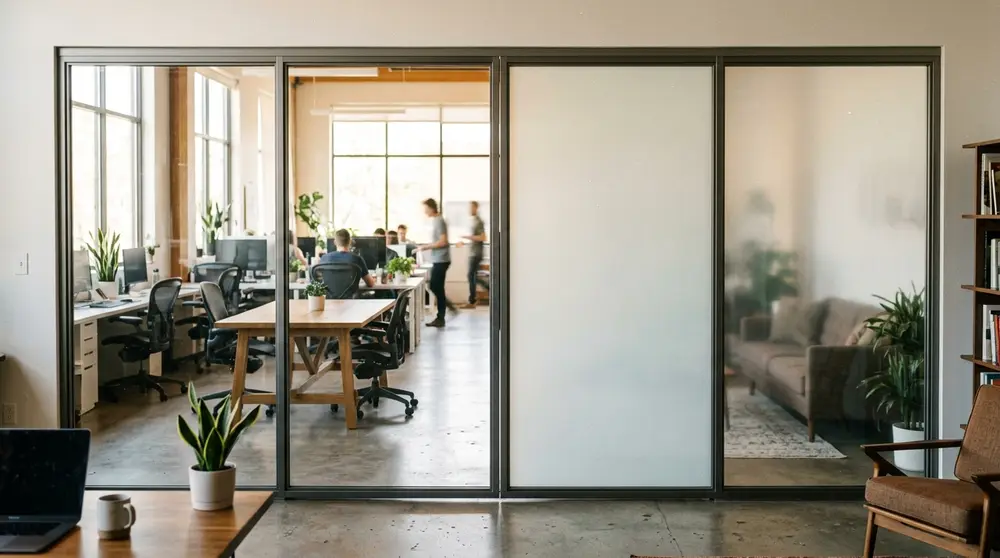
Standout Features
The glass works by running a tiny electric current through a film between the panes. During the day, the glass is clear and the whole space feels huge. At night, hit the switch, and it’s a private, frosted cocoon. It’s the future of small-space living, providing flexibility without sacrificing any natural light. It’s very impressive.
- Who it's for: Studio apartment dwellers or those with a home office in the living room who need instant privacy.
- Pricing: Expect to pay $100 to $150 per square foot, plus electrical work.
- Honest Drawbacks: It requires a constant (though tiny) power source to stay clear. If the power goes out, the glass defaults to frosted.
21. Integrated Storage Window Benches – The Space Saver
Maximizing every square inch is a hallmark of modern design. A built-in window seat provides a cozy reading nook and often hides deep storage drawers for extra pillows. I suggest using the same wood for the seat as you do for your flooring to make it feel like a part of the architecture.
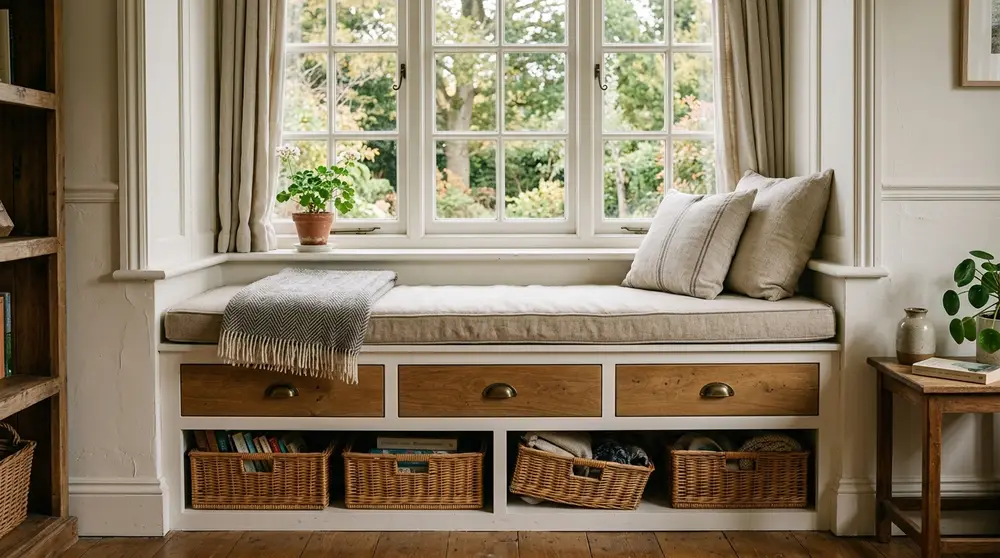
Standout Features
It turns an unused corner into the best seat in the house. By integrating storage underneath, you eliminate the need for extra cabinets that would clutter the room. Custom 4-inch high-density foam cushions make it a place you’ll actually spend four hours reading a book. It’s a thoughtful, practical addition to any modern flat.
- Who it's for: Anyone living in an urban apartment where storage is at a premium and every corner needs to serve a purpose.
- Pricing: A custom-built bench with drawers costs between $1,500 and $3,500 depending on the materials.
- Honest Drawbacks: If you don't use high-quality drawer slides, they will jam under the weight of the bench and the person sitting on it.
22. Floor-Level Modular Sectionals – The Flexible Lounge
The "L-shaped" sectional is being replaced by modular pieces that can be moved around like LEGO bricks. Low-profile seating makes ceilings feel higher by keeping the "horizon line" of the furniture low. It creates an airy, expansive feeling even in standard rooms. It feels modern and completely "un-fussy."
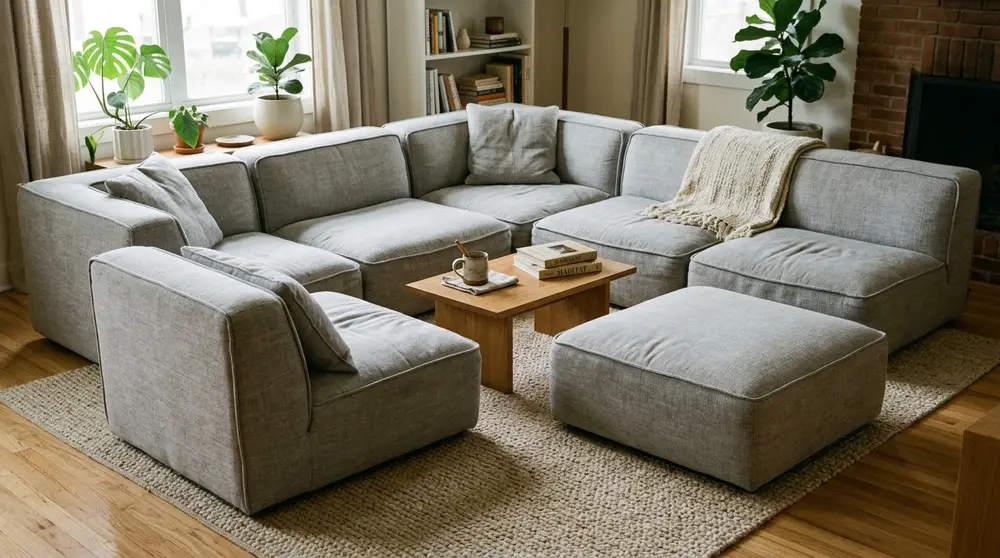
Standout Features
You can change your room layout based on whether you're hosting a party or a movie night. Most modular sofas in 2026 sit directly on the floor, which looks incredibly sleek. It encourages a more relaxed, "lounge" style of living that fits the warm minimalism aesthetic perfectly. It’s the ultimate in furniture versatility.
- Who it's for: Renters who move often or homeowners who like to change their room layout every few months.
- Pricing: High-quality modular sets start around $3,000 and can go up to $10,000.
- Honest Drawbacks: They can be hard to get out of if you have bad knees. The "no-leg" look also means you can't vacuum under them without moving them.
23. PVD-Coated Matte Black Fixtures – The Graphic Detail
It’s a small detail, but swapping out shiny chrome for matte black can instantly modernize a room. It provides a sharp, graphic contrast that acts like mascara for your interior design. PVD (Physical Vapor Deposition) is a process where the color is bonded to the metal at a molecular level. It’s nearly impossible to scratch.
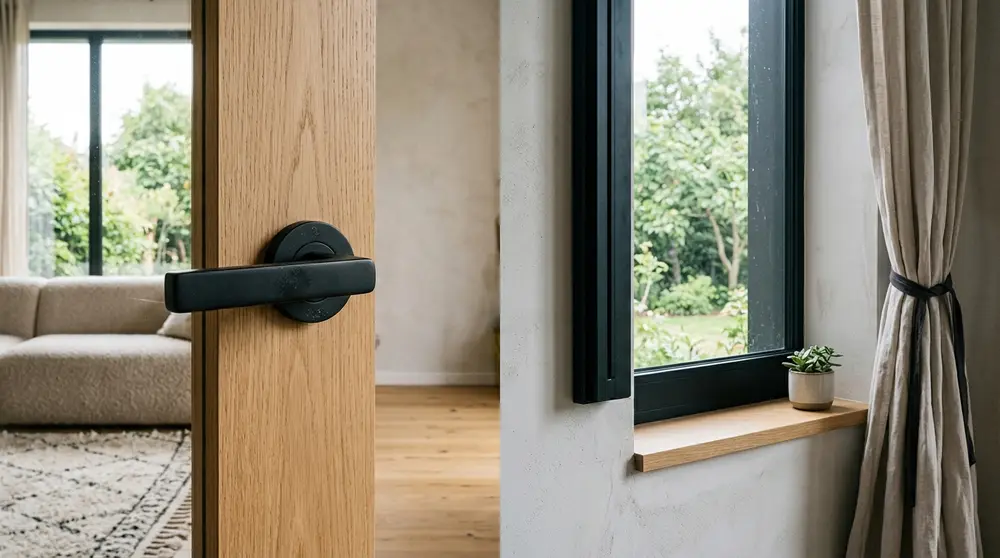
Standout Features
Standard black paint on a handle will chip within six months, but PVD stays looking new forever. It doesn't show water spots or fingerprints as much as polished finishes. I use matte black for everything from the window frames to the light switches to create a "visual rhythm" through the room. It’s a clean, professional look.
- Who it's for: Detail-oriented homeowners who want a cohesive, modern look that doesn't require constant polishing.
- Pricing: High-quality PVD handles cost about $50 to $100 each.
- Honest Drawbacks: If you buy the cheap painted versions instead of PVD, they will look terrible within a year of daily use.
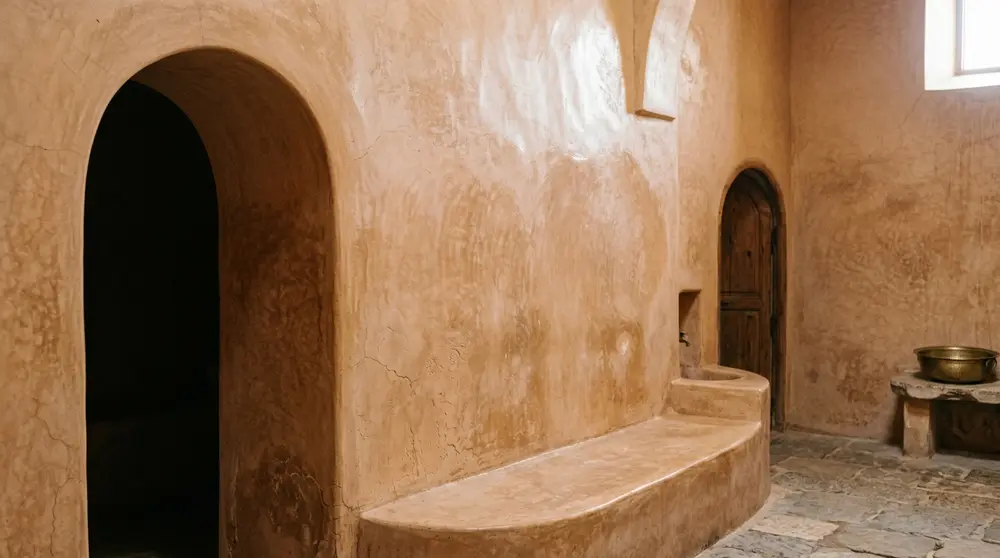
24. Tadelakt Plaster Finishes – The Waterproof Stone
Tadelakt is a Moroccan plaster polished with a stone and treated with olive oil soap. It makes a smooth, waterproof surface with a soft shine like marble. It’s a natural alternative to tile that feels both ancient and modern. It has a really nice, tactile depth.
Standout Features
It’s one of the few plasters that can handle direct water contact, making it great for feature walls near windows or indoor fountains. The hand-polished finish has a natural movement that standard paint can't replicate. It feels cool and stony to the touch. It’s a "quiet luxury" material that adds immense value to a room.
- Who it's for: Homeowners looking for a high-end, organic wall finish that is both durable and visually stunning.
- Pricing: This is a specialist craft; expect to pay $30 to $50 per square foot for professional installation.
- Honest Drawbacks: It requires maintenance. You have to re-soap the surface every few years to keep it waterproof and looking its best.
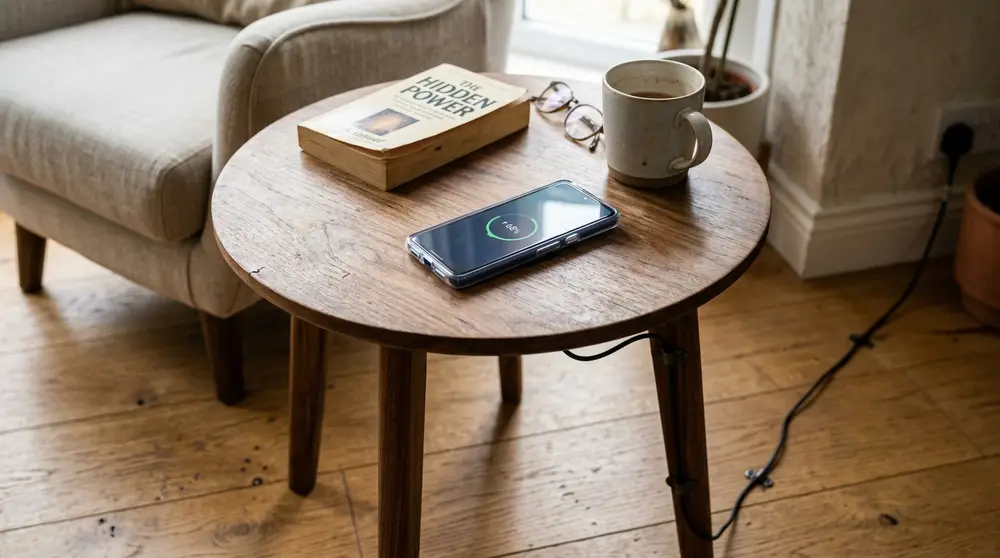
25. Under-Surface Qi2 Chargers – The Hidden Power
Cables are the enemy of minimalism. In 2026, we are building Qi2 wireless charging pads directly *under* the surface of stone or wood side tables. You just set your phone down on a specific spot, and it starts charging through the material. There are no visible ports or wires. It’s very clean.
Standout Features
This keeps your surfaces completely clean and "tech-free" in appearance. It’s a small, thoughtful detail that makes a modern home feel truly advanced. The fabricator has to grind the underside of the stone until it's thin enough for the signal to pass through. It’s a high-end architectural trick that guests always love. It’s smart.
- Who it's for: Tech enthusiasts who hate cable clutter and want their home to feel like it’s from the future.
- Pricing: Adding this to a custom table costs about $300 to $500 for the hardware and the labor.
- Honest Drawbacks: You have to remember exactly where the "sweet spot" is on the table, or your phone won't charge overnight.
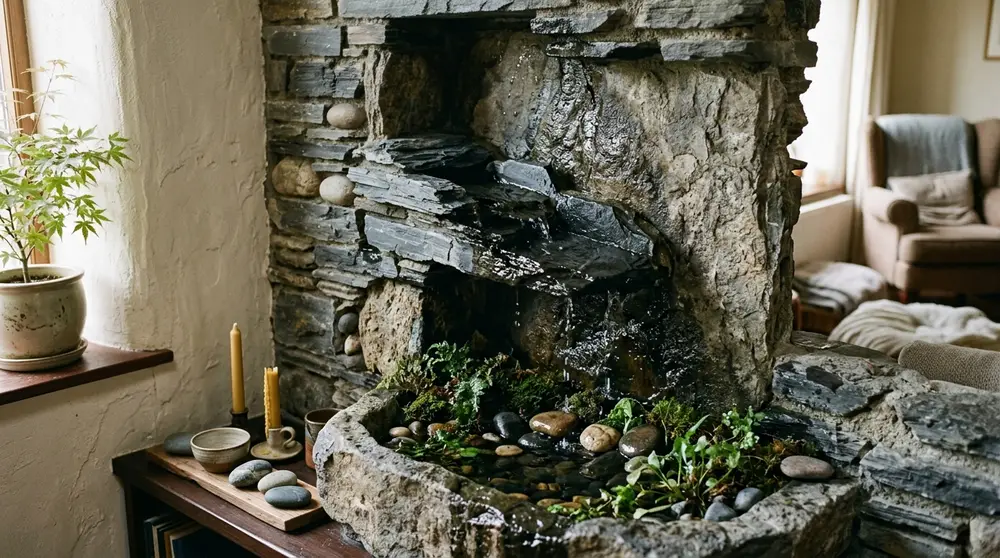
26. Slate Rill Water Features – The Soundscape
White noise is essential in loud cities. A minimalist wall-mounted water feature adds a calming soundscape that masks the hum of traffic. The 2026 version is very restrained—think of a single sheet of water sliding down a dark slate panel. It’s about movement and sound, not a flashy visual display. It’s zen.
Standout Features
It adds a layer of humidity to dry, air-conditioned rooms, which is great for your skin and your plants. I look for designs where the water "clings" to the surface of the stone as it falls to prevent splashing. It’s silent and keeps the area dry while providing a gentle, rhythmic sound. It’s a lifetime of calm.
- Who it's for: City dwellers who want to drown out street noise and create a peaceful, spa-like atmosphere at home.
- Pricing: A custom wall rill starts around $1,500 and can go up to $5,000 for large installations.
- Honest Drawbacks: You must use distilled water. If you use tap water, you’ll get white calcium lines on the stone within a month.
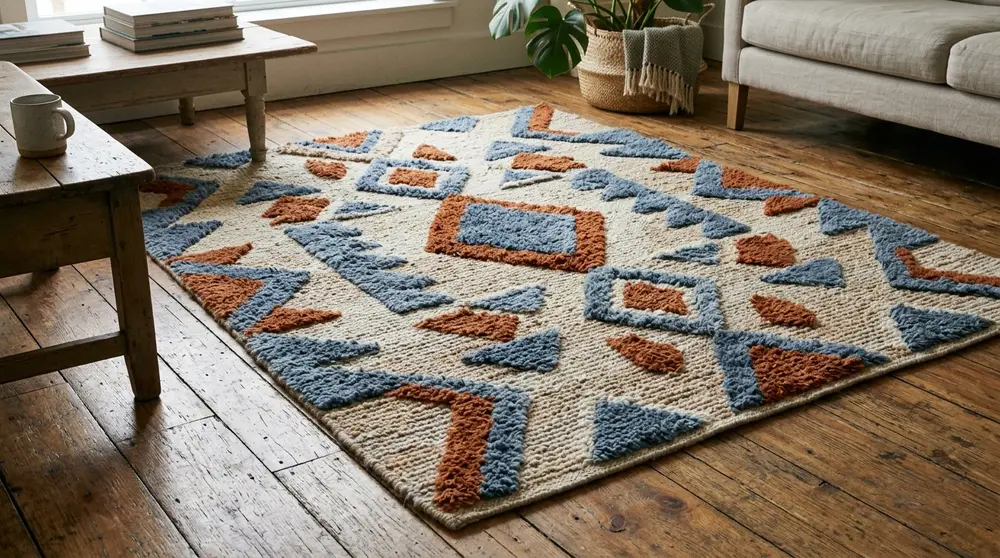
27. High-Low Pile Geometric Rugs – The 3D Floor
If your walls are plain, your floor can be the art. We’re seeing rugs with high-and-low pile heights that create "3D" geometric patterns in a single color. This adds visual interest without introducing a "loud" pattern that might date quickly. It’s a subtle way to define the seating zone. It looks expensive.
Standout Features
The variation in height creates shadows and highlights that change as you walk around the room. It’s a tactile experience for your feet and a visual one for your eyes. I suggest rugs made from New Zealand Wool; it’s soft but has a natural coating that makes it stain-resistant. It’s the best of both worlds.
- Who it's for: Minimalists who want to add "depth" to their room without using multiple colors or busy patterns.
- Pricing: A high-quality 8x10 high-low wool rug costs between $1,200 and $2,500.
- Honest Drawbacks: They can be a nightmare to vacuum. The "valleys" of the pattern collect dust that a standard vacuum head can't always reach.
28. Black-Dyed Cane Cabinetry – The Modern Texture
To soften the "industrial" side of modern design, we use woven cane. I often use cane webbing on the doors of a media console because it looks beautiful and allows air to circulate around your electronics. The black-dyed version looks much more contemporary than the honey-colored cane from the 1970s. It’s very sophisticated.
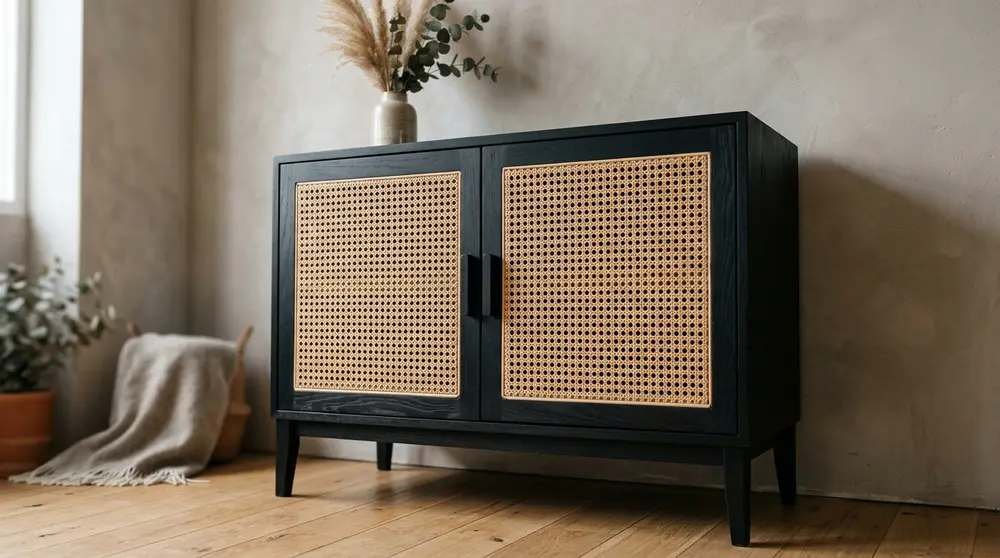
Standout Features
Cane allows infrared remote signals to pass through, so you can keep your electronics hidden while still using them. It adds a handmade, tactile feel to the room that balances out the smooth stone and metal surfaces. It’s a great way to add texture without making the room feel like a beach house. It’s timeless.
- Who it's for: People who want to hide their tech but need it to stay cool and functional without opening cabinet doors.
- Pricing: A custom cane-front console usually costs between $1,500 and $3,000.
- Honest Drawbacks: Cane can get brittle in dry rooms. You need to wipe the back with a damp cloth occasionally to keep it flexible.
29. Solar-Powered Smart Skylights – The Natural Light Hub
In many urban builds, the center of the living room can be dark. A solar-powered smart skylight can transform the energy of the space. Natural light from above is much brighter than light from windows. It highlights the textures in your stone and wood in a way that artificial light simply cannot. It’s life-changing.
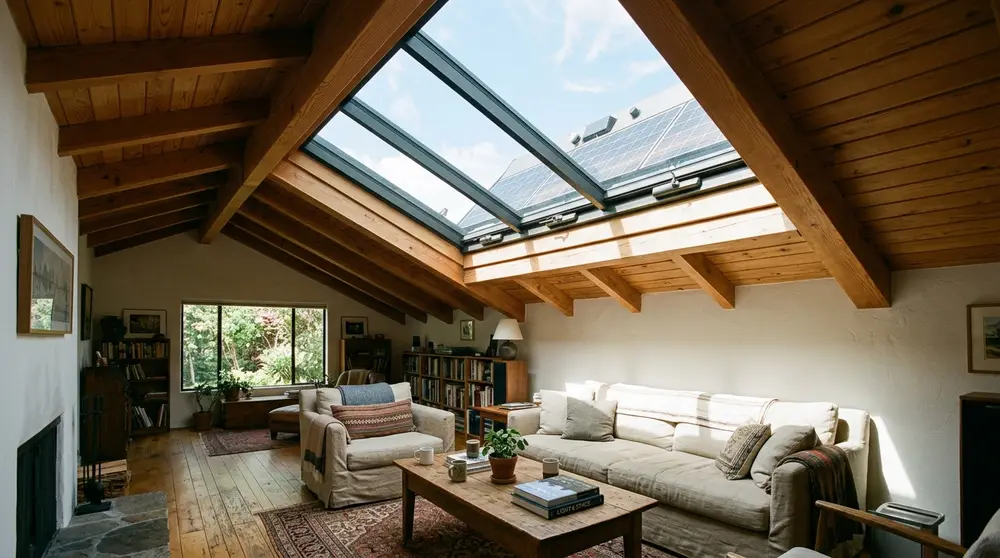
Standout Features
These skylights come with built-in rain sensors that close the window automatically if a storm rolls in. You can tint the glass from your phone if the midday sun gets too intense. It’s a sustainable way to light your home and reduce your reliance on electric bulbs during the day. It makes the room feel alive.
- Who it's for: Homeowners on the top floor or those in single-story houses with dark, windowless interior rooms.
- Pricing: Professional installation of a smart skylight costs between $2,500 and $5,000.
- Honest Drawbacks: If the installation isn't perfect, they will leak. You also have to deal with the occasional bird landing on top of your "view."
30. Grid-Pattern Gallery Walls – The Personal Touch
Modern doesn't have to mean empty. A curated gallery wall with oversized mats and thin black frames can make a large room feel personal. The secret is consistency; use the same frame style for every piece to keep it from looking cluttered. I recommend spacing them exactly 2 inches apart. It’s very precise.
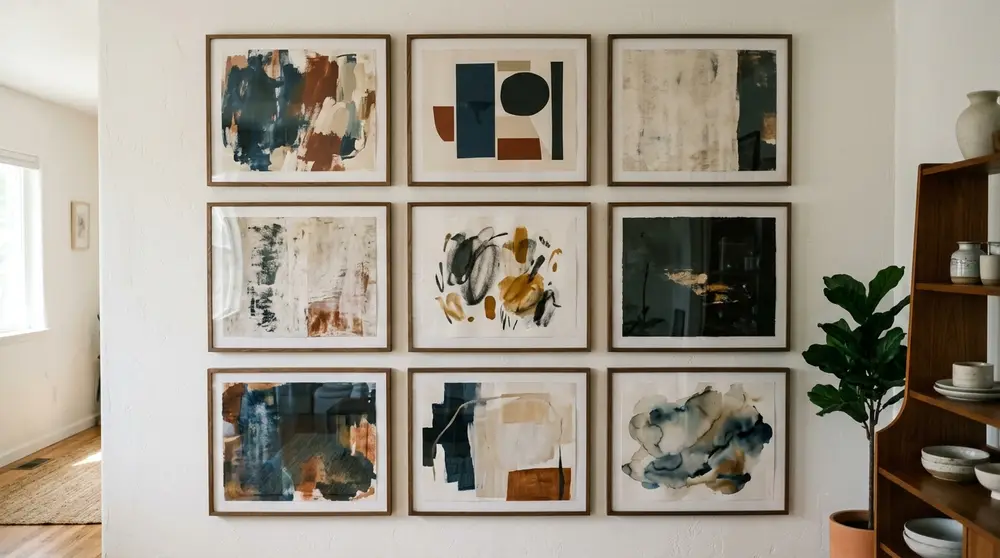
Standout Features
A grid layout provides a sense of order and architectural discipline that fits the modern aesthetic perfectly. It allows you to display a large collection of photos or art without it feeling overwhelming. It turns a plain wall into a major focal point that tells the story of the people who live there. It’s elegant.
- Who it's for: Families or art collectors who want to display many pieces while maintaining a clean, organized, and modern look.
- Pricing: Framing 12 pieces professionally can cost $1,000 to $2,000, but the impact is worth the price.
- Honest Drawbacks: It is incredibly difficult to get the alignment perfect. One crooked frame will ruin the entire grid effect.
31. Smoked Mirror Backsplashes – The Depth Creator
Using mirrors in a modern way involves "smoked" or "bronzed" glass rather than standard silver. It provides the depth and light-reflection of a mirror without the "gym-like" glare. I often place these on the back of shelving units to make them look deeper. It helps bounce light into the darker corners. It’s very moody.
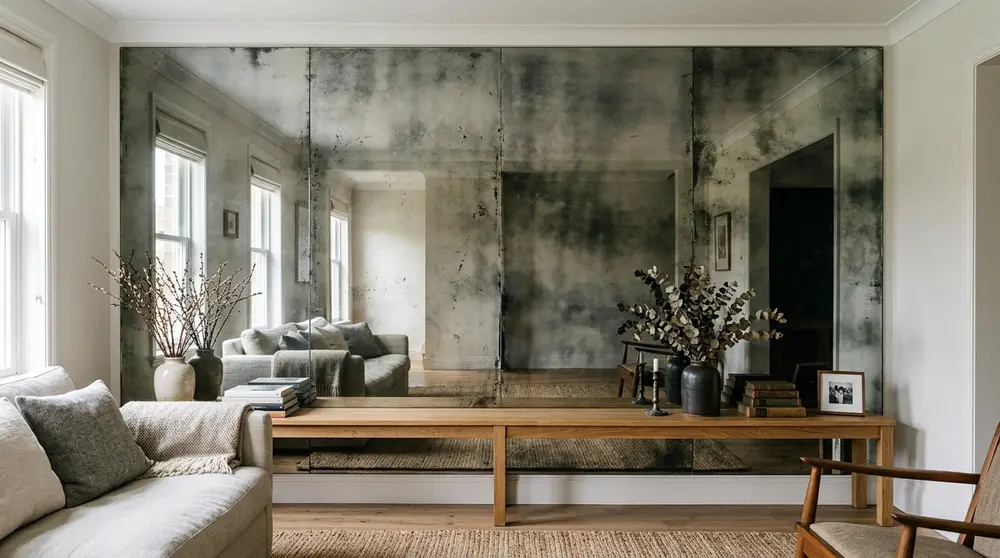
Standout Features
Smoked glass has a hazy, grey tint that feels much more high-end and mysterious than a regular mirror. It reflects the room in a softer way, creating a sense of infinite space without being distracting. It’s a great architectural trick for small apartments that need to feel larger and more sophisticated. It’s a portal.
- Who it's for: People with small living rooms who want to create an illusion of space without using dated, shiny mirrors.
- Pricing: Custom smoked mirror panels cost about $40 to $70 per square foot installed.
- Honest Drawbacks: They show every speck of dust and every fingerprint. You’ll be cleaning them constantly if you have kids or pets.
32. Distressed Limewashed Brick – The Soft Industrial
If you have an industrial space, don't hide the brick. A thin coat of limewash softens the harsh reds into a chalky, neutral tone that fits the "warm minimalism" aesthetic. Limewash is a mineral-based finish that doesn't "seal" the brick, allowing the wall to breathe. It’s a clean, healthy, and stylish way to handle old walls.

Standout Features
The application process allows some of the original brick color to peek through, creating a soft, aged texture. It’s naturally anti-fungal, which is a huge plus in humid cities. It pairs perfectly with modern, clean-lined furniture, providing a rough backdrop that makes the smooth pieces pop. It’s an easy, high-impact renovation. It’s soulful.
- Who it's for: Owners of lofts or older buildings who want an industrial look without the "heavy" feel of raw red brick.
- Pricing: Limewashing a large wall is a cheap DIY project ($100), or you can hire a pro for $500 to $1,000.
- Honest Drawbacks: It’s a permanent change. Once you limewash brick, it is nearly impossible to get it back to its original raw state.
33. Extra-Large Circular Rugs – The Social Island
Most living rooms are a series of rectangles, which can feel a bit rigid. A large circular rug "breaks" the grid and makes the seating area feel like a cozy island. It’s particularly effective in open-plan apartments where the living and dining areas bleed together. The circle creates a clear, soft boundary. It’s very inviting.
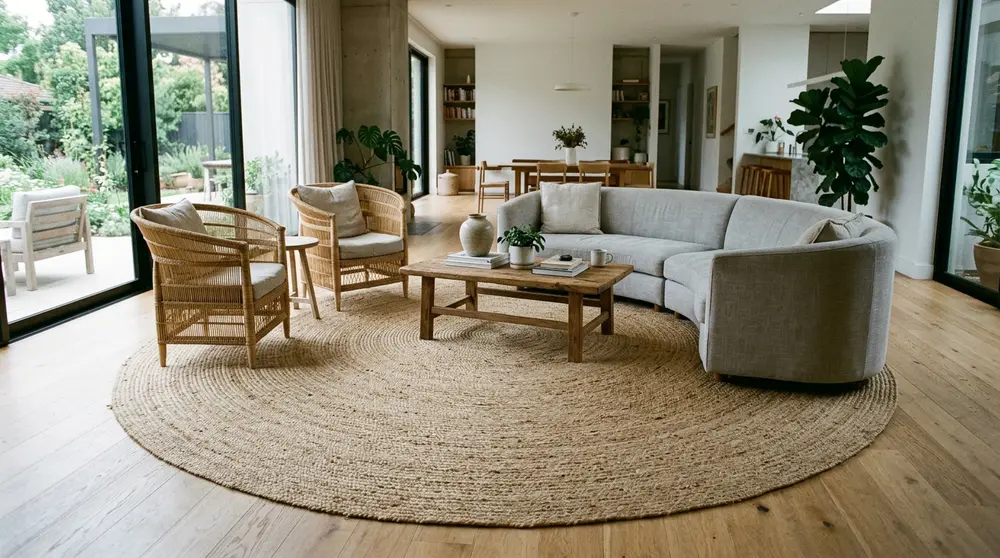
Standout Features
A circle rug needs to be bigger than you think; I usually aim for a 10-foot diameter. All the main furniture pieces should be able to "touch" the circle to create a sense of unity. It echoes the curves of a modern sofa and makes the whole room feel more intentional and less boxy. It’s a great layout fix.
- Who it's for: Homeowners with large, open-plan spaces who need to define a seating area without using physical walls or dividers.
- Pricing: Large 10-foot circular rugs in quality materials range from $1,500 to $3,500.
- Honest Drawbacks: They are harder to find than rectangular rugs, and they can make a small, narrow room feel even smaller if sized wrong.
34. Flush-Track Telescoping Doors – The Indoor-Outdoor Flow
Standard sliding doors only open halfway, which really limits your space. Telescoping doors stack the panels so you can open up 75% or more of the wall. When they're open, the balcony feels like an actual part of the living room. I suggest a flush track system for a flat transition. It looks very clean.
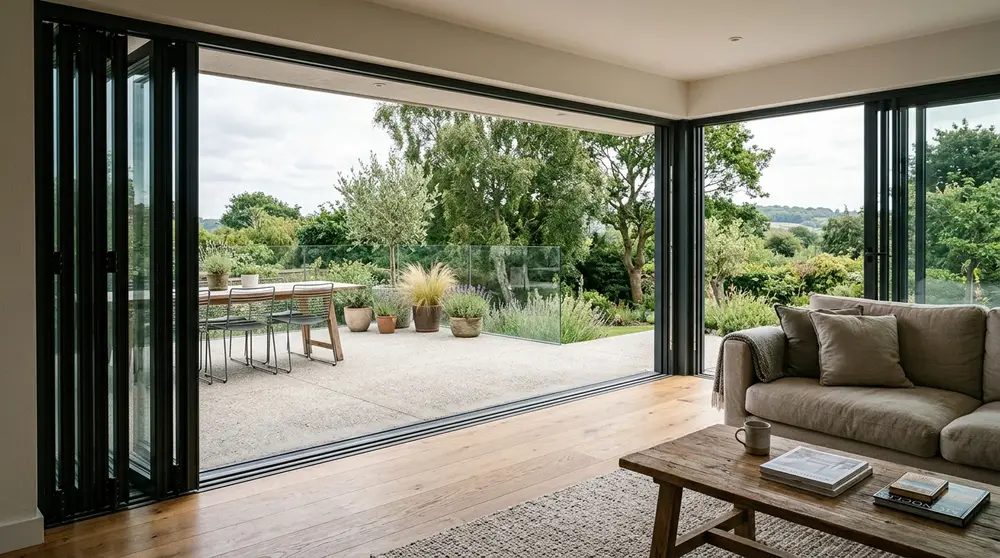
Standout Features
It completely removes the barrier between your home and the outdoors. These systems use heavy-duty rollers that feel like butter, even with massive panes of glass. In 2026, they feature high-quality thermal breaks to keep the outdoor heat from bleeding into your AC-cooled room. It’s the ultimate in modern architectural luxury. It’s airy.
- Who it's for: People who love to entertain and want a living room that can expand into their outdoor space instantly.
- Pricing: These are high-end systems, often costing $15,000 to $40,000 depending on the width.
- Honest Drawbacks: Flush tracks collect dirt and debris. You have to vacuum the tracks regularly or the doors will start to feel "crunchy" and hard to move.
35. Refurbished Mid-Century Sideboards – The Sustainable Hero
Sustainability is the ultimate luxury in 2026. A 1950s Danish teak sideboard adds "soul" to a room that brand-new furniture can't provide. Mixing old and new is how you avoid the "showroom" look. One high-quality vintage piece acts as a conversation starter and shows you value craftsmanship over fast furniture. It’s a hero piece.
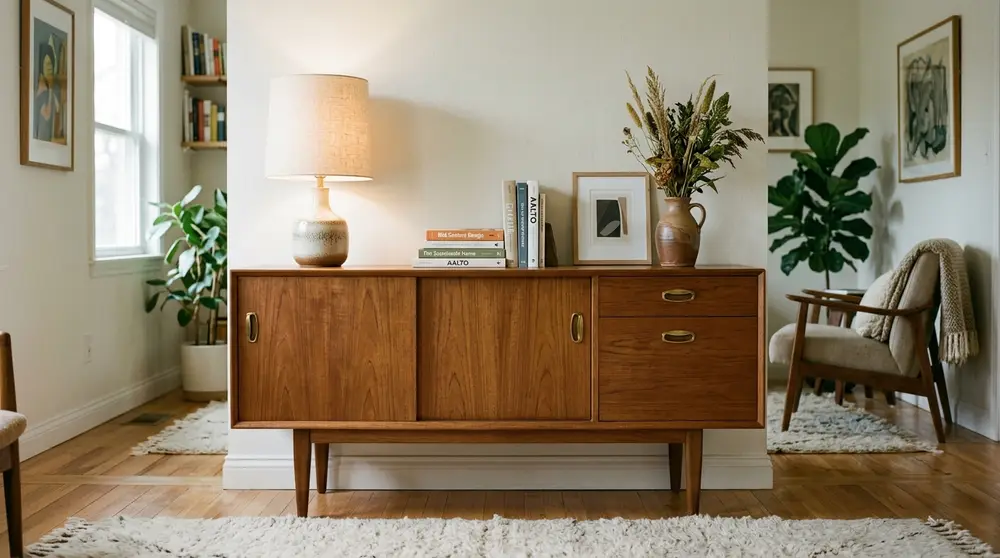
Standout Features
Vintage teak has a rich, warm color that modern manufacturers struggle to replicate. These pieces were built to last for decades, and they only get better with age. A sideboard provides excellent hidden storage for media gear or dinnerware while serving as a beautiful surface for a lamp or art. It’s a smart, ethical investment.
- Who it's for: Conscious consumers who want a unique, high-quality piece of history that adds character to a modern space.
- Pricing: A refurbished authentic Danish sideboard costs between $2,000 and $5,000.
- Honest Drawbacks: They require care. You can't just set a wet glass down on 70-year-old teak without leaving a permanent ring.
2026 Living Room Design Comparison Table
Building a modern living room in 2026 requires balancing high-tech functionality with tactile, organic materials. This breakdown helps you compare the costs and benefits of the year's most influential design elements to see where your budget fits best.
Modern trends are shifting away from purely aesthetic choices toward features that improve your daily quality of life. For instance, acoustic slats and circadian lighting might cost more upfront, but they significantly reduce stress for those who live and work in the same space.
Smart Investments for Longevity
Focusing on durable materials like micro-cement or travertine ensures your home stays relevant as styles evolve. Choosing one or two high-impact pieces, like a modular sectional or a vapor fireplace, creates a focal point without needing a full room overhaul.
Small upgrades like Qi2 hidden chargers or PVD hardware offer a high-end feel for a fraction of the price of major structural changes. These micro-luxuries keep surfaces clear of clutter while adding subtle, functional value to high-traffic areas.
| Item Name | Primary Benefit | Best For | Est. Cost (Mid-Range) |
|---|---|---|---|
| Oak Paneling | Acoustic Warmth | Large, Echoey Rooms | $25/sq. ft. |
| Curved Bouclé Sofa | Social Flow | Intimate Gatherings | $3,500 |
| Conversation Pit | Analog Connection | Social-First Homes | $10,000 |
| Ketra Lighting | Circadian Rhythm | Remote Workers | $5,000 |
| Living Wall | Air Purification | Urban Apartments | $150/sq. ft. |
| Travertine Shelves | Minimalist Display | Art Collectors | $1,200 |
| Lime-Wash Paint | Visual Depth | Soulful Surfaces | $8/sq. ft. |
| Motorized Art | Hides Technology | Pure Minimalists | $4,000 |
| Noguchi Pendant | Soft Diffusion | High Ceilings | $600 |
| Mixed Metals | Curated Feel | Personalized Design | $400 |
| Vapor Fireplace | Safe Ambiance | High-Rise Flats | $3,000 |
| Triple-Pane Glass | Energy Efficiency | Hot Climates | $15,000 |
| Concrete Table | Durability | Busy Families | $1,800 |
| Layered Rugs | Texture Depth | Budget Luxury | $800 |
| Terrazzo Floor | Longevity | Full Renovations | $35/sq. ft. |
| Acoustic Slats | Sound Control | Open-Plan Living | $180/panel |
| Invisible Speakers | Clean Aesthetic | Audiophiles | $2,500 |
| Performance Velvet | Stain Resistance | Pet Owners | $1,200 |
| Micro-Cement | Seamless Look | Feature Walls | $20/sq. ft. |
| Smart Glass | Instant Privacy | Studio Living | $125/sq. ft. |
| Window Bench | Hidden Storage | Small Spaces | $2,500 |
| Modular Sectional | Versatility | Frequent Hosts | $4,500 |
| PVD Hardware | Durability | High-Traffic Areas | $75/handle |
| Tadelakt Plaster | Waterproof Texture | Luxury Accents | $40/sq. ft. |
| Hidden Qi2 Charger | Zero Cable Clutter | Tech Minimalists | $400 |
| Slate Rill | Natural White Noise | Stress Reduction | $2,500 |
| 3D Geometric Rug | Visual Interest | Monotone Rooms | $1,800 |
| Black Cane Console | Tech Ventilation | Media Rooms | $2,200 |
| Smart Skylight | Natural Lumens | Dark Interiors | $3,500 |
| Gallery Wall | Personal Story | Memory Keepers | $1,500 |
| Smoked Mirror | Adds Depth | Narrow Spaces | $55/sq. ft. |
| Limewashed Brick | Softens Industrial | Loft Owners | $600 |
| Circular Rug | Breaks Grid | Large Floors | $2,000 |
| Telescoping Doors | Indoor-Outdoor | Entertainers | $25,000 |
| Vintage Sideboard | Sustainable Soul | Quality Seekers | $3,500 |
Which Modern Design Approach Fits Your Lifestyle?
Choosing the right items for your living room depends entirely on how you actually use the space every day. If you’re a Tech Minimalist, focus on the Invisible Speakers, Hidden Qi2 Chargers, and Motorized Art to keep your surfaces clean while staying connected. It’s about power without the mess.
For the Busy Family, I always recommend the "indestructible" path: Performance Velvet, Concrete Coffee Tables, and Layered Jute Rugs. These materials can handle the chaos of kids and pets while still looking like a high-end designer space. You shouldn't have to choose between your children and a beautiful home. It’s a balance.
If you’re a Wellness Enthusiast, prioritize the items that affect your senses. The Self-Irrigating Living Wall, Ketra Smart Lighting, and Slate Rill Water Feature will transform your living room into a sanctuary that lowers your heart rate the moment you walk in. In 2026, true luxury is a space that helps you breathe. Design for your soul.
Leave a comment