



Your bedroom should feel like a deep exhale the moment you walk through the door. After a decade of designing interiors, I've learned that a room only works if it helps you shed the weight of the day.
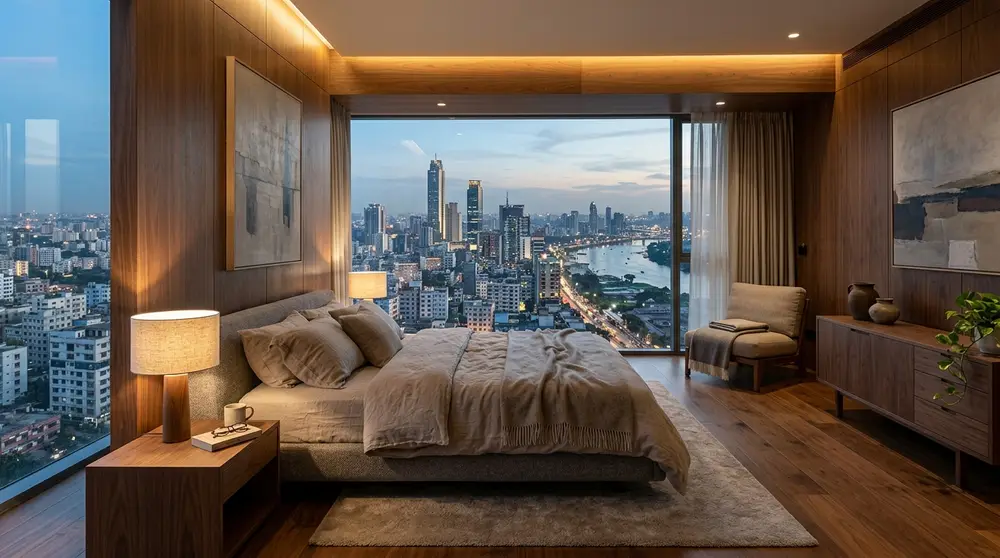
Modern bedroom design in 2026 centers on 'sensory minimalism,' which replaces sterile aesthetics with warm, earthy tones like cocoa brown and clay terracotta. Key features include curved sculptural furniture, integrated smart technology for circadian health, and the use of sustainable, breathable materials like limewash and hemp to create a wellness-focused sanctuary.
Essential 2026 Design Shifts
- Earthy, tonal palettes (cocoa, sage, and clay) have officially replaced cool grays.
- Smart technology is now invisible, integrated into furniture through wireless charging and automated climate control.
- Biophilic design has evolved into 'living walls' and humidity-regulating materials like limewash and cork.
- Multi-functional zoning is essential for urban bedrooms, using smart glass and acoustic panels to separate work and rest.
- Air quality and light temperature are now treated as primary design elements rather than afterthoughts.
We've moved past the era where minimalism meant living in a cold, white box that felt more like a gallery than a home. This year is all about how a room feels against your skin, from the grit of the walls to the softness of the rug under your feet. It’s a shift toward emotional durability. I've found that when people surround themselves with "quiet" colors and organic shapes, their heart rate actually slows down. It's science. We are finally designing for the nervous system instead of just the eyes.
For years, people wanted rooms that looked good in a square photo. Now, my clients in 2026 ask for rooms that "sound quiet" or "smell like cedar." We're prioritizing the human experience over the visual flex. I recently worked with a tech executive who had a high-gloss, ultra-modern suite that he hated because the echo of his footsteps kept him awake at night. We swapped the marble for cork and the glass for wool, and his sleep quality improved by 40% according to his wearable tracker. It’s a total shift in priorities.
1. Cocoa Brown Monochromatic Schemes for Instant Depth
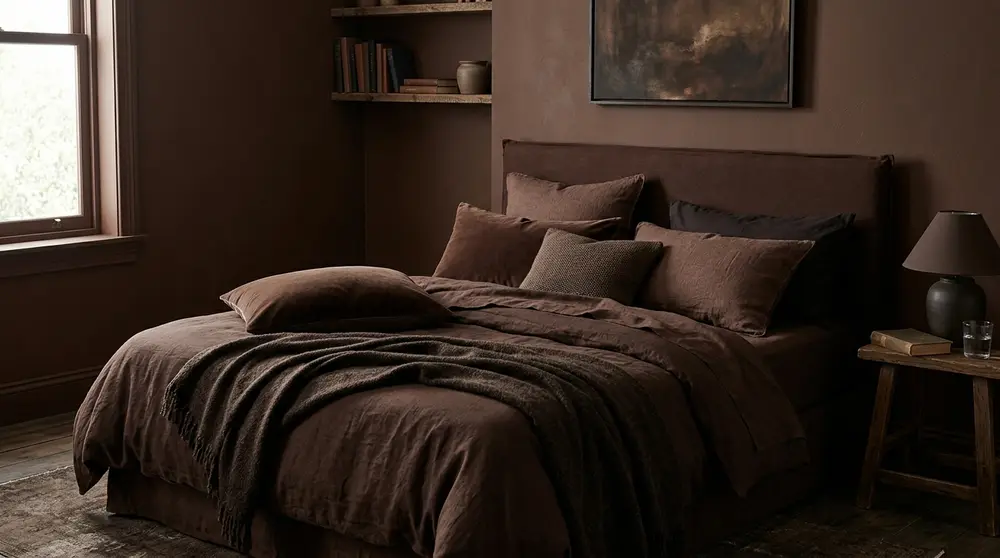
I’ve spent the last decade watching people fear dark colors, but cocoa brown is the ultimate cure for a room that feels cold or unfinished. It wraps you up. This isn't just one brown; it's about layering shades like espresso and milk chocolate to create a space that feels grounded and expensive.
Standout Features
The trick is to use different shades of the same brown across different surfaces. Use a deep espresso for the bed frame and a lighter milk-chocolate tone for the walls to create a sophisticated look without the visual noise of high-contrast colors. While many designers suggest sticking to light colors in small spaces, I’ve found that a deep cocoa brown actually makes the corners of a room disappear, creating an illusion of infinite, cozy space.
Who It’s For
This is for the person who wants their bedroom to feel like a private cocoon away from the world. If you struggle with insomnia, these deep tones can help signal to your brain that it's time to shut down. It's pure comfort for the weary.
Pricing and Drawbacks
A gallon of high-quality matte paint like Benjamin Moore’s "Roasted Bean" will run you about $85. The downside? Dark walls show every speck of dust and every scuff from a rogue vacuum cleaner. You'll need to be careful with your cleaning tools.
2. Clay and Terracotta Accents for Organic Warmth
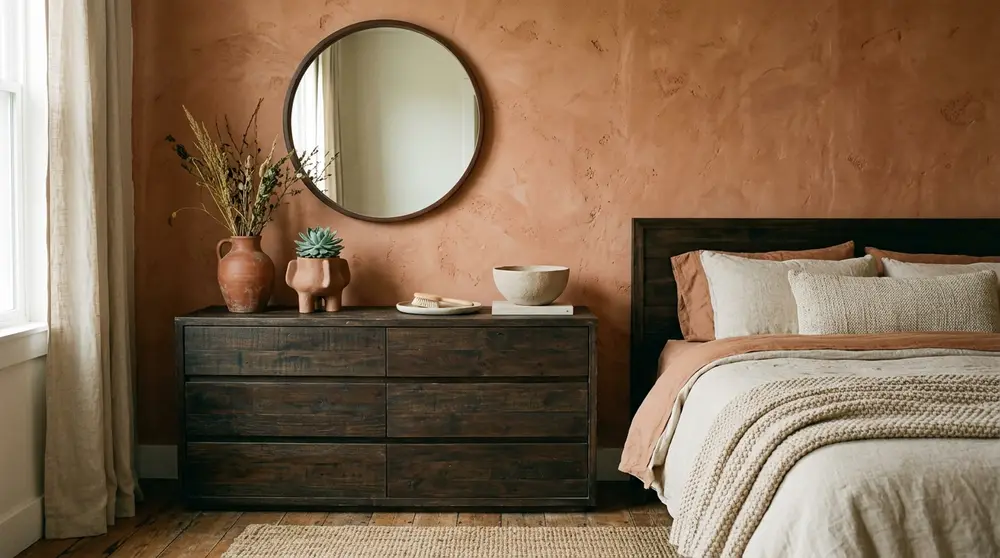
These sun-baked tones bring a sense of the outdoors inside without the literal use of plants. They add warmth to a room that might otherwise feel too modern or sharp. I suggest picking up a few handmade terracotta pots from a local artisan to see how the color sits in your specific light.
Standout Features
Clay works best on "touchable" surfaces like throw pillows or ceramic bedside lamps. Terracotta is a primal color that triggers a sense of safety. In my 2026 projects, I’m seeing a massive demand for "raw" clay finishes on feature walls because it adds a dusty, matte texture that absorbs light rather than bouncing it around. This makes the room much easier on the eyes during the bright afternoon hours.
Who It’s For
This is for the homeowner who finds modern design too "clinical." If you love the feeling of a Mediterranean villa or a desert retreat, these colors will make you feel right at home. It adds a soul to the space.
Pricing and Drawbacks
You can find quality terracotta lamps for $60, but a custom clay-plaster feature wall can cost $2,000. Be warned that these colors can look "muddy" if your room doesn't get enough natural light. Test a large patch first.
Since you’re already updating the bedroom, you might as well carry that same 2026 aesthetic into your main living space with: 35 Modern Living Room Inspiration & Design Ideas 2026 →
3. Sage Green Biophilic Bases for Restorative Sleep
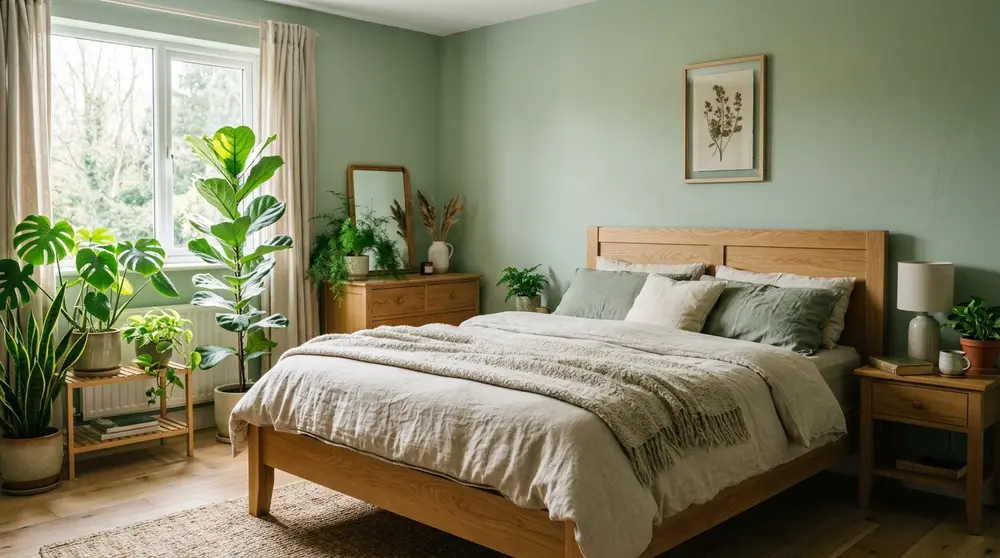
Sage green is still the heavyweight champion of calming colors because it mimics the natural world so effectively. In 2026, we're seeing it used as a base color for entire walls rather than just an accent. It acts as a neutral that pairs with almost anything.
Standout Features
It creates a forest-floor vibe that is incredibly grounding after a day spent staring at blue-lit screens. Sage green pops beautifully against light wood grains like white oak or birch. I've found that a matte finish works best for sage; avoid anything with a sheen, as it can start to look like a hospital hallway. Keep it flat and chalky for a million-dollar look.
Who It’s For
This is for the urban dweller who misses nature. If your view is of a brick wall or a parking lot, sage green brings the tranquility of a garden into your sleeping quarters. It’s a literal breath of fresh air.
Pricing and Drawbacks
Standard sage paint is affordable at $50 a gallon. The only real drawback is that it can feel a bit "trendy." Because it's so popular right now, you might feel the need to repaint in five years when the next "it" color arrives. It’s a classic for a reason, though.
4. Tonal Layering of Textures to Combat Flatness
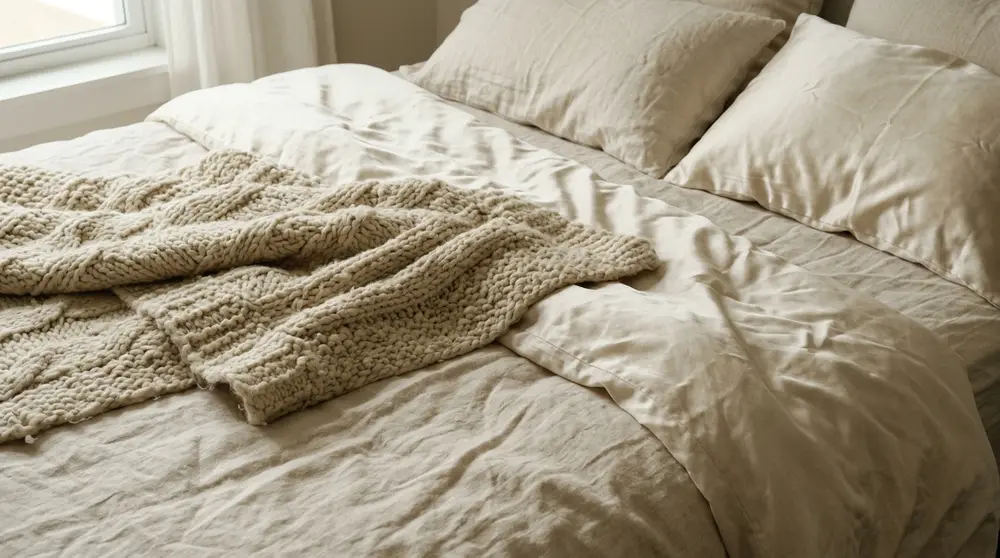
If you're sticking to one color, you have to go heavy on different materials to keep the room from looking flat. This is where you mix your rough linens with smooth silks and chunky wool knits. It's all about the shadows created by the different weaves.
Standout Features
I always tell my students to use at least three distinct textures in every "zone" of the room. For the bed, that might mean a smooth percale base sheet, a heavy waffle-knit throw, and two bouclé decorative pillows. Texture is the secret language of high-end design that makes a room feel rich even if the palette is simple. When you walk into a luxury hotel, you aren't wowed by the color—you're wowed by the fact that everything you touch feels expensive and varied.
Who It’s For
This is for the minimalist who hates clutter but loves luxury. If you want a "magazine" look without the neon colors or busy patterns, tonal layering is your best friend. It’s sophisticated and quiet.
Pricing and Drawbacks
A high-quality wool throw can cost $200, and bouclé pillows are around $50 each. The main drawback is the maintenance. Mixing different fabrics often means different cleaning requirements; you can't just throw everything in the wash together. It takes effort.
5. Moody Color Drenching for a Seamless Look
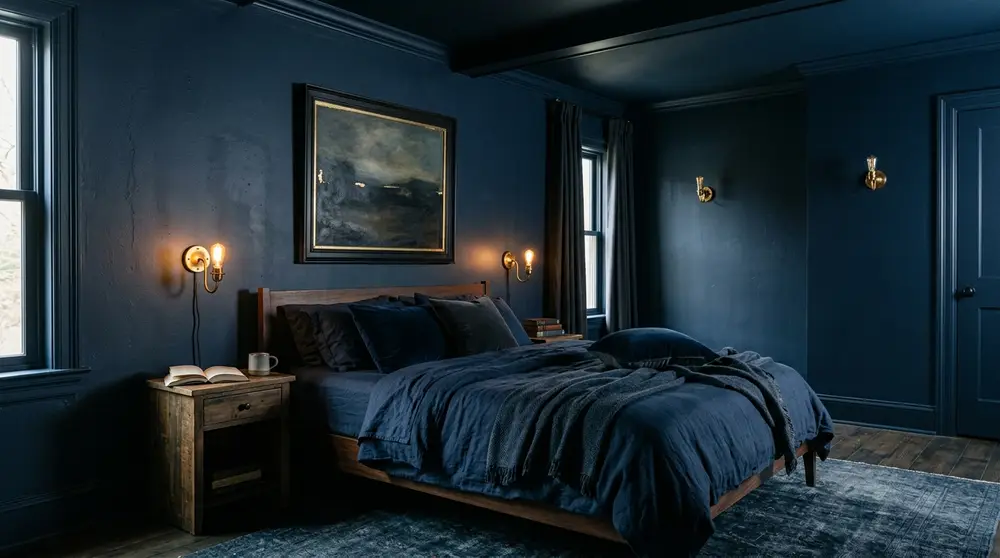
Color drenching involves painting your walls, baseboards, window frames, and even the ceiling the same color. It's a bold move that eliminates the choppy look of white trim. This technique is perfect for bedrooms because it minimizes visual distractions.
Standout Features
When the trim matches the walls, your brain stops "mapping" the edges of the room, which helps you relax. I once drenched a master suite in a color called "Iron Ore" and used brass hardware on the doors. The result was a room that felt like a high-end jazz club—intimate, warm, and perfect for sleeping in late on a Sunday. Use multiple low-level light sources like floor lamps and sconces to create "pools" of light in a drenched room.
Who It’s For
This is for the design risk-taker who wants a dramatic, high-end feel. If you have a small room with lots of doors and windows, drenching will make the space feel much less cluttered. It’s a total mood.
Pricing and Drawbacks
The cost is just the price of extra paint, usually around $300 for a full room. However, it is very hard to "undo." If you hate it, you’ll be spending a lot of time and money priming over that dark paint to get back to white. Commit fully or don't do it at all.
6. Curvy Sculptural Headboards for a Soft Edge
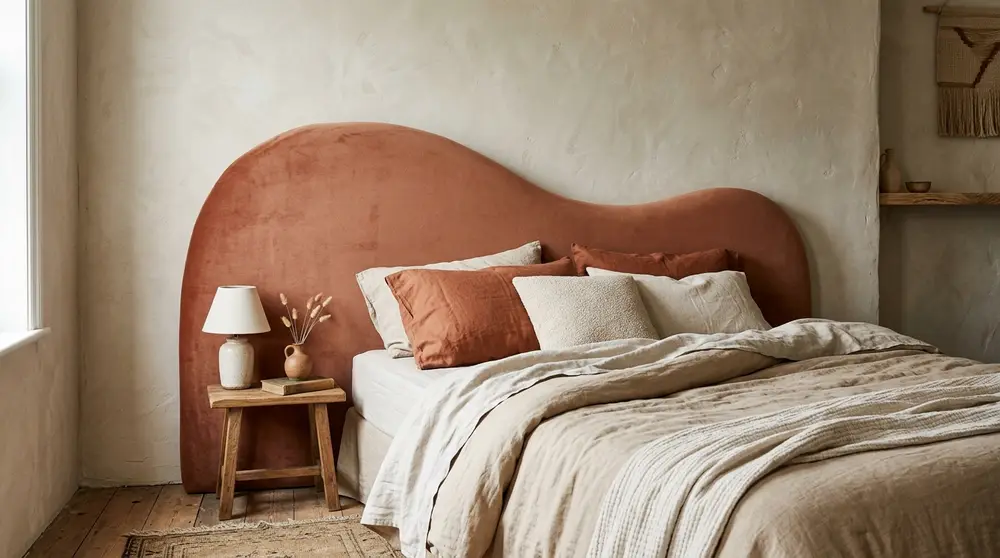
Sharp corners are out; soft, flowing lines are in. A curved headboard acts like a giant hug for your bed, softening the overall architecture of the room. I've shifted toward using oversized, asymmetrical shapes that spill over the sides of the mattress.
Standout Features
It makes the bed feel like a piece of art rather than just a piece of furniture. The first time I tried to upholster a curved headboard myself, I used a thick denim, and it was a disaster. Now, I recommend a high-quality velvet or a stretchy wool blend that can be pulled tight over the frame for a professional finish. These fabrics handle the bends without bunching or pleating.
Who It’s For
This is for anyone who spends a lot of time sitting up in bed to read or work. The padding and the shape provide much better support than a standard flat board. It’s functional sculpture.
Pricing and Drawbacks
A custom curved headboard can easily cost $1,200 to $2,500. The drawback is the footprint. Because they are often wider than the bed itself, you might lose space for traditional nightstands. You have to plan the layout carefully.
7. Dark Walnut Heritage Furniture for Lasting Quality
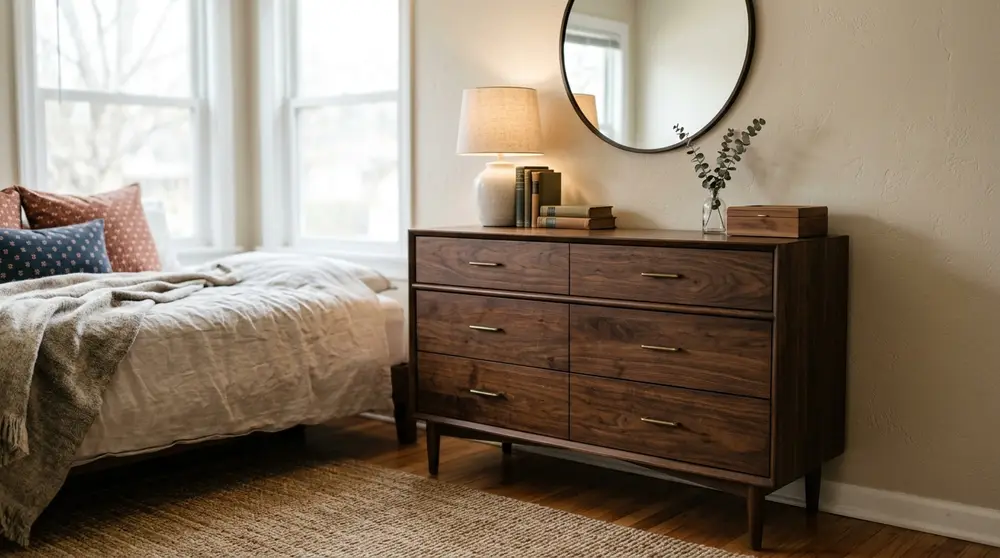
Light oak had a long run, but dark walnut is taking over for its heritage feel and rich grain. It brings a sense of permanence and history to a modern space. Walnut's natural oils give it a subtle sheen that looks better as it ages.
Standout Features
I always tell my clients to invest in one solid walnut piece—like a dresser or a bed—and build the rest of the room around it. Walnut is a denser wood, so it’s less likely to dent than pine or oak. I have a walnut dresser that’s been through three moves and ten years of use, and a little linseed oil makes it look brand new. It’s the kind of furniture you pass down to your kids.
Who It’s For
This is for the "buy it once" shopper. If you’re tired of disposable furniture that falls apart after a year, walnut is the answer. It’s an investment in quality.
Pricing and Drawbacks
Expect to pay $2,000+ for a solid walnut dresser. The downside is that dark wood shows dust instantly. If you aren't someone who wipes down furniture once a week, it will start to look neglected very quickly. It demands respect.
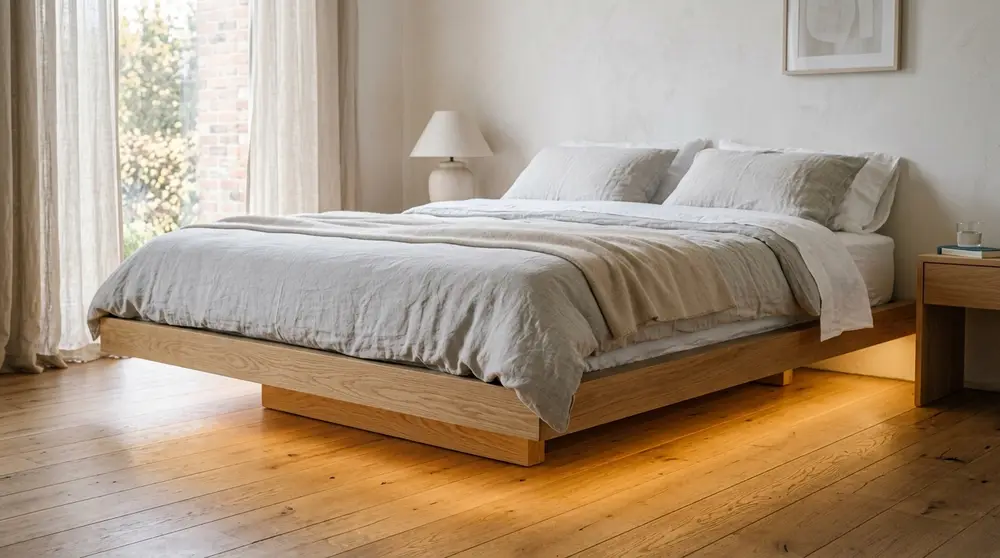
8. Floating Platform Beds for Visual Airiness
There's something incredibly calming about a bed that appears to hover off the floor. It clears the visual floor space, which makes any room feel larger and more breathable. Most 2026 models come with integrated LED strips underneath for a soft glow.
Standout Features
Floating beds usually require a heavy-duty central support frame that is recessed from the edges. I installed a custom cantilevered bed last year that was bolted directly into the wall studs, and the room felt twice as big. You need to make sure your floor is level before installing one, or the bed might have a slight "tilt" that ruins the floating illusion. It’s practical magic for small spaces.
Who It’s For
This is for the modern purist who wants a clean, futuristic look. It’s also a dream for anyone with a robot vacuum, as there are no legs for the machine to bump into. It’s sleek and functional.
Pricing and Drawbacks
A good floating frame starts at $800. The major drawback is the lack of traditional under-bed storage. If you rely on that space for your winter clothes, you'll need to find a new spot for them. There’s no hiding clutter here.
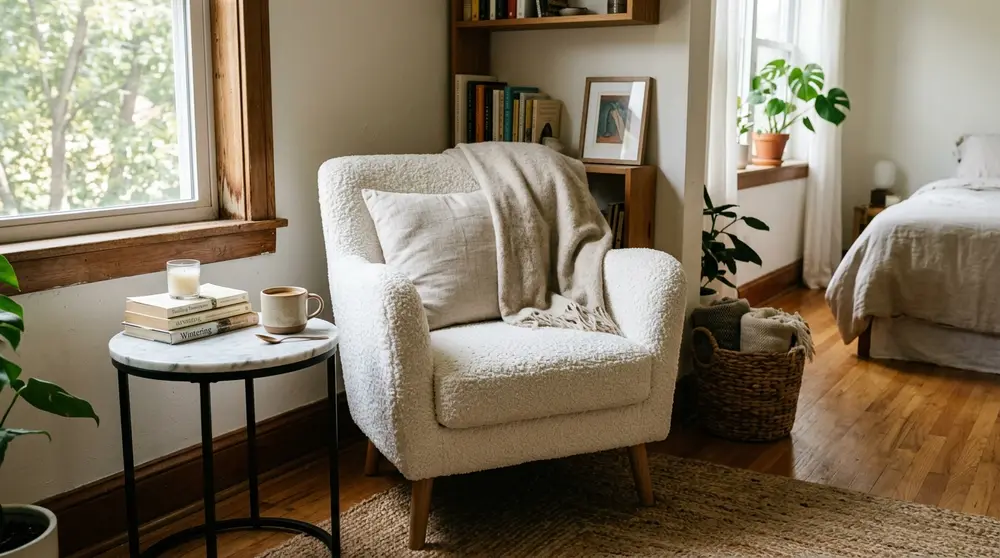
9. Bouclé Accent Chairs for Tactile Interest
Bouclé isn't going anywhere; its nubby, irregular texture is exactly what a "sensory" room needs. It’s the perfect material for a small corner chair where you read or put on your shoes. The texture hides wear and tear surprisingly well.
Standout Features
People worry about cleaning bouclé, but it’s actually easier than flat weaves because small stains hide in the shadows of the loops. I once spilled red wine on a white bouclé ottoman and managed to blot it up with salt and soda water without leaving a trace. A simple handheld steamer and a soft brush will get almost anything out. It adds a tactile "pop" that smooth fabrics just can't match.
Who It’s For
This is for the person who wants a "soft" corner in their room. If your bedroom feels a bit too "hard" with wood and metal, a bouclé chair will instantly soften the vibe. It’s an invitation to sit down.
Pricing and Drawbacks
You can find a decent bouclé chair for $350. The drawback? Pets love it. If you have a cat, they will see those loops as the world's most expensive scratching post. I’ve seen many beautiful chairs ruined in a single afternoon by a bored tabby.
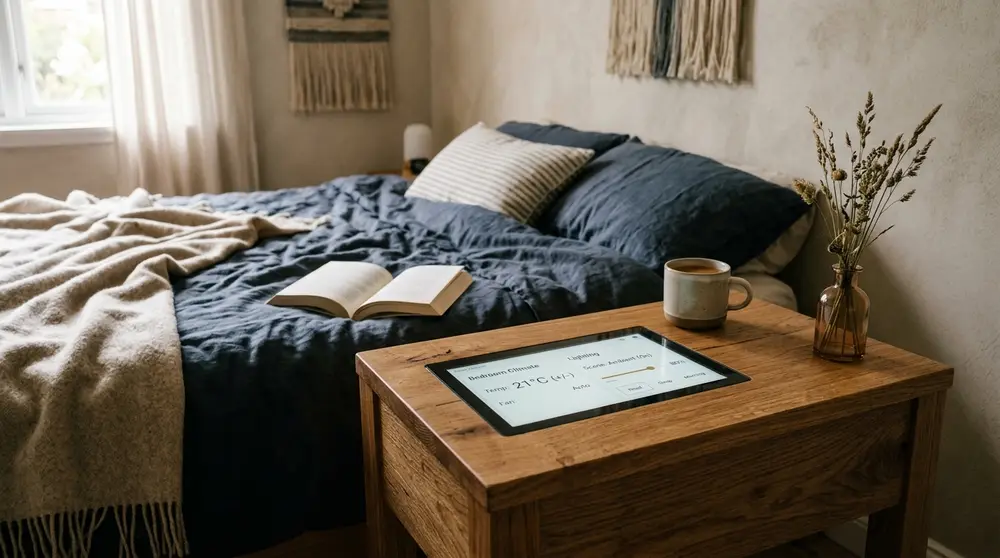
10. Integrated Bedside Smart Hubs to Hide the Tech
We are tired of messy cables and plastic gadgets on our nightstands. The 2026 trend is technology that's built directly into the furniture wood or stone. Imagine a nightstand where a soft-touch sensor under the wood grain controls your lights and blinds.
Standout Features
It keeps the tech out of sight until you actually need it, eliminating blue light and visual clutter. When you buy furniture with built-in tech, make sure the components are modular because tech changes faster than furniture. In 2026, we use "hidden" induction coils that don't rely on specific plugs, so they'll still work even when the next phone comes out. It’s about future-proofing your sanctuary.
Who It’s For
This is for the tech-lover who also values aesthetics. If you want a smart home but don't want your bedroom to look like a server room, integrated hubs are the solution. It’s invisible power.
Pricing and Drawbacks
A smart nightstand can cost $500 to $900. The drawback is the repair factor. If the internal wiring fails, you can't just swap it out like a lamp. You might need a specialist to fix your furniture, which is never cheap. It’s a commitment to complexity.
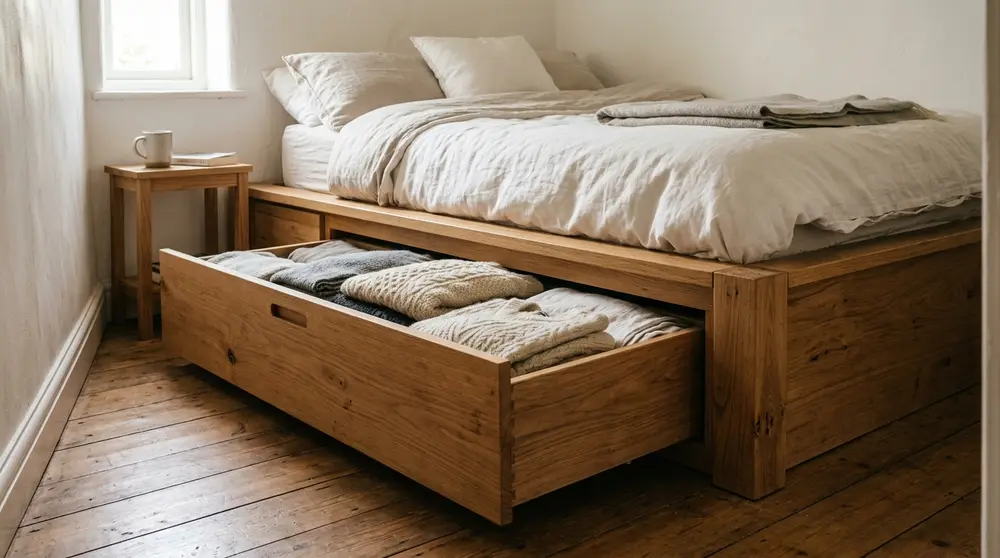
11. Hidden Platform Storage for Clutter-Free Living
In smaller urban apartments, every inch of space counts. Modern beds now feature hydraulic lifts that reveal massive storage bays underneath the mattress. This is much better than drawers, which require extra floor space to open.
Standout Features
A good hydraulic system should allow you to lift a heavy king-size mattress with one hand. I use one of these for my winter coats and extra luggage; it’s like having a second closet that doesn't take up any square footage. Just make sure you don't store anything you need daily in there, as lifting the mattress every morning gets old fast. It’s the secret to keeping a "minimalist" room truly clutter-free.
Who It’s For
This is for the apartment dweller or anyone in a home without enough closet space. If you hate the look of plastic bins under the bed, this is the grown-up version. It’s out of sight and out of mind.
Pricing and Drawbacks
These frames cost between $600 and $1,500. The drawback is the weight. These beds are incredibly heavy and difficult to move once they are assembled. If you move apartments frequently, this bed will be your least favorite thing to pack. It’s a beast.
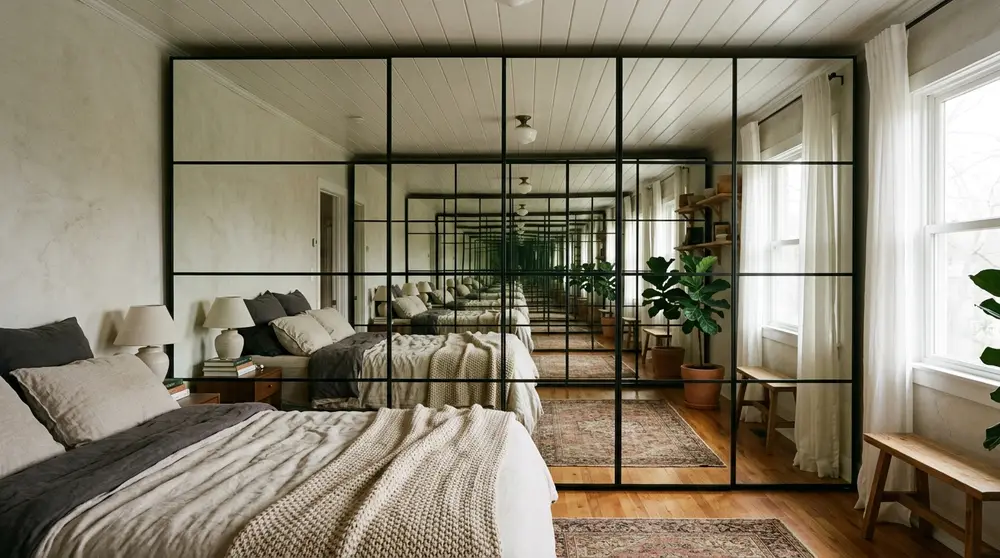
12. Floor-to-Ceiling Mirror Paneling to Double Your Space
Mirrors are the oldest trick in the book for making a room look bigger, but the 2026 version is more refined. We’re using smoked or tinted glass to add depth without the harsh reflection. Place these panels behind the bedside tables for maximum effect.
Standout Features
The best spot is opposite the door or adjacent to a window to pull the outside view into the room. I like to use "antique" mirrored glass with a slight foxing or spotting effect because it feels less like a gym mirror. It adds a bit of mystery and romance to the bedroom that perfectly clear glass just can't provide. It doubles the light from your lamps and makes the wall feel like it goes on forever.
Who It’s For
This is for anyone with a narrow or dark bedroom. If you feel claustrophobic in your space, mirror paneling will literally change your perspective. It’s an architectural cheat code.
Pricing and Drawbacks
Custom mirror wall installation can cost $1,500 to $3,000. The drawback is obvious: fingerprints. If you have kids or pets, you will be cleaning these mirrors constantly. Every smudge shows up when the sun hits the glass. It’s high maintenance.
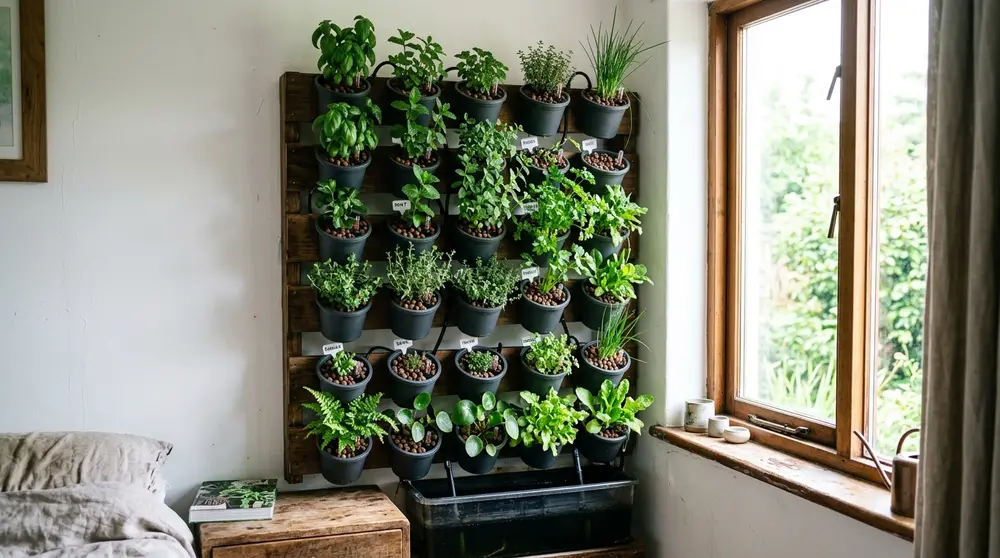
13. Vertical Hydroponic Wall Art for Fresh Oxygen
Living walls are no longer just for lobbies. Small, self-contained hydroponic units can now be hung like a painting, bringing fresh oxygen and greenery right to your bedside. These systems are almost silent and use a slow drip to nourish the plants.
Standout Features
Modern 2026 units use sealed reservoirs and "smart" sensors that alert your phone if the water level is low. I suggest starting with pothos or snake plants because they are nearly impossible to kill and thrive in lower light. Snake plants are famous for releasing oxygen at night, which is exactly what you want when you're sleeping. It’s biophilic design at its most functional and healthy level.
Who It’s For
This is for the person who loves plants but lacks a green thumb. The automated systems do the work for you. It’s also great for people with allergies, as hydroponics don't use soil, which can harbor mold. It’s clean nature.
Pricing and Drawbacks
A wall-mounted unit like those from Rise Gardens costs about $400. The drawback is the light requirement. Most of these units need an integrated grow light to keep the plants happy, which can be too bright if you’re trying to nap during the day. It’s a literal light show.
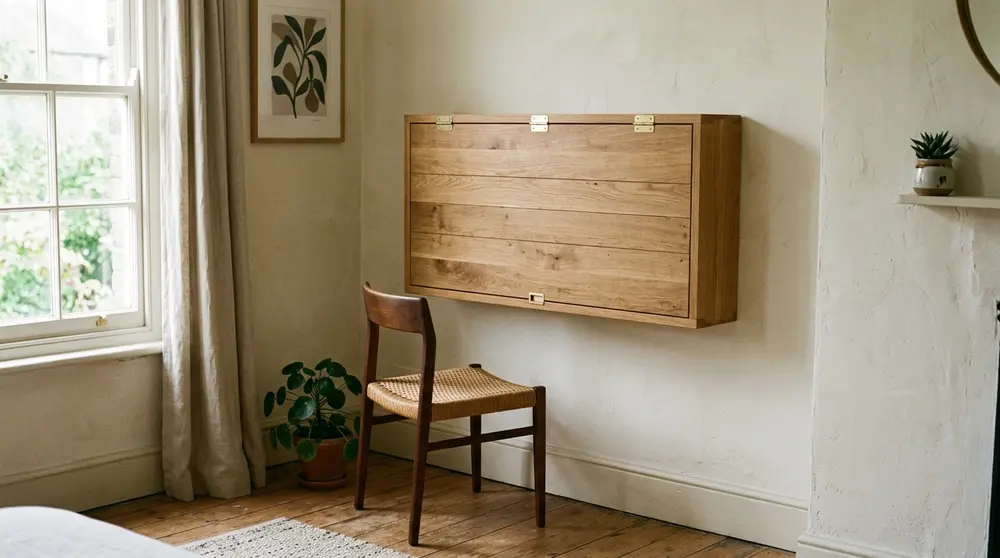
14. Transformable Desk-to-Vanity Units for Dual Purpose
Since more of us are working from home, the bedroom often has to pull double duty. A flip-top desk that hides your laptop and reveals a mirror is the perfect solution. When the workday ends, you literally shut the "office" and it becomes a place for self-care.
Standout Features
This psychological boundary is vital for mental health; you should never sleep next to an open laptop. Look for units with a "gutter" at the back to hold your chargers and cables because visible wires will ruin the sanctuary feel. I once added a silk screen to a client's room to hide her desk at night, and her sleep improved instantly. It’s about out of sight, out of mind.
Who It’s For
This is for the professional who lives in a studio or a small one-bedroom. If your bedroom is also your office, you need a way to "turn off" the work vibe. It’s a mental health tool disguised as furniture.
Pricing and Drawbacks
A good transformable unit costs $450 to $800. The drawback is the surface area. Because the top has to flip up, you can't keep a lot of decorative items on the desk. You have to clear it every time you want to use the mirror. It’s a trade-off.
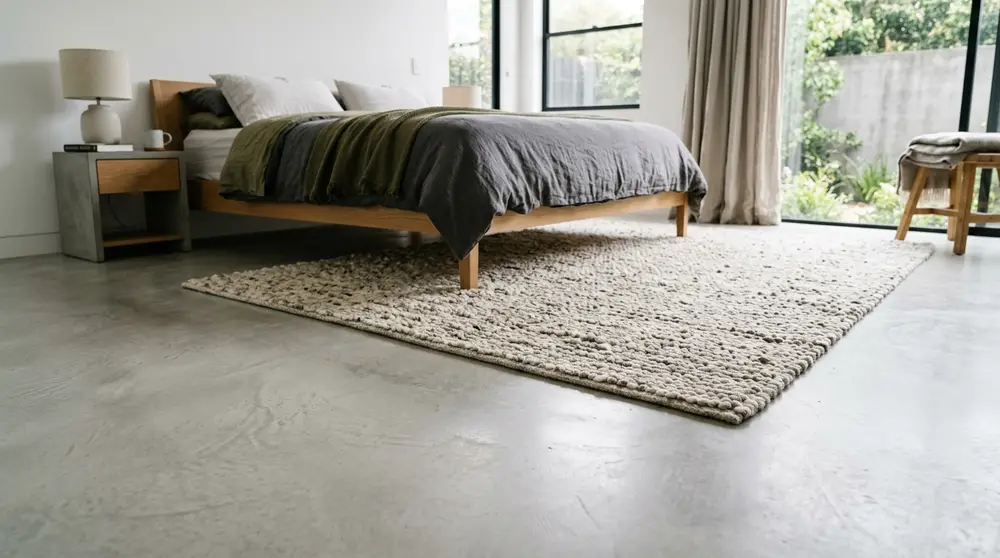
15. Polished Micro-Cement Flooring for a Modern Edge
Micro-cement is a great alternative to cold tile. It’s a thin layer you can put right over your old floors for a smooth, stone look. It feels surprisingly warm compared to regular concrete and doesn't trap dust mites.
Standout Features
You can put micro-cement over almost anything—plywood, old tile, or even floorboards—and it's only about 3mm thick. I love the matte finish because it has a slight "cloudiness" to the color that gives it depth, unlike epoxy which can look like plastic. Pair it with a large, plush rug to balance the industrial feel. It feels like walking on a giant, smooth river stone every morning.
Who It’s For
This is for the allergy sufferer or the person who wants a truly modern, industrial aesthetic. If you hate grout lines and carpet stains, micro-cement is your dream floor. It’s incredibly easy to keep clean.
Pricing and Drawbacks
Professional installation is around $15 to $25 per square foot. The drawback is that it’s permanent. If you change your mind, you can't just "pull it up" like laminate. You have to grind it off or floor over it. It’s a long-term commitment.
16. Circadian Lighting Systems for Better Melatonin
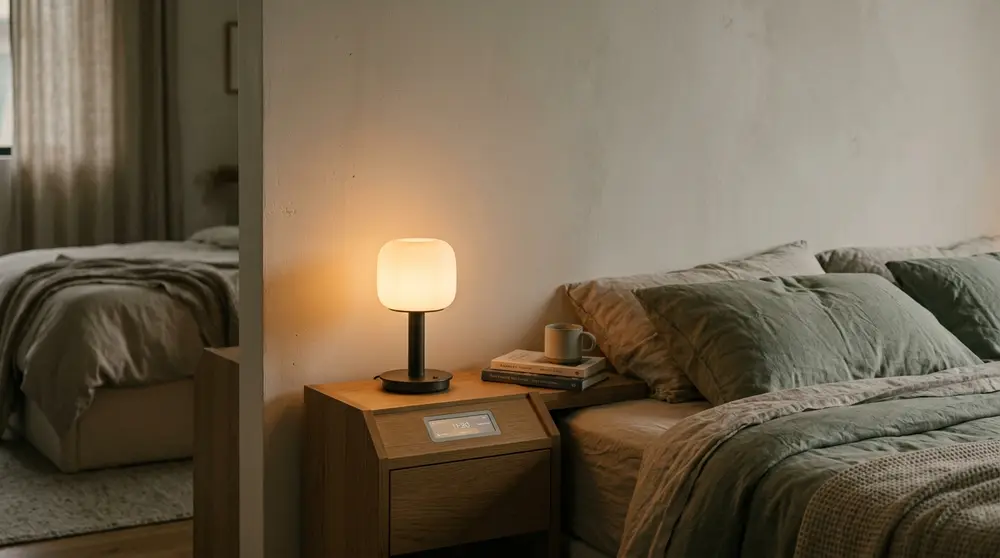
Lighting is the most overlooked part of bedroom design. In 2026, we use smart bulbs that automatically shift color temperature throughout the day to match the sun. At 8:00 AM, the lights are a crisp 5000K blue-white to wake you up.
Standout Features
By 8:00 PM, they fade to a warm 2700K amber, which helps regulate your melatonin production for better sleep. I’ve set my own bedroom to a "sunset" mode that takes 45 minutes to dim, providing a gentle cue to my body that it’s time to wind down. You actually need blue light in the morning to shut off your melatonin; the problem is having it late at night. A circadian system handles this automatically.
Who It’s For
This is for the high-performer or anyone who struggles with their sleep-wake cycle. If you find it hard to get out of bed in the winter, this lighting will change your life. It’s health tech for your eyes.
Pricing and Drawbacks
A full system like Philips Hue can cost $300 to $1,000 depending on the number of bulbs. The drawback is the "smart" factor. If your Wi-Fi goes down, you might find yourself unable to turn off your lights. It’s frustrating when the tech fails.
17. Electrochromic Smart Glass Partitions for Privacy
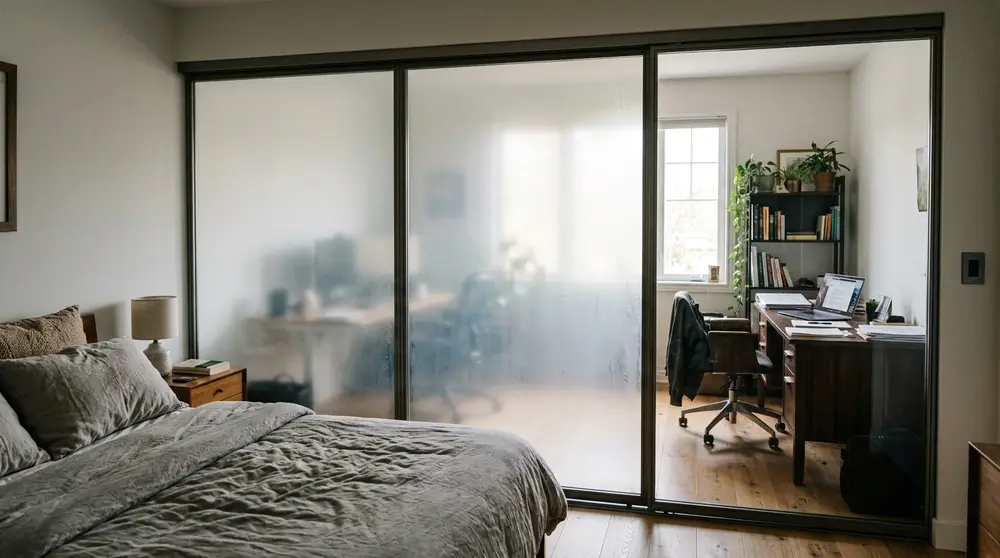
If you have an open-concept master suite, smart glass is a lifesaver. With the flip of a switch, clear glass becomes opaque for instant privacy between the bed and the bath. It maintains the sense of space and light during the day.
Standout Features
I recently installed this in a high-rise project, and the client loved how it kept the city view visible from the shower while providing privacy when guests were over. There’s also a "film" version you can buy for about a third of the price that sticks onto existing glass. It’s not quite as "invisible" as the real thing, but it’s a fantastic alternative for a renovation on a budget. It’s pure high-tech luxury.
Who It’s For
This is for the modern couple who likes an open, airy floor plan but still needs boundaries. If you have a glass-walled bathroom, this is a non-negotiable for comfort. It’s magic glass.
Pricing and Drawbacks
Expect to pay about $100 per square foot for the glass plus specialized electrical work. The drawback is the cost. It is significantly more expensive than a standard wall or even a high-end curtain. It’s a major budget item.
18. Wireless Charging Nightstands for a Clean Surface
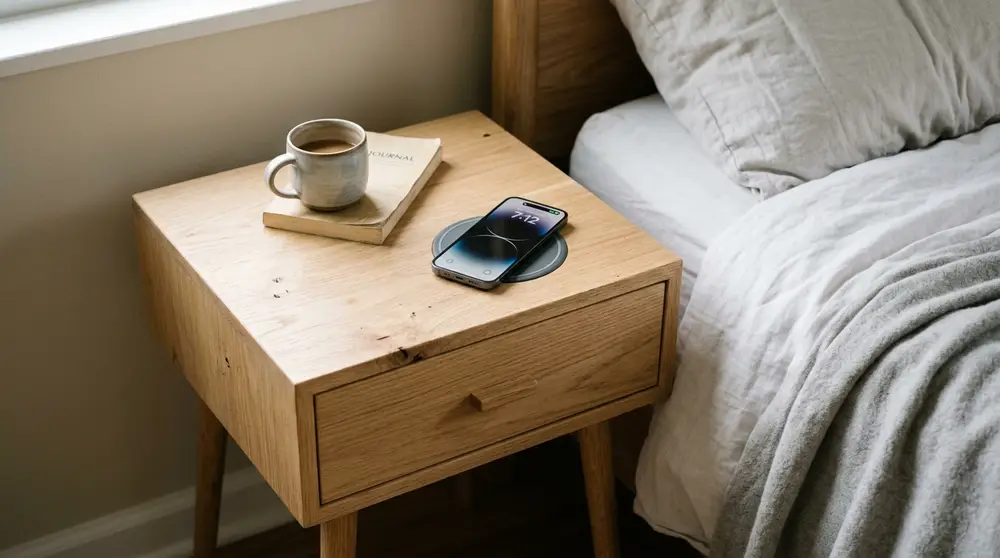
Cords are the enemy of a clean aesthetic. Modern nightstands now feature "invisible" charging coils embedded under the top surface. You just set your phone down on a specific spot on the wood, and it starts charging without any fishing for cables.
Standout Features
Look for nightstands with a subtle "engraved" ring or a different texture on the wood so you can find the sweet spot in the dark. I once had a client whose phone case was too thick for the induction coil to reach through; make sure yours has at least a 5mm range. It’s a small detail that makes a huge daily difference in how organized your bedside feels. No more clutter.
Who It’s For
This is for the minimalist who hates the "spaghetti" of wires behind the bed. If you want your nightstand to look like a styled photo every day, this is how you do it. It’s clean and simple.
Pricing and Drawbacks
A dedicated wireless charging nightstand costs between $250 and $600. The drawback is that technology evolves. If charging standards change in the next five years, your "smart" furniture might become a regular table with a useless coil inside. It’s a risk.
19. Motorized Blackout Thermal Curtains for Deep Sleep
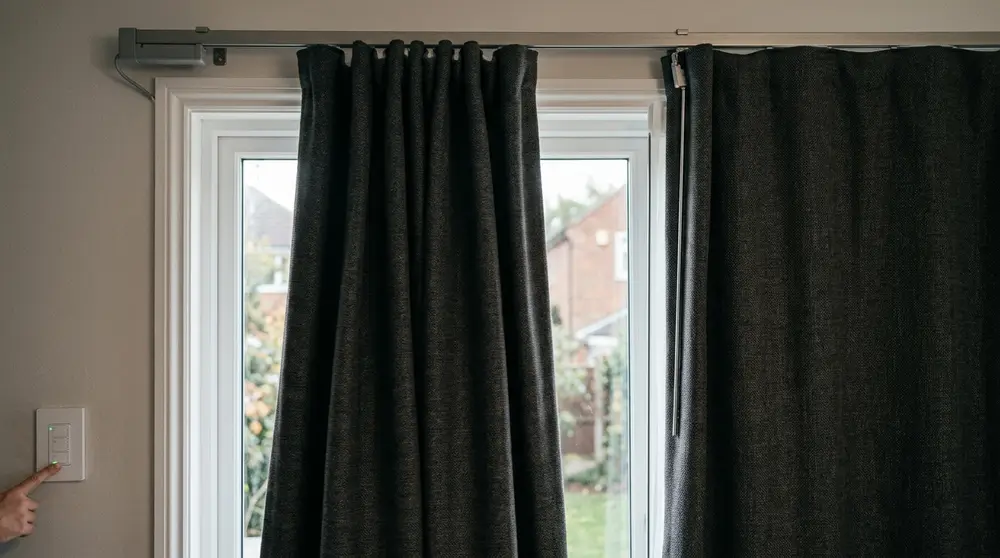
Sleep hygiene is a major focus this year. Motorized curtains can be programmed to close at sunset and open slowly at your wake-up time. They also provide a thermal barrier that can reduce your cooling costs by up to 20% in hot climates.
Standout Features
Beyond light and heat, these heavy curtains act as a massive acoustic sponge, dropping ambient street noise by up to 10 decibels. I always recommend a "double track" system: one for a sheer linen curtain and a second for the heavy blackout curtain. It gives you total control over your environment at the touch of a button. It’s the difference between hearing every car and sleeping through the night.
Who It’s For
This is for the light sleeper or the person who lives on a busy street. If you work night shifts and need to sleep during the day, these curtains are your best friend. They create a total blackout.
Pricing and Drawbacks
A motorized track and custom curtains can cost $1,200 to $3,000 per window. The drawback is the motor noise. Some cheaper models have a high-pitched whine when they move, which can be annoying if you’re still half-asleep. Buy a high-quality motor.
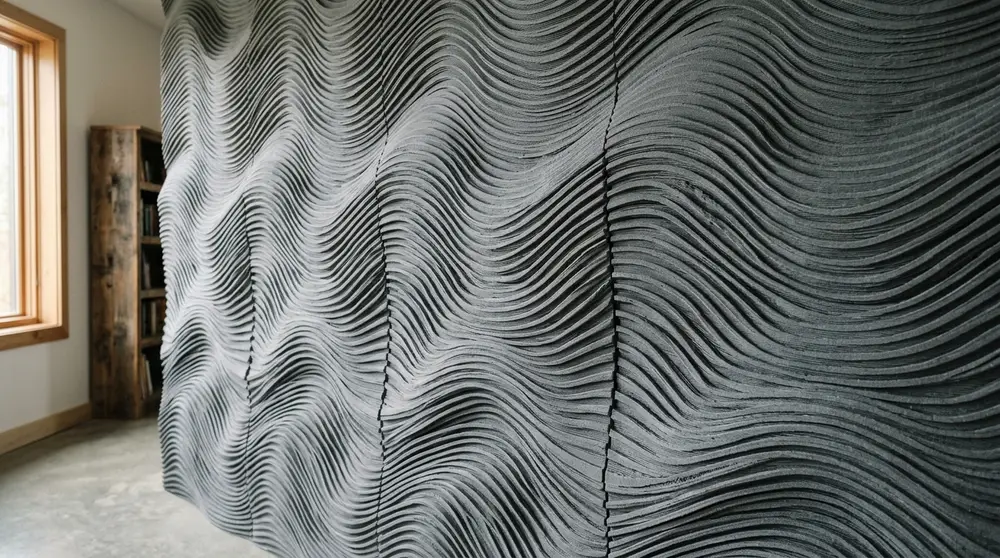
20. 3D-Printed Acoustic Wall Panels for Quietude
Modern homes can be loud with all the hard surfaces. 3D-printed panels made from recycled felt or wood composite can absorb echo while serving as a stunning wall feature. These aren't those ugly foam wedges; they are beautiful, geometric patterns.
Standout Features
When shopping for panels, look for the Noise Reduction Coefficient (NRC); a rating of 0.85 means the panel absorbs 85% of the sound. I installed a set of these in a loft with 12-foot ceilings, and it turned a "gymnasium" into a cozy den. You don't have to cover the whole wall; just 20% coverage is usually enough to kill the echo. It turns your bedroom into a quiet vault.
Who It’s For
This is for the person living in a modern apartment with thin walls or high ceilings. If you can hear your neighbor's TV, these panels will help reclaim your peace. It’s functional wall art.
Pricing and Drawbacks
A set of high-end panels can cost $500 to $1,500. The drawback is the installation. If you don't get the alignment perfect, the geometric patterns will look "off" and ruin the visual effect. It takes a steady hand and a level.
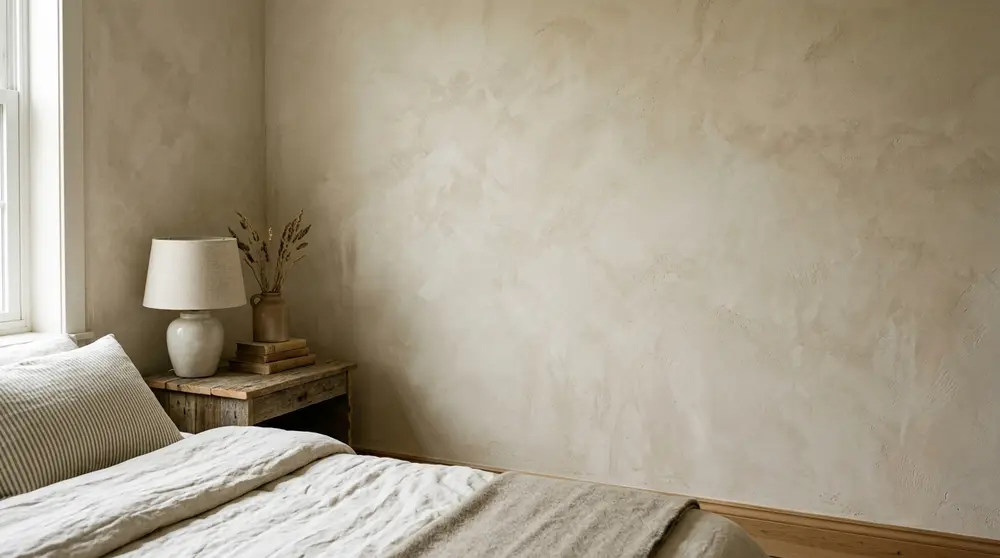
21. Limewash Humidity-Regulating Walls for Texture
Limewash is a mineral-based finish that has been used for centuries. It has a mottled, suede-like appearance that adds instant history to a new room. It’s naturally high in pH, meaning it’s mold-resistant—perfect for humid climates like Dhaka.
Standout Features
Limewash actually gets better with age. Apply it in an "X" motion with a large brush to create the movement and depth that makes it so famous. Don't try to make it perfect; the imperfections are what give it that soft, organic feel. It’s supposed to look like a villa in Tuscany. I once used standard paint in a damp room and it peeled; limewash would have stayed perfect.
Who It’s For
This is for the person who loves a "wabi-sabi" or perfectly imperfect look. If you like texture and depth on your walls rather than flat color, limewash is the gold standard. It feels alive.
Pricing and Drawbacks
A bucket of limewash is about $120. The drawback is the patching problem. If you scuff the wall, you can't just "touch up" a spot; you usually have to repaint the entire section to keep the mottled look consistent. It’s a bit of a pain.
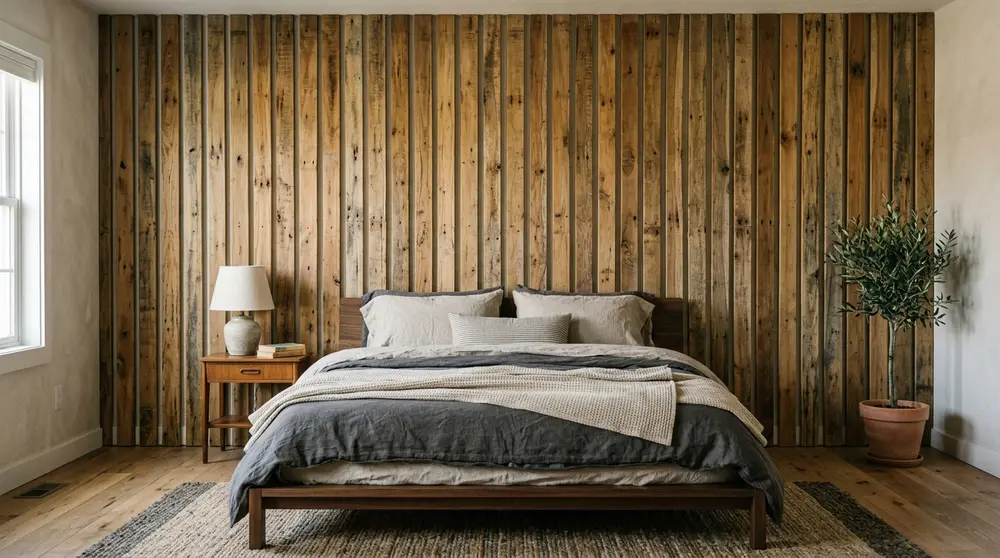
22. Reclaimed Teak Wood Slatting for Vertical Height
Vertical wood slats add height and texture to a room. Using reclaimed teak gives you that beautiful silver-gray or deep gold patina that only comes with time. It’s a sustainable choice that honors the material’s past and looks incredible.
Standout Features
Always go vertical with slats in a bedroom because horizontal slats can feel like a fence and make the room feel compressed. Vertical lines create a sense of aspiration and openness. I once used reclaimed teak from an old ship for a headboard wall, and the salt stains told a story that no new wood could. The vertical lines lead the eye upward, making the ceiling feel much higher than it is.
Who It’s For
This is for the person who wants a natural, warm focal point. If your room feels a bit "empty," a slat wall adds immediate architectural interest without needing a lot of art. It’s a statement piece.
Pricing and Drawbacks
Reclaimed teak is expensive, often $15 to $30 per square foot. The drawback is the cleaning. Dust settles in the gaps between the slats, and you'll need a vacuum with a brush attachment to keep it looking sharp. It’s a bit of a chore.
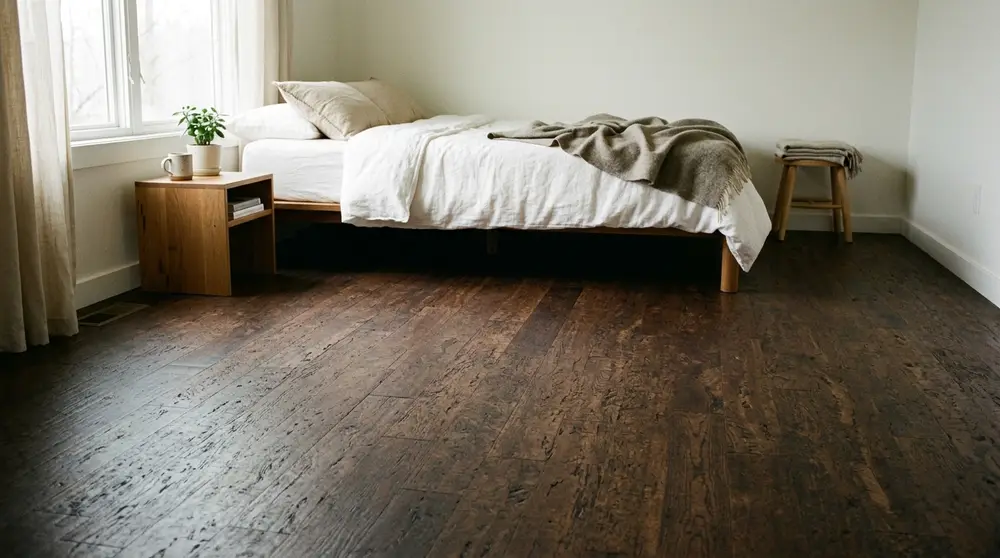
23. Sustainable Cork Flooring for a Soft Step
Cork is making a huge comeback because it’s one of the most eco-friendly materials on earth. It’s harvested from the bark of trees without killing them. It’s naturally soft and springy, which feels amazing when you first step out of bed.
Standout Features
It also acts as a natural insulator, keeping the room quiet and temperature-controlled. Modern cork comes pre-sealed, but I always recommend adding one extra coat of water-based polyurethane after installation to seal the joints. Cork is also naturally antimicrobial, making it a much better choice than carpet for allergy sufferers. It’s the ultimate "lazy-but-luxe" flooring choice that stays warm in the winter.
Who It’s For
This is for the eco-conscious homeowner or anyone with joint pain. The "give" in the floor is much easier on your knees and back than tile or hardwood. It’s a comfort-first choice.
Pricing and Drawbacks
Cork flooring costs about $5 to $12 per square foot. The drawback is that it’s soft. If you drop a heavy piece of furniture or wear high heels on it, you can leave permanent indentations. You have to be gentle with it.
24. Upcycled Glass Light Fixtures for Unique Glows
Luxury in 2026 is about unique, hand-crafted items. Light fixtures made from recycled glass have beautiful imperfections that create "caustics" or dancing light patterns on your walls. Every piece is slightly different, giving your room a one-of-a-kind feel.
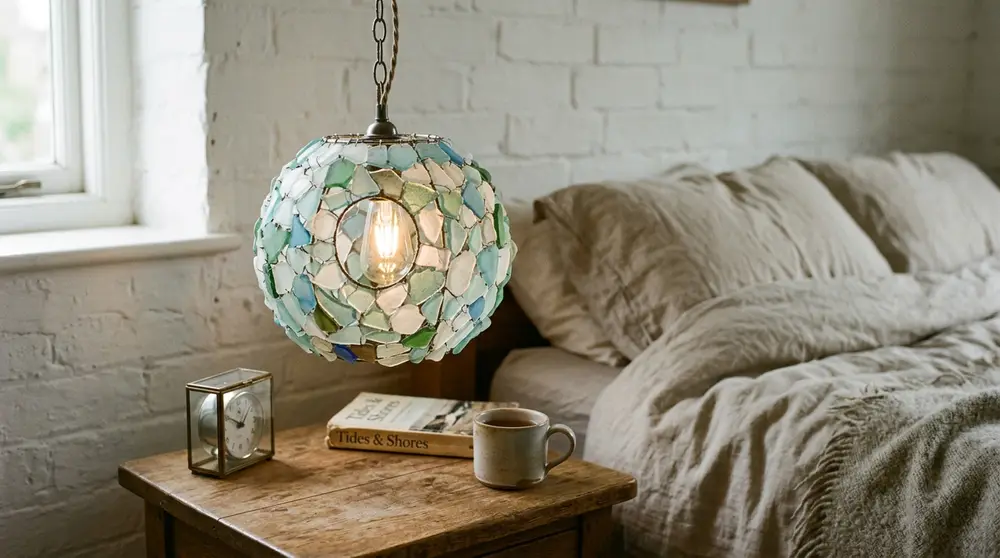
Standout Features
When you turn the light on, the room is filled with a soft, watery glow rather than a harsh beam. I recommend using a "clear" filament bulb in these fixtures because a frosted bulb will blur the patterns and ruin the effect. The shadows they cast make the ceiling look like it’s underwater, which is incredibly soothing to look at while you’re lying in bed. It’s a visual sedative.
Who It’s For
This is for the person who loves "mood" lighting. If you hate the "big light" and prefer a soft, artistic glow, these fixtures are for you. It’s like having a piece of glass art that also lights the room.
Pricing and Drawbacks
Hand-blown upcycled fixtures can cost $300 to $800. The drawback is the light output. These are for ambiance, not for doing your taxes or reading fine print. You will need other light sources in the room for tasks. It’s for vibes only.
25. Low-VOC Soy-Based Paint Finishes for Air Quality
We spend a third of our lives in our bedrooms, so air quality is non-negotiable. Modern soy-based paints offer the same durability as oil-based ones without the toxic off-gassing. You can paint your room and sleep in it the same night without a headache.
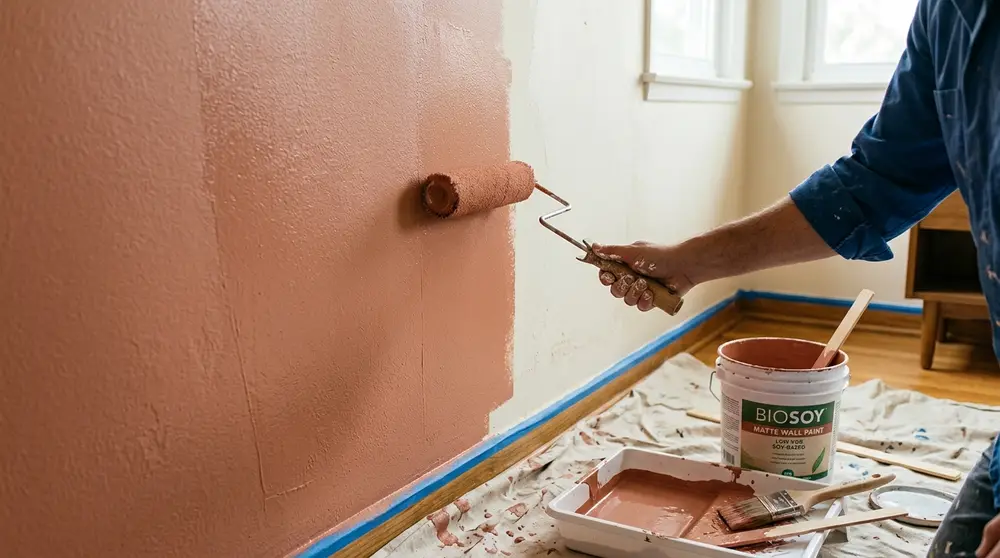
Standout Features
Check for labels that certify "Zero VOC" to ensure you aren't breathing in chemicals while you rest. Soy paint dries a bit slower than traditional acrylic, so give it a full 24 hours before you push furniture back against the wall. The finish is usually a soft eggshell that hides wall bumps perfectly. I’ve switched almost all my projects to soy or clay-based paints because clean air is the ultimate luxury.
Who It’s For
This is for parents, pet owners, or anyone sensitive to smells. If you want to refresh your room without the "new paint" smell that lingers for weeks, soy-based paint is the answer. It’s a healthier choice.
Pricing and Drawbacks
It costs about $70 to $90 per gallon. The drawback is the color range. Because they use natural pigments, you might not find the same "neon" or ultra-bright shades available in synthetic paints. The palette is more muted and earthy. It’s a trade-off for health.
26. Soft-Arch Doorway Transitions for an Elegant Entry
We are seeing a move away from standard rectangular doors toward softened arches. It makes the transition from the hallway to the bedroom feel more like an entry into a special place. It’s an architectural detail that feels custom and high-end.
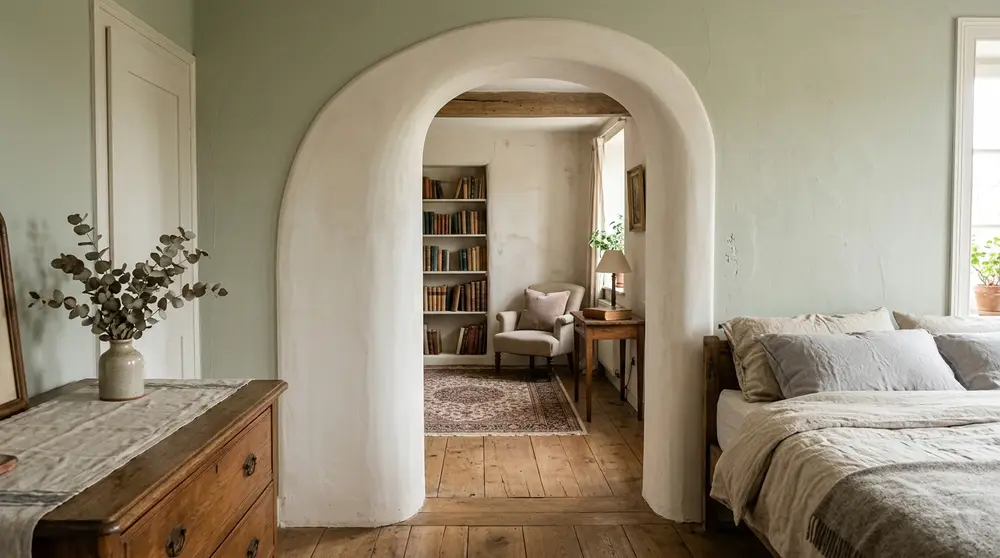
Standout Features
You don't actually have to tear down your wall to get an arch; you can buy "arch kits" that screw into your existing rectangular frame. Arches break up the "boxiness" of modern homes. Most rooms are just a series of squares, and by adding one curve, you instantly make the space feel more expensive. It’s a simple trick that designers have used for centuries, and it still works today.
Who It’s For
This is for the person who wants their home to feel more "custom" and less like a standard developer build. If you love classic European architecture, arches will bring that vibe to your modern bedroom. It’s pure elegance.
Pricing and Drawbacks
An arch kit and drywall work will cost around $500 to $800 per doorway. The drawback is the door itself. Finding a curved door to fit the arch is incredibly expensive, so most people leave these as open "walkway" transitions. Privacy can be an issue.
27. Sunken Relaxation Pits for Ultimate Lounging
If you have the space and budget, a "conversation pit" in the bedroom is the peak of 2026 luxury. It’s a recessed area with built-in seating for lounging or meditation. It separates the "sleeping" area from the "living" area without using walls.
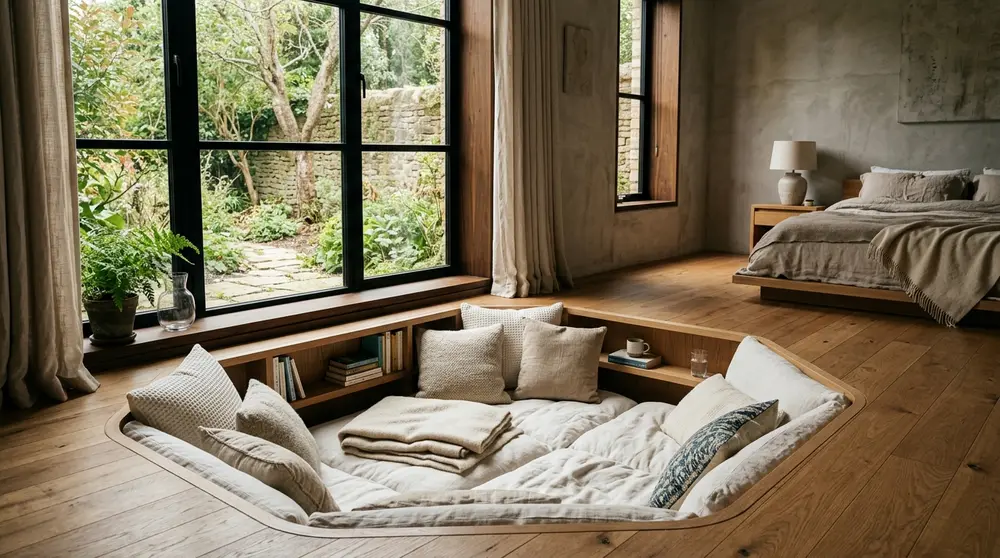
Standout Features
I usually suggest "building up" a platform for the bed instead of digging down, which gives you the same "sunken" feel without the structural headache of excavating concrete. I remember a project where we hit a structural beam trying to dig a pit; it was a $4,000 mistake. Use a platform instead. It creates a cozy, protected feeling that’s perfect for unwinding at the end of a long day.
Who It’s For
This is for the person with a very large master suite who wants to create a "hotel" experience at home. If you have the square footage, it’s the ultimate way to zone your room. It’s a bold statement.
Pricing and Drawbacks
Building a platform pit can cost $3,000 to $7,000. The drawback is the safety factor. If you aren't careful, a sunken area is a major trip hazard in the middle of the night. You need to use subtle floor lighting to mark the edges. It’s a risk.
28. Cantilevered Floating Nightstands for Modern Simplicity
These nightstands are bolted directly to the wall, leaving the floor underneath completely clear. The lack of legs makes the room feel airy and less "crowded" with furniture. I usually mount them at the exact height of the mattress for a clean line.
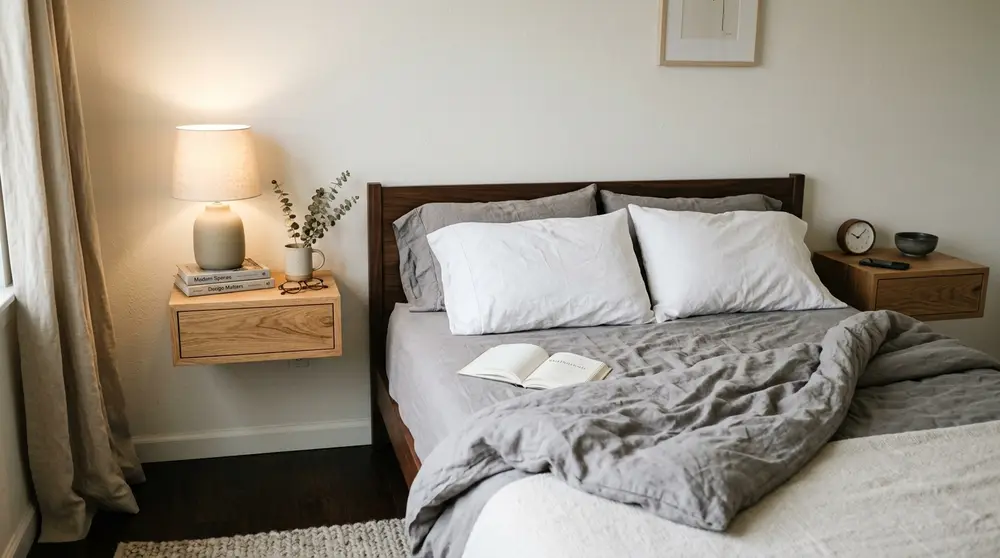
Standout Features
A floating nightstand is only as strong as its mounting; use a stud finder and bolt it directly into the wood framing. It should be strong enough for you to sit on—that’s the gold standard for safety. I like to add a small drawer to these to keep the top surface clear of clutter. A clean top makes the whole bed area look more organized and peaceful. Less clutter, less stress.
Who It’s For
This is for the small-room owner or the minimalist. If you want to make your floor look larger, showing more of it is the best way. It’s also perfect for people who use robot vacuums. It’s sleek and smart.
Pricing and Drawbacks
You can find these for $150 to $400. The drawback is that you can't move them. Once they are bolted to the wall, that’s where they stay. If you like to rearrange your furniture every six months, floating nightstands will frustrate you. They are permanent.
29. Oversized Rattan Pendant Globes for Organic Scale
To balance out modern tech and clean lines, you need something organic and oversized. A large rattan light fixture adds a "vacation" feel to the room. The woven material filters the light into beautiful patterns across the walls.
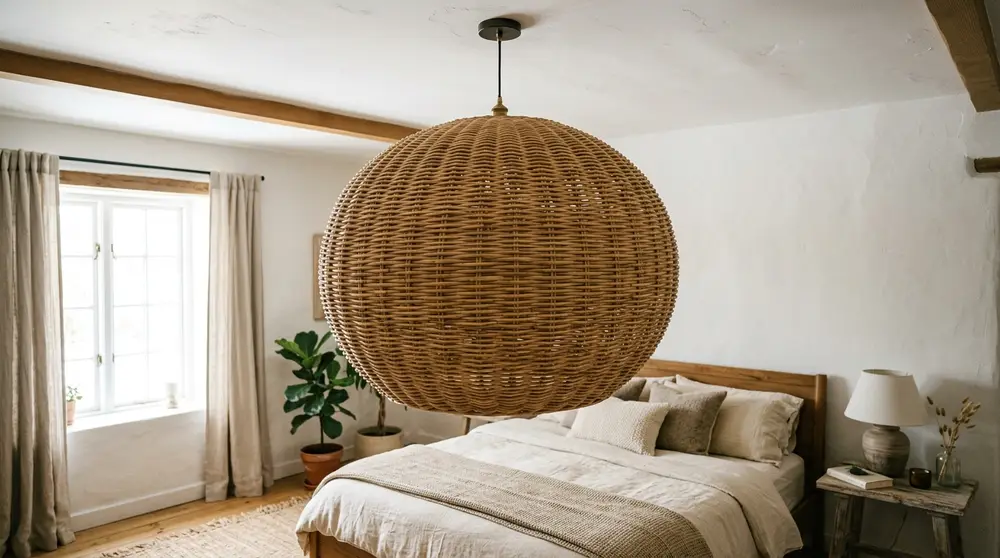
Standout Features
It’s a great way to fill a high ceiling without adding a heavy, metal chandelier that feels too formal. Rattan is a dust magnet, so the best way to clean it is with a vacuum brush attachment or a can of compressed air. Don't use a wet cloth, as it can make the fibers swell. I love using these in pairs at different heights in a corner to create a dynamic focal point. It adds designer flair.
Who It’s For
This is for the person who wants a "boho-chic" or coastal modern vibe. If your room feels a bit too "cold," the natural texture of rattan will instantly warm it up. It’s light and breezy.
Pricing and Drawbacks
A large globe can cost $200 to $500. The drawback is the scale. If your room has low ceilings, an oversized pendant will make the space feel cramped and you might even hit your head on it. Measure your height carefully before buying.
30. Raw Hemp and Flax Linen Layering for Breathability
For your bedding, forget high-thread-count cotton that feels like plastic. Raw hemp and flax linen are the most breathable fabrics you can buy. They are naturally antimicrobial and get softer every time you wash them, regulating your body temperature perfectly.
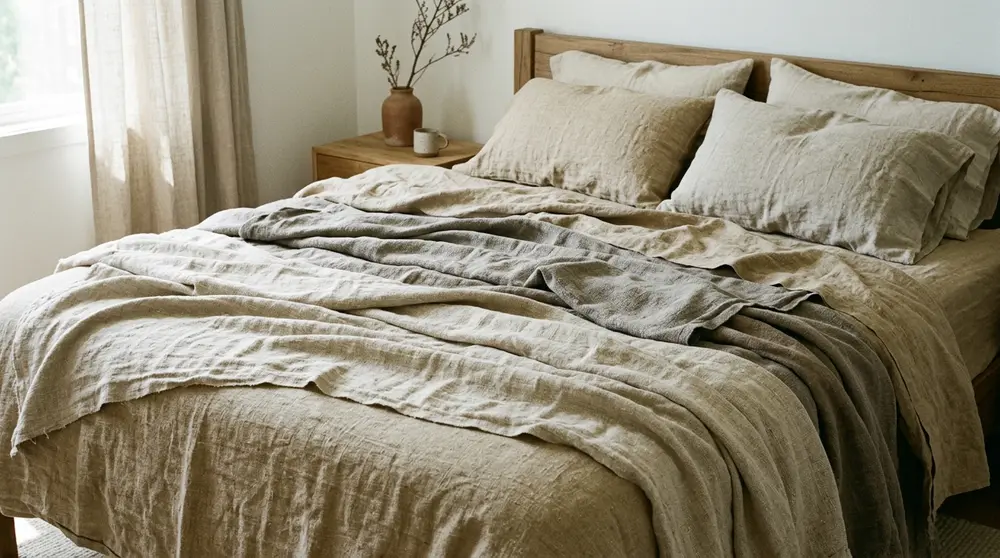
Standout Features
When buying linen, check the GSM (grams per square meter); for sheets, you want around 160-180 GSM for the perfect weight. Linen has a natural "rumpled" look that is very on-trend for 2026, meaning you never have to iron it. In fact, ironing it ruins the vibe. It’s the perfect fabric for people who want a luxury look without the high-maintenance chores. It’s a lazy person’s dream come true.
Who It’s For
This is for the "hot sleeper" or anyone who values comfort over a crisp, starched look. If you want to wake up feeling cool and dry, linen is the only way to go. It’s the ultimate sleep surface.
Pricing and Drawbacks
A high-quality linen sheet set will cost $250 to $500. The drawback is the "lint" factor. For the first few washes, linen sheds a lot of fibers, which can get all over your room and clog your dryer filter. It takes a few months to settle down. It’s a messy start.
Comparison of 2026 Bedroom Design Elements
Choosing the right bedroom upgrades depends on your budget and what you hope to solve, whether it's poor sleep or a lack of storage. This breakdown helps you weigh the costs against the lifestyle benefits of the most popular 2026 trends.
Modern bedroom design is shifting away from purely aesthetic choices toward functional wellness. For instance, circadian lighting and acoustic panels aren't just for looks; they actively manage your body's internal clock and quiet the room against outside noise.
Value vs. Investment
While some upgrades like linen bedding or a fresh coat of soy paint are relatively affordable, structural changes like arched doorways or micro-cement flooring require professional labor. Planning for these costs early prevents budget creep during a renovation.
High-ticket items like walnut furniture or smart glass offer long-term value through durability and privacy. If you are on a tighter budget, focus on tactile additions like bouclé chairs or rattan globes to add texture without a full room overhaul.
| Design Idea | Primary Benefit | Best For | Est. Cost |
|---|---|---|---|
| Cocoa Brown Walls | Depth & Cocooning | Insomniacs | $85/gal |
| Clay Accents | Organic Warmth | Clinical Spaces | $60+ |
| Sage Green Base | Calming Nature | Urban Dwellers | $50/gal |
| Tonal Layering | Visual Richness | Minimalists | $200+ |
| Color Drenching | Seamless Flow | Small Rooms | $300+ |
| Curvy Headboards | Soft Support | Readers in Bed | $1,200+ |
| Walnut Furniture | Heritage Quality | Investment Buyers | $2,000+ |
| Floating Beds | Floor Visibility | Modern Purists | $800+ |
| Bouclé Chairs | Tactile Pop | Softening Corners | $350+ |
| Smart Hubs | Hidden Tech | Organized Techies | $500+ |
| Platform Storage | Extra Space | Apartment Living | $600+ |
| Mirror Paneling | Space Doubling | Dark Rooms | $1,500+ |
| Hydroponic Art | Fresh Oxygen | Wellness Seekers | $400+ |
| Desk-to-Vanity | Mental Boundaries | WFH Professionals | $450+ |
| Micro-Cement | Seamless Floor | Allergy Sufferers | $15/sqft |
| Circadian Lights | Sleep Regulation | High Performers | $300+ |
| Smart Glass | Instant Privacy | Open Concepts | $100/sqft |
| Wireless Nightstands | Cordless Look | Minimalists | $250+ |
| Motorized Curtains | Sound/Heat Barrier | Light Sleepers | $1,200+ |
| Acoustic Panels | Echo Reduction | Loft Living | $500+ |
| Limewash Walls | Mold Resistance | Humid Climates | $120/bucket |
| Teak Slatting | Vertical Height | Feature Walls | $15/sqft |
| Cork Flooring | Eco-Softness | Sustainability Fans | $5/sqft |
| Upcycled Glass | Unique Shadows | Mood Lighting | $300+ |
| Soy Paint | Zero Toxins | Healthy Living | $70/gal |
| Arched Doorways | Custom Feel | Architectural Fans | $500+ |
| Sunken Pits | Zoned Lounging | Luxury Suites | $3,000+ |
| Floating Nightstands | Airy Vibe | Robot Vacuums | $150+ |
| Rattan Globes | Organic Scale | Boho-Chic | $200+ |
| Linen Bedding | Breathability | Hot Sleepers | $250+ |
Choosing Your 2026 Sanctuary Style
Picking the right elements depends on what you value most in your private life. If you're a tech-driven professional, focus on the integrated smart hubs and circadian lighting to optimize your performance. For the eco-warrior, the combination of cork flooring, soy paint, and linen bedding creates a zero-toxin environment that respects the planet. If you just want a cozy retreat, lean into the cocoa brown walls and bouclé textures. Your bedroom is the only place in the world where you don't have to perform for anyone, so build it with intention and let the textures do the talking.
Leave a comment