



I remember when "modern" meant just grey walls and a hard sofa that nobody actually wanted to sit on. In 2026, it’s about making your living room feel alive and smart without cluttering the soul of your home.
Modern living room design in 2026 focuses on 'Biophilic Minimalism,' blending sustainable materials like bamboo and jute with smart-home integration. For Dhaka homes, this involves maximizing natural ventilation, using modular multi-functional furniture to handle space constraints, and incorporating earthy terracotta tones paired with sleek metallic accents for a balanced, contemporary aesthetic.
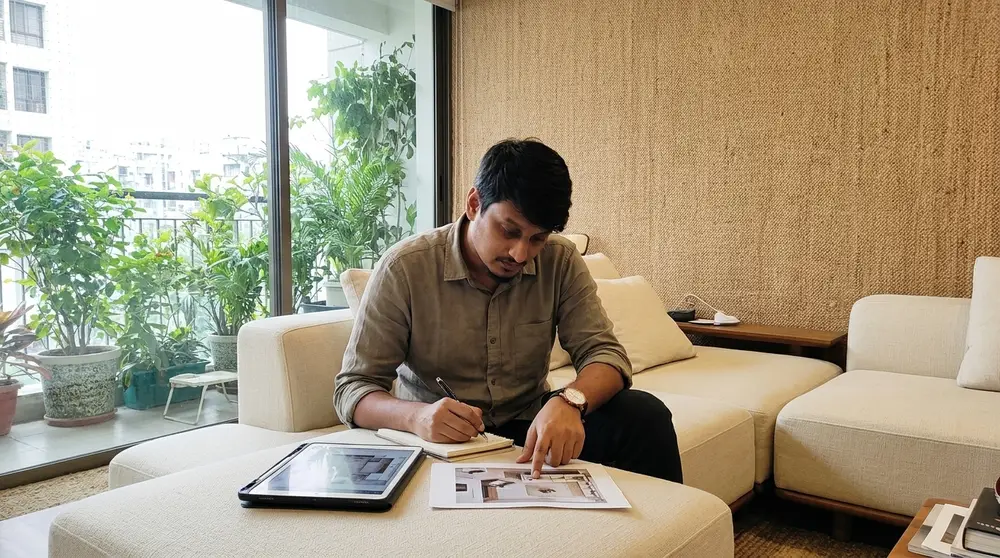
What you need to know
Sustainability is at the heart of 2026 design. We're using local materials like jute, cane, and teak to reduce the carbon footprint of high-end interiors. This shift isn't just about looks; it's a response to the growing need for eco-conscious luxury that feels grounded in the local environment. Smart home features for climate and lighting are now standard in Dhaka luxury apartments to help save energy.
Biophilic design elements, such as indoor green walls and natural stone, help mitigate urban heat and improve indoor air quality in dense city environments like ours. To make this work in the tighter floor plans of Banani and Dhanmondi, modular furniture has become essential. These pieces allow homeowners to maximize their square footage while maintaining a clean, sophisticated look that adapts to daily life.
How is modern living room design evolving in Dhaka for 2026?
The Dhaka skyline is changing, and so is the way we live inside it. We’ve moved past the era of heavy, ornate furniture that takes up half a room; now, it’s all about breathing room and intelligent surfaces. I’ve seen clients shift from wanting "expensive-looking" things to wanting things that actually make their lives easier and healthier.
The heat in Dhaka has become a primary design driver. We are seeing a move away from massive glass windows that turn rooms into greenhouses, replaced by "smart" glass and deep-set balconies. People want luxury, but they want it to be sustainable and responsive to the 35°C humidity we deal with for most of the year.
“Design in 2026 is no longer about just aesthetic; it’s about the emotional and physiological response to a space, especially as urban density increases.”
Nazmul Hasan, MT Interior team
Comparing 2025 vs. 2026 Living Room Trends for Dhaka Apartments
The transition from last year to this year has been subtle but significant. We are moving from "static" rooms to "responsive" environments that change based on the time of day or the activity happening in the space.
| Feature | 2025 Trend | 2026 Modern Standard |
|---|---|---|
| Primary Materials | Polished Marble & Chrome | Matte Terracotta & Reclaimed Teak |
| Technology | Smart Bulbs (App-controlled) | AI-Driven Climate & Light Sync |
| Furniture Style | Large Fixed Sectionals | Modular & Floating Units |
| Color Palette | Cool Greys & Whites | Warm Earth Tones & Deep Teals |
This shift reflects a deeper desire for comfort over showmanship. While 2025 was about looking "high-tech," 2026 is about technology that hides in the background so the natural textures can shine. It is a more mature approach to interior design.
Sustainable Materials and Local Textures for Eco-Conscious Homes
Using local materials isn't just a "green" choice; it's a practical one for the Dhaka climate. I’ve found that local teak and cane handle our humidity much better than imported softwoods that tend to warp or rot within a few seasons. We are finally seeing a marriage between traditional craftsmanship and minimalist modern forms.
I once made the mistake of importing a beautiful Scandinavian oak table for a client in Gulshan. Within two monsoons, the joints had expanded so much the legs became wobbly. Now, I stick to seasoned local timber that knows how to survive in 90% humidity. It saves the client money and looks better anyway.
1. Sustainable Jute-Textured Feature Walls
Jute has come a long way from being just a sack material. In 2026, we’re using high-grade, treated jute fibers to create wall coverings that offer incredible acoustic insulation and a soft, organic texture. It kills that "echo" you get in modern apartments with tiled floors.
The first time I installed a full-height jute wall, I didn't treat the backing for humidity. Three months later, it smelled like a damp basement. Now, I always use a vapor-permeable membrane first to keep the fibers dry and fresh. This creates a healthy, breathable wall that looks stunning under warm LED wash lighting.
2. Modular Teak Wood Sectionals
Teak is the gold standard here, but the 2026 twist is modularity. Instead of one giant, heavy sofa, we use smaller blocks that can be rearranged for a party or a movie night. This flexibility is a lifesaver in mid-sized Dhanmondi flats where space is a premium.
You can move the pieces to clear the floor for a morning yoga session or push them together for a guest bed. High-quality teak frames ensure these joints don't wear out over time. They are built to last decades, not just years.
3. Sustainable Cane Accent Chairs
Cane is making a massive comeback because it’s naturally breathable. In a city where you’re always fighting the heat, a chair that lets air circulate around your back is a luxury. We’re pairing these with sleek black metal frames for a "Japandi" look that feels very current.
These chairs are incredibly light. You can move them from the living room to the balcony with one hand. They provide that visual "lightness" that stops a room from feeling overcrowded or heavy.
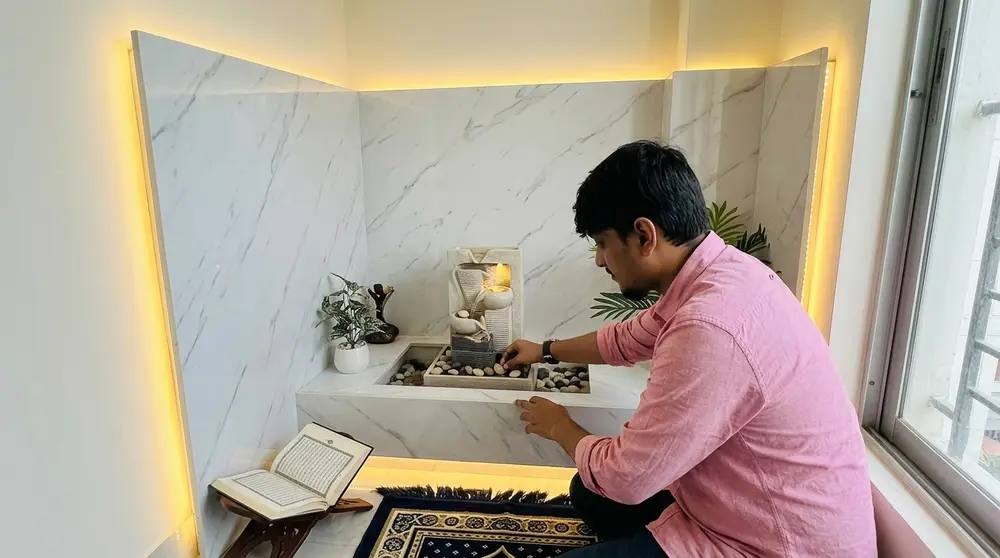
4. Terracotta Cooling Tiles
Modern terracotta isn't just for roofs anymore. We are seeing large-format, matte-finished terracotta tiles used as feature flooring or wall accents. They have a natural thermal mass that helps keep the room cooler during the peak afternoon sun.
The color is the real draw here. That deep, burnt orange provides a perfect contrast to the white walls and green plants typical of biophilic design. It feels rooted and expensive at the same time.
5. Recycled Plastic Area Rugs
With the rise of eco-consciousness, rugs made from 100% recycled ocean plastic are huge in 2026. They don't look like plastic; they feel like soft wool but are virtually indestructible. You can literally wash them with a garden hose if someone spills tea.
They are also hypoallergenic. In a dusty city like Dhaka, being able to deep-clean your rugs without ruining them is a massive practical advantage. It's the perfect intersection of sustainability and urban reality.
6. Eco-Friendly Bamboo Parquet
Bamboo grows incredibly fast, making it much more sustainable than hardwood. Modern bamboo flooring in 2026 is "strand-woven," making it harder and more durable than traditional oak. It resists scratches from pets and heavy furniture movement brilliantly.
The grain is very linear and clean. This fits the minimalist aesthetic perfectly. It’s also naturally resistant to moisture, which is a major win for our local climate.
7. Sound-Proofing Cork Panels
Dhaka is loud. Between the traffic and the construction, silence is the ultimate luxury. Cork panels on the ceiling or behind the TV console absorb high-frequency noise and look like high-end bark wallpaper.
They are also a great insulator. Using cork can actually lower your AC bill by keeping the cool air inside longer. It’s a functional design choice that pays for itself over time.
Smart Technology and Climate-Responsive Solutions
Technology in 2026 isn't about more screens; it's about better sensors. We are seeing a move toward "invisible tech" that monitors air quality and light levels to adjust the environment automatically. This is especially important in Dhaka, where air pollution can vary wildly from hour to hour.
I’ve started recommending integrated systems that sync with local weather data. When the PM2.5 levels spike outside, the living room's air filtration kicks into high gear before you even smell the smog. It makes the home a true sanctuary.
8. Smart Glass Balcony Dividers
Switchable glass is the new must-have for 2026. With one click, your clear balcony door turns frosted. This provides instant privacy from the neighbors without needing heavy curtains that block the breeze.
It also helps with heat. Many of these smart glasses have a UV-reflective coating that blocks 99% of solar heat gain. It's a sophisticated way to keep the view while losing the glare.
9. Integrated Air Purification Systems
Standard bulky air purifiers are an eyesore. In 2026, we build HEPA-grade filtration directly into the cabinetry or the HVAC vents. You don't see it, but you definitely feel the difference in how you breathe.
According to data from IQAir, Dhaka's air quality often hits "unhealthy" levels. Having a built-in system ensures your living room remains a safe zone for your family's health.
10. Voice-Controlled Lighting Scenes
We’ve moved beyond just turning lights on and off. Now, we program "scenes." You can say "Movie Night," and the lights dim to 10%, the blinds close, and the TV switches on. It’s about creating an atmosphere instantly.
I always suggest using "warm-to-dim" LED technology. It mimics the way old incandescent bulbs used to get warmer as they dimmed, which is much more relaxing for the eyes in the evening than cheap LEDs that just turn grey.
11. Automated Thermal Blinds
These blinds have sensors that know when the sun is hitting the window directly. They close automatically to keep the heat out and open when the sun passes. It’s a "set and forget" system that saves a fortune on electricity.
In 2026, these are often made from solar-mesh fabrics. You can still see outside, but the heat stays on the other side of the glass. It’s a clever way to handle the western sun in Dhaka apartments.
12. AI-Optimized Temperature Control
New thermostats like the latest Nest or Ecobee models now use AI to learn your habits. They know you like the living room at 24°C when you get home from work at 6 PM. They start cooling the room just 15 minutes before you arrive.
This prevents the AC from running all day in an empty house. It’s efficient, smart, and essential for modern urban living. Technology should serve you, not the other way around.
13. Biophilic Skylight Simulations
Not every Dhaka apartment has great windows. For those dark interior corners, we use LED panels that perfectly mimic the color and movement of a real sky. They even cycle through sunrise and sunset colors during the day.
It sounds gimmicky until you see it. It completely changes the mood of a windowless room. It tricks your brain into feeling like you have a connection to the outdoors, which is vital for mental well-being.
14. Indoor Zen Water Fountains
A small, modern water feature adds humidity back into the air when the AC dries it out. The sound of trickling water also acts as perfect white noise. It drowns out the sound of honking cars outside your window.
In 2026, these are minimalist—think a single slab of black granite with water shimmering over it. No cheesy rocks or plastic plants. Just pure, clean movement.
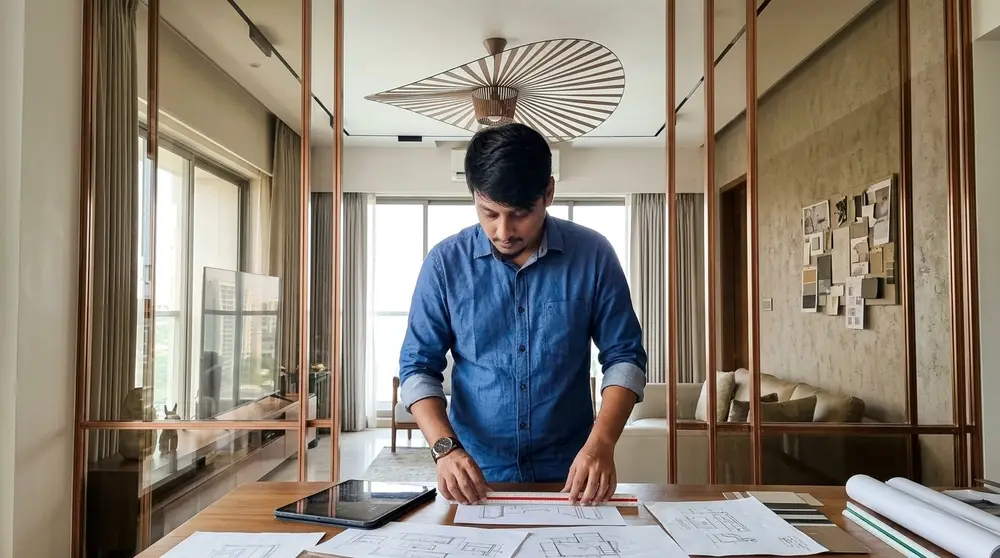
Space-Saving Furniture and Layout Innovations
In dense neighborhoods like Banani, every square inch matters. We are seeing a move toward "zero-clearance" design, where furniture fits perfectly into corners or serves multiple purposes. The goal is to create a sense of flow even in a smaller footprint.
I once worked on a 1,200 sq ft flat where the client wanted a home office, a dining area, and a large living room all in one space. We used sliding panels and "transformer" furniture to make it work. It didn't feel cramped; it felt like a puzzle that fit together perfectly.
15. Minimalist Floating TV Consoles
By mounting the console to the wall and leaving the floor clear, you trick the eye into thinking the room is larger. It’s a simple trick that works every time. Plus, it makes cleaning much easier since there are no legs for dust to hide behind.
We usually hide all the wires inside the wall or a hidden channel. A "floating" look only works if it’s clean. One hanging wire ruins the whole aesthetic.
16. Fold-Down Home Office Stations
Since more people are working from home, the living room often doubles as an office. A fold-down desk looks like a sleek wall cabinet when closed. When you need to work, it drops down to provide a full-sized desk surface.
This allows you to "shut down" work at the end of the day. You literally close the cabinet and the office disappears. It helps maintain that work-life balance that is so hard to find these days.
17. Multifunctional Ottoman Storage
Ottomans are the Swiss Army knife of furniture. They are extra seating, a coffee table if you add a tray, and a storage bin for extra pillows or blankets. In 2026, we’re seeing them upholstered in high-end performance fabrics that handle heavy use.
I recommend choosing one with a "flip-top." One side is soft for your feet, and the other is a hard wood surface for your coffee. It’s a simple, brilliant piece of design.
18. Sliding Pocket Doors
Traditional doors need a "swing" area that wastes about 10 square feet of floor space. Pocket doors slide right into the wall, freeing up that space for furniture or better paths to walk. They're perfect for narrow hallways in Dhaka.
They also allow you to open up the room completely when you have guests. It turns a series of small rooms into one large, airy space. Flow is everything in modern design.
19. Open-Concept Foyer Integration
We’re getting rid of the "entrance hallway" and letting the foyer bleed into the living room. We use a change in floor texture—like moving from marble to wood—to define the space without using a wall. This makes the entrance feel grand and the living room feel massive.
It’s a more welcoming way to enter a home. You see the whole living space immediately, which creates a sense of scale. No more cramped, dark entrance ways.
20. Low-Profile Floor Seating
Inspired by the traditional 'majlis' style, modern floor seating is making a huge comeback. It’s very social and relaxed. We use thick, high-density foam cushions on a low wooden platform for a look that is both traditional and ultra-modern.
This is great for younger families. It’s a safe, comfortable way for kids to play while adults sit nearby. It also makes the ceiling feel higher, which adds to the sense of space.
21. Geometric Metal Room Dividers
If you need to separate the dining area from the living room, don't use a solid wall. A laser-cut metal screen allows light and air to pass through while still creating a clear boundary. It’s a piece of art and a wall at the same time.
In 2026, we’re seeing these in matte black or brushed brass. They add a touch of "industrial chic" that balances out the softer, biophilic elements in the room. They are thin, elegant, and effective.
Cultural Fusion and Artistic Accents
A modern room shouldn't look like it could be anywhere in the world; it should look like it belongs in Bangladesh. We are seeing a beautiful fusion of high-tech design and traditional craft. It’s about taking our heritage and presenting it in a way that fits a 2026 lifestyle.
I love finding ways to use "jamdani" patterns or "nakshi kantha" in a minimalist way. It adds a layer of story to the room that a generic piece of IKEA furniture never could. It’s what makes a house a home.
“True luxury in 2026 is the ability to tell a story through your furniture, blending local heritage with global design standards.”
Architectural Digest India — source
22. Hidden Minimalist Prayer Nooks
A prayer space is a must for many families in Dhaka. In 2026, we’re designing these to be a natural part of the living room. They might be hidden behind a beautiful sliding wood panel or tucked into a quiet, well-lit corner with simple shelves for religious books.
The design is simple: clean lines, soft indirect lighting, and a single high-quality prayer mat. It’s a peaceful, dedicated space that doesn't disrupt the modern flow of the rest of the room.
23. Jamdani-Patterned Wallpaper
We are seeing traditional textile patterns being turned into sophisticated, large-scale wallpapers. Instead of bright colors, we use tonal shades—like white on off-white or charcoal on black. It’s a subtle nod to our culture that looks incredibly high-end.
It’s perfect for a feature wall behind a sofa. From a distance, it looks like a textured wall; up close, you see the intricate geometric patterns of a Jamdani weave. It’s a great conversation starter.
24. Custom Nakshi Kantha Art Frames
Instead of using Nakshi Kantha as a blanket, we are framing large, high-quality pieces as central art. When placed in a deep, museum-style shadow box with professional lighting, the hand-stitching looks like a masterpiece of modern abstract art.
It brings warmth and a human touch to a room that might otherwise feel too "perfect." The slight imperfections in the hand-stitching are exactly what make it beautiful.
25. Oversized Local Clay Pottery
Traditional clay pottery from areas like Rayer Bazar is being scaled up. We’re using massive, 4-foot tall jars as sculptural elements. We leave them in their natural, matte terracotta state rather than glazing them.
One or two large pieces are better than ten small ones. It creates a bold focal point and emphasizes the "minimalist" part of the design. They look stunning next to a sleek, modern sofa.
26. Brass-Inlaid Marble Flooring
Marble is a classic, but the 2026 way to do it is with thin brass inlays. We create geometric patterns or simple lines that run through the stone. It adds a touch of "Art Deco" luxury to a modern living room.
Brass ages beautifully, developing a patina over time. It’s a material that feels substantial and permanent. It elevates the entire room instantly.
27. Industrial Steel Shelf Accents
To keep the room from feeling too "soft," we use raw or powder-coated steel for shelving. Thin, 10mm steel frames look incredibly sharp and can hold a surprising amount of weight. It’s a very urban, "loft" look that works well in Dhaka.
The contrast between the cold metal and warm wood furniture is key. It creates a balanced, "complete" feeling in the interior design.
28. Sculptural Ceiling Fan Designs
In our climate, fans are a necessity, but they don't have to be ugly. 2026 fans look like sculptures. They use curved wooden blades and DC motors that are completely silent. They move more air with less noise and look beautiful even when they are off.
Think of the fan as the "jewelry" of the ceiling. It’s often the first thing people notice when they walk in. A high-design fan can make a basic room look like a designer masterpiece.
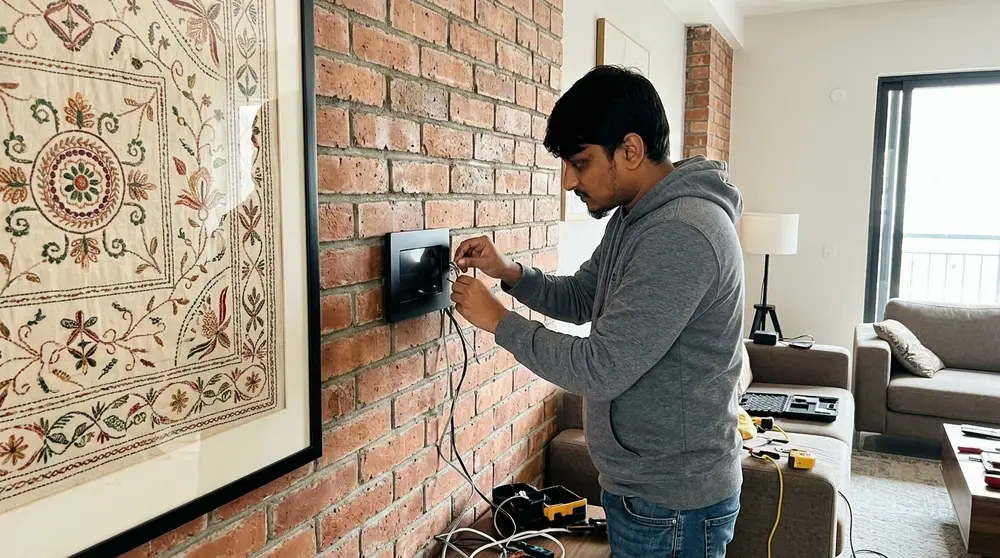
Lighting, Color, and Atmospheric Elements
The final layer of a room is the atmosphere. This is where you use color and light to pull everything together. In 2026, we are moving away from flat, "hospital" white lighting toward layers of light that can be adjusted to fit the mood.
I always tell my clients: "If you only have one light switch, you don't have a design." You need floor lamps, wall washers, and task lighting to create depth. It’s the difference between a flat photo and a 3D experience.
Leave a comment