

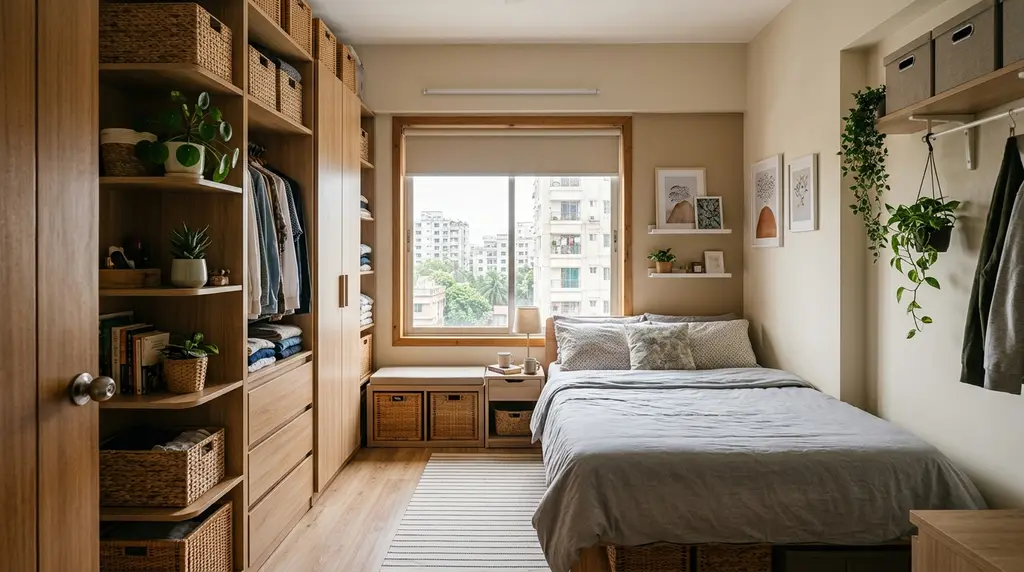
Why Dhaka bedrooms feel smaller (and what a storage-first plan fixes)
In many Dhaka flats, the “small bedroom” isn’t just about square footage. It’s the combination of narrow room proportions, deep window sills, wardrobe doors that swing into walking paths, and the reality that one bedroom often stores more than just clothes—luggage, winter quilts, prayer mats, books, baby gear, and sometimes even extra kitchen items. A storage-first layout plan solves this by deciding where things live before picking finishes or buying furniture. The goal is simple: keep a clear walking loop, reduce visual clutter, and use vertical space without making the room feel boxed in.
Start with a quick room audit (before you choose furniture)
Before moving anything, take measurements and do a “what must stay” list. This step is exactly what our interior design consultation focuses on—because the best plan comes from your habits, not generic Pinterest images.
- Measure accurately: room length/width, ceiling height, window size and sill height, and the location of switches, AC lines, and sockets.
- Note door swings: bedroom door and wardrobe doors often collide; changing door type or hinge direction can create surprising space.
- List storage categories: daily wear, formal wear, bedding, luggage, documents, vanity items, shoes, and “seasonal overflow.”
- Decide your no-compromise zone: usually 24–30 inches clear path on at least one side of the bed in tight Dhaka layouts.
The storage-first layout plan (works for most Dhaka apartments)
1) Anchor the bed, then protect the walkway
Place the bed where you can keep a clean path from the door to the wardrobe and to the window. In many flats, the best position is a long wall, not centered like a showroom. If you can only access one side of the bed comfortably, make that the “daily-use side” and keep it clear. Use a slimmer bedside shelf instead of a bulky table, and wall-mount your reading light to free surface space.
2) Turn one wall into a “storage wall” (wardrobe + overhead + niche)
Instead of scattering storage across the room, concentrate it. A full-height wardrobe to the ceiling reduces dust-prone gaps and adds a valuable top zone for suitcases and seasonal bedding. If the room is very tight, sliding doors help prevent door-swing conflicts, while mirrored shutters can bounce daylight and reduce the need for extra dressing mirrors.
As part of our bedroom interior design service, we typically plan internal wardrobe zoning in centimeters: hanging for shirts/sarees, drawers for accessories, pull-out baskets, and a locked compartment for documents and jewelry. The inside matters as much as the shutter style.
3) Use under-bed storage—but only if it stays accessible
Hydraulic storage beds are popular in Dhaka for a reason: they swallow quilts, spare pillows, and luggage. But they only work if you can open the bed easily and keep the contents organized. Use labeled fabric boxes, and avoid storing daily-use items underneath (you’ll stop using it). If you prefer a standard bed, consider a drawer bed only when you have clearance for the drawers to open.
4) Add a compact dressing/vanity point near the wardrobe
Instead of a separate dressing table that eats floor space, create a dressing zone integrated into the wardrobe run: a pull-out tray, a narrow counter with a mirror, and a dedicated socket for hair tools. This is one of the most space-efficient upgrades in small bedrooms and can be planned during custom furniture design so the heights and lighting are correct for real daily use.
5) Solve the “study corner” with a floating desk
Many Dhaka households need a small WFH corner. A floating desk (16–18 inches deep) paired with a wall shelf keeps the floor open. Place it near the window if possible for natural light, and avoid blocking curtain movement. If the room can’t spare a chair full-time, consider a fold-down desk or a stool that tucks under the desk completely.
Smart storage ideas that don’t make the room feel heavy
- Overhead cabinets above the headboard wall: Keep them shallow and aligned; use push-to-open or simple handles to avoid visual clutter.
- Window-side storage bench: If your window wall has dead space, a low bench with lift-up storage can hold books and seasonal items without blocking light.
- Headboard with slim ledge: A 3–4 inch ledge replaces bulky side tables for phones, glasses, and a water bottle.
- Behind-the-door hooks: Ideal for handbags, scarves, or “wear again” clothes—keeps chairs from becoming clothing piles.
- High shelf above the door: Great for rarely used items; keep a consistent box system so it looks intentional.
Materials and color choices that suit Dhaka heat, dust, and daily life
Small bedrooms feel tighter when surfaces are busy or too dark. In Dhaka, you also want materials that handle humidity and frequent cleaning.
- Wall color: Warm off-white, soft greige, or pale sand tones reflect light and hide minor dust better than pure white.
- Wardrobe finish: Matte laminates are easier to maintain than high-gloss in dusty areas; textured wood tones add warmth without overpowering the room.
- Hardware: Soft-close hinges and good drawer channels matter more than fancy shutters—especially for daily use.
- Curtains: Use ceiling-mounted tracks to visually increase height; pick lighter fabrics for airflow, with blackout lining only if needed.
Lighting plan: make it feel bigger without adding clutter
A single ceiling light creates harsh shadows and makes storage look messy. Layer your lighting so the room stays calm at night and functional in the morning. In our false ceiling and lighting design work, we typically recommend three layers for small bedrooms:
- Ambient: warm LED downlights or a minimal ceiling fixture.
- Task: wall-mounted reading lights on the bed side you use most.
- Wardrobe/vanity: LED strip inside the wardrobe and a front-facing mirror light to avoid unflattering shadows.
A practical “Do/Don’t” checklist for small bedroom layouts
- Do keep one uninterrupted walking line from door to bed to wardrobe.
- Do take storage to the ceiling and reduce open shelves if dust is a concern.
- Do choose fewer, taller pieces instead of many small items scattered around.
- Don’t place a deep wardrobe where it blocks window airflow or AC throw.
- Don’t buy a larger bed “to feel luxurious” if it kills the walkway; comfort includes movement.
- Don’t ignore power points—plan charging near the bed and desk to avoid messy extensions.
When to bring in an interior designer (and what we actually do)
If you’re constantly reorganizing but the room still looks crowded, the issue is usually planning, not effort. A designer helps you avoid expensive mistakes—like a wardrobe that can’t open fully, or a bed that blocks drawers. For Dhaka apartments, our interior design service typically includes space planning, 2D layout options, storage zoning, custom wardrobe/bed design, material selection, and on-site execution support with carpenters and suppliers. The result is a bedroom that stores more while feeling lighter.
Next step: get a storage-first layout for your flat
If you share your room measurements, photos, and a short list of what needs to be stored, we can propose a storage-first layout plan tailored to your Dhaka flat—complete with wardrobe internal divisions, bed type recommendation, and a realistic lighting plan. Visit our contact page to book a site visit or online consultation and start with the layout that makes every other design decision easier.
Explore more on Bedroom, Wardrobe & Kids Spaces
About the author
Daniel runs day-to-day operations, pricing, and vendor coordination so projects stay profitable and predictable. He builds repeatable processes for proposals, timelines, procurement, and site-ready deliverables. He’s known for calm client communication and clean documentation that contractors can actually use. …
Leave a comment